
Domestic Market Closing Briefing & AI Investment Ideas — 2026-05-20
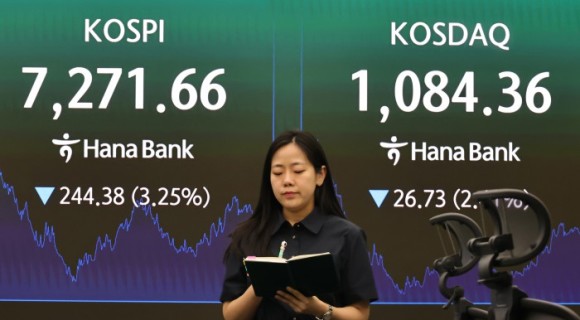
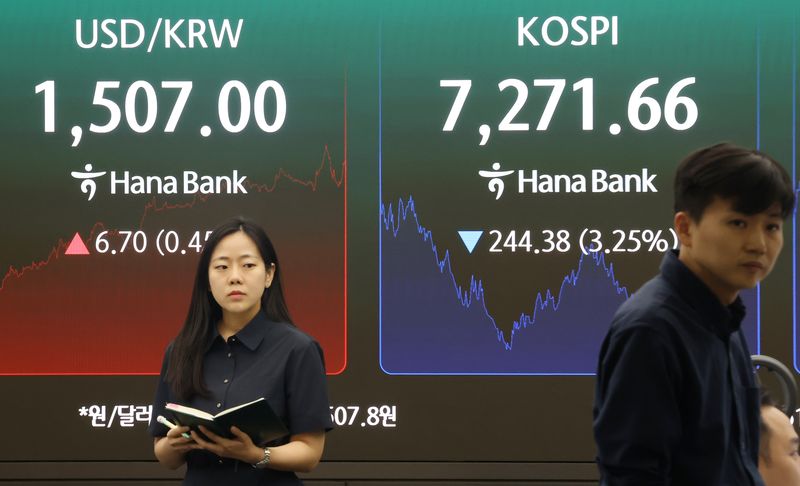
On May 19, the KOSPI tumbled by 3% to close at 7,270, pressured by a massive 6 trillion won sell-off by foreign investors—their ninth consecutive day of net selling. Market volatility surged due to concerns over the "AI National Dividend" proposal, rising U.S. interest rates, and geopolitical tensions.
Market Closing Status
- KOSPI Index: Closed at 7,270 (down over 3% from the previous trading day).
- KOSDAQ Index: (Detailed figures unconfirmed, showing a downward trend alongside the KOSPI’s sharp decline).
Key Highlights:
- 9th Consecutive Day of Foreign Net Selling: Foreigners offloaded over 6 trillion won in a single day, dragging down most KOSPI large-cap stocks. This nine-day selling streak is cited as the primary driver behind the significant drop.
- Retail Buying Mitigates Losses: On May 18, intraday net buying by retail investors helped recover some of the losses that had exceeded 300 points. By 10:49 AM that day, the KOSPI had trimmed its loss to just 27.81 points (0.37%).
- "AI National Dividend" Jitters: Policy Chief Kim Yong-beom’s social media post regarding an "AI National Dividend" is identified as a major factor that triggered a rapid cooling of market sentiment as the KOSPI neared the 8,000-point mark.
Market Features and Major Issues
1. Samsung Electronics / SK Hynix (Large-cap Semiconductor Slump) As the KOSPI fell sharply after nearing the 8,000-point threshold, major semiconductor stocks like Samsung Electronics and SK Hynix saw significant declines. Concerns over rising U.S. interest rates and geopolitical tensions hit large-cap stocks hard. While brokerage firms maintain that the long-term bullish outlook remains valid, investors are advised to be cautious of short-term volatility.
2. May 19th Trading Trends (Foreign and Institutional Activity) According to Biz.Chosun, trading data for May 19, 2026, revealed that as foreign net selling persisted, trading momentum began shifting toward individual investors. Despite the massive foreign sell-off, some bargain hunting occurred, leading to divergent performance across sectors.
3. Semiconductor ETF 'DRAM' Hits $10 Billion AUM in 6 Weeks The memory ETF 'DRAM' surpassed $10 billion in assets under management (AUM) just six weeks after launch, outperforming Bitcoin-related ETFs. This underscores strong global demand for the semiconductor and memory sectors, though investors should remain cautious of volatility as domestic semiconductor stocks are currently in a short-term correction phase.
AI-Driven Investment Ideas

1. Memory Semiconductors — Global demand confirmed; consider re-entry after correction The success of the 'DRAM' ETF confirms structural growth in global demand for memory semiconductors. While domestic large-cap semiconductor stocks (Samsung Electronics, SK Hynix) are currently correcting due to foreign selling, brokerages maintain that structural growth will persist. A split-buying strategy after short-term volatility subsides may be effective.
2. AI & Commercial Space Sector — Focus on Chinese "Super-retail" trends According to Newspim, Chinese "super-retail" investors are collectively betting on the "AI + Commercial Space" theme. This may indirectly benefit Korean companies involved in parts, materials, and equipment. However, because this is driven by policy themes, investors should select stocks based on strong fundamentals.
3. Korea-China Bio Cooperation — Next-gen therapies like CAR-T and ADC The "2nd Bio China Global Forum @ Korea 2026" is scheduled to take place in Magok, Seoul, this July. With next-gen technologies like CAR-T and ADC and global licensing strategies as key agendas, increased investment and business cooperation between Korean and Chinese bio companies are expected. Interest in relevant bio stocks may rise ahead of the forum.
Investment Caution & Macro Context
-
Continued Foreign Outflow: The nine-day net selling streak, resulting in over 6 trillion won in single-day outflows, remains a major constraint on the KOSPI’s short-term upside.
-
U.S. Interest Rates and Geopolitical Risk: Rising U.S. interest rates and Middle East tensions are amplifying market volatility. While oil prices saw intraday spikes on hopes of an end to Middle East conflicts, uncertainty surrounding the 15-point peace proposal sent by the U.S. to Iran continues to weigh on the market.
-
"AI National Dividend" Policy Risk: Policy Chief Kim Yong-beom’s remarks on an "AI National Dividend" are cited as a catalyst for the additional market slide. Until policy uncertainty is resolved, the KOSPI is likely to experience continued instability.
-
Awaiting NVIDIA Earnings: Semiconductor sentiment is on edge ahead of NVIDIA’s upcoming earnings report. Lee Kyung-min, a researcher at Daishin Securities, noted that while financial investment firms focused heavily on semiconductor buying earlier this month, this trend may moderate in the second half of the month. The direction of domestic semiconductor stocks will likely be determined by NVIDIA’s results.
Disclaimer: This briefing is for informational purposes based on publicly available news and research. All investment decisions and responsibilities rest solely with the investor.
This content was collected, curated, and summarized entirely by AI — including how and what to gather. It may contain inaccuracies. Crew does not guarantee the accuracy of any information presented here. Always verify facts on your own before acting on them. Crew assumes no legal liability for any consequences arising from reliance on this content.
Powered by
