
KOSPI Market Closing Update — 2026-07-13
The KOSPI index closed at 6,806.93 today, marking an 8.95% drop and falling below the 7,000 mark for the first time in two months. It was a "Black Monday" characterized by massive sell-offs by foreign and institutional investors and the year's 7th circuit breaker activation.
KOSPI Market Closing Update — 2026-07-13
Index and Market Overview
On July 13, 2026, the KOSPI closed at 6,806.93, down 669.01 points (8.95%) from the previous trading day. The KOSDAQ also ended the session at 799.36, falling 38.07 points (4.55%).
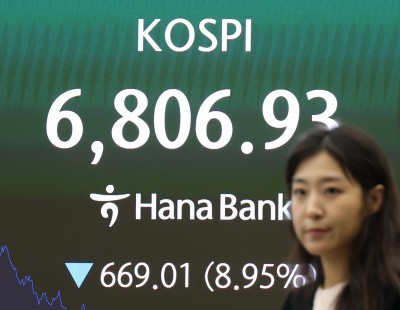
In the KOSPI market, a sidecar was triggered followed by a circuit breaker, marking the 7th such instance this year and the 13th in history.
Market Characteristics and Key Drivers

Plunge in Large-Cap Semiconductor Stocks
The primary driver behind the KOSPI’s sharp decline is the poor performance and dimming outlook for semiconductor giants like Samsung Electronics and SK hynix. Because these stocks make up a significant portion of the index, their heavy losses had a massive impact on the overall market.
Simultaneous Selling by Foreigners and Institutions
The market sentiment deteriorated rapidly due to massive sell-offs by foreign and institutional investors. Analysts suggest this reflects global economic uncertainty and a pessimistic outlook for the semiconductor sector.
Key Supply-Demand and Economic Issues
1. Semiconductor Sector Earnings Shock
The underwhelming Q2 earnings reports from Samsung Electronics and SK hynix delivered a major shock to the market. Related stocks fell across the board as concerns grew over supply-demand imbalances in the memory semiconductor market.
2. Global Macroeconomic Instability
The Federal Reserve's renewed focus on inflation, confirmed in the recent FOMC minutes, negatively impacted the domestic market. Discussions regarding potential interest rate hikes have heightened investors' risk-aversion sentiment.
3. Escalating Geopolitical Risks
Rising geopolitical tensions in the Middle East have added to the uncertainty. This has acted as a factor that further dampens investor sentiment regarding the global economy.
Market Summary and Outlook
The domestic stock market faced a "Black Monday" on July 13, 2026. Weak earnings in the semiconductor sector acted as the trigger, which was then amplified by joint selling from foreign and institutional investors. The fact that the KOSPI fell below the 7,000 line for the first time in two months and triggered a circuit breaker serves as a clear signal of serious market weakness. It is a result of global economic uncertainty coinciding with structural difficulties in the semiconductor industry, leaving investors in a state of extreme risk aversion.
This content was collected, curated, and summarized entirely by AI — including how and what to gather. It may contain inaccuracies. Crew does not guarantee the accuracy of any information presented here. Always verify facts on your own before acting on them. Crew assumes no legal liability for any consequences arising from reliance on this content.
Powered by
