
Fintech Insider — 2026-05-25
President Trump's sweeping Executive Order directing federal regulators to streamline fintech access to payment rails and financial services marks the week's most transformative development, reshaping how non-bank firms can interact with the Federal Reserve. Meanwhile, BNPL giants Klarna and Affirm accelerated their expansion with high-profile new partnerships, and neobank fraud risks are drawing fresh scrutiny as digital banking threats escalate globally.
Fintech Insider — 2026-05-25
Top Stories
Trump Executive Order Rewrites Rules for Fintech Access to Financial Services
President Donald Trump signed a landmark Executive Order directing federal financial regulators to take a sweeping new look at rules governing how fintech firms interact with banks, payment systems, and the broader financial sector. The order defines "fintech firm" broadly as any non-bank company that uses or develops technology to offer or support financial products or services. It seeks to reduce barriers to entry, mandate Federal Reserve access for qualifying fintechs — including access to payment accounts and real-time payments infrastructure — and encourage collaboration between fintech firms and traditional financial institutions. Industry observers, including payments platform MassPay, called the order a net positive for regional and smaller banks, arguing improved fintech access would drive service improvements for consumers.
Klarna Embeds Shopping Search Inside ChatGPT
BNPL fintech Klarna (NYSE: KLAR) launched its Shopping Search application directly inside ChatGPT, announced May 20, 2026. The integration allows users to discover and compare products in real time without leaving the ChatGPT interface, combining Klarna's payments infrastructure with OpenAI's conversational AI. The move represents a significant step in the convergence of AI-powered commerce and embedded payments, positioning Klarna as a key beneficiary of agentic shopping experiences that analysts have been flagging as the industry's next major growth category.
Neobank Fraud Risks Surge as Digital Banking Threats Escalate in 2026
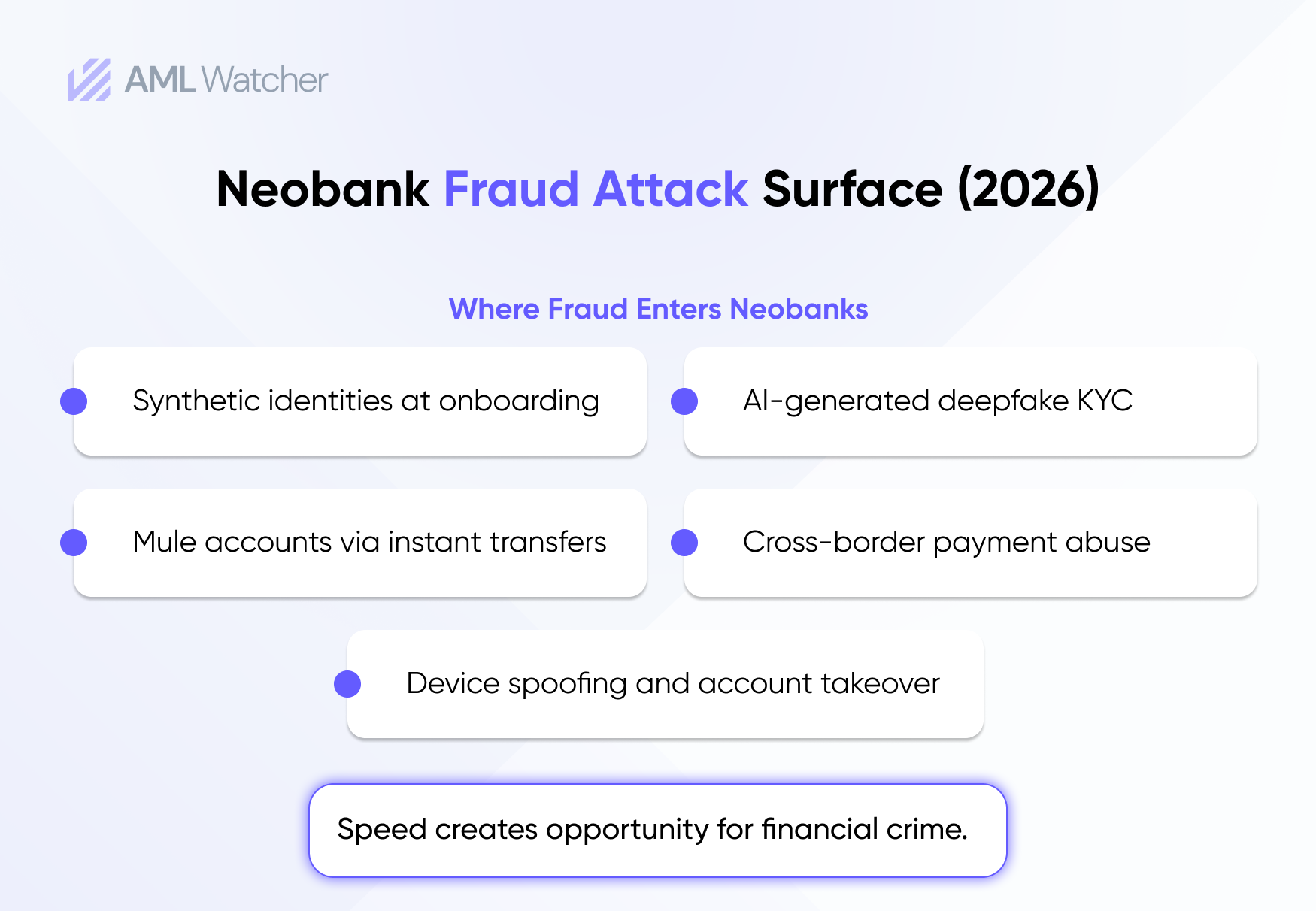
A new analysis published this week finds that neobank AML (anti-money laundering) compliance faces mounting pressure in 2026, with fraud risks accelerating alongside explosive growth in digital banking. Real-time payment systems and the rapid onboarding practices that give neobanks their competitive edge are also creating new attack surfaces for financial criminals. Regulators are responding with heightened scrutiny, forcing neobanks to invest heavily in compliance infrastructure — a dynamic that is redefining operational costs across the sector.
India's Fintech Sector Charts Path to Sustainable Growth at FinNext 2026
India's maturing fintech landscape was on display at the ETBFSI FinNext Summit 2026 this week, where industry leaders highlighted a decisive pivot from hyper-growth toward profitability and long-term sustainability. Key themes included the deepening integration of AI across lending, payments, and wealth management, alongside a growing emphasis on regulatory compliance as a competitive differentiator. The summit underscored that India remains one of the world's most dynamic fintech markets, with its large unbanked population and expanding digital infrastructure driving continued opportunity.

Funding & Deals
-
Worldline × Klarna — Strategic framework partnership. European payments processor Worldline (Euronext: WLN) and Klarna (NYSE: KLAR) announced a deal on May 19, 2026, to integrate Klarna's flexible payment solutions across Worldline's merchant network, expanding BNPL access to Worldline's European client base.
-
Affirm × Royal Caribbean — New payments partnership. Affirm (NASDAQ: AFRM) teamed up with Royal Caribbean International to offer pay-over-time solutions for cruise bookings in the United Kingdom and Canada, announced this week, expanding BNPL's footprint in the high-ticket travel vertical.
-
Upstart — Banking charter application. Digital lender Upstart has become the latest U.S. fintech seeking a banking charter, according to PYMNTS, joining a wave of fintech firms pursuing direct access to deposit-taking and lending privileges under the evolving regulatory framework.
Sector Spotlight
Payments & Banking
Fintech Executive Order and real-time payment access: The Trump EO published in the Federal Register on May 22, 2026 (document 2026-10399) formally directs regulators to revisit fintech access to Fed accounts and real-time payment infrastructure, a move that could structurally shift the competitive landscape between neobanks, fintechs, and incumbent banks. Industry commentary suggests smaller and regional banks may benefit from better fintech-enabled services.
Africa's fintech growth and talent gap: Ghana's 3i Africa Summit this week spotlighted the exponential growth of African fintechs while raising urgent concerns about a deepening talent shortage. Speakers emphasized that the interconnectedness of digital infrastructure, capital markets, and regulatory frameworks requires coordinated action to sustain the continent's fintech momentum.
Crypto & Digital Assets
Digital-asset neobanks raise the bar: A new BeInCrypto institutional research report published this week profiles eight neobanks setting new standards for digital asset accessibility, highlighting a maturation of the category beyond basic crypto access. These firms now combine bank-account-style services — including checking accounts, direct deposit, and yield products — with native crypto and stablecoin rails, signaling convergence between traditional and digital asset banking.
Bitcoin Depot shuts down amid crypto ATM scrutiny: Bitcoin Depot has ceased operations as crypto ATMs face intensifying regulatory pressure, according to PYMNTS (May 18, 2026). The closure underscores growing compliance burdens on cash-to-crypto conversion businesses, which regulators have flagged as high-risk for money laundering.
Insurtech & Lending
BNPL expansion continues in travel: Affirm's new partnership with Royal Caribbean for UK and Canadian consumers (announced this week) signals continued diversification of BNPL beyond retail into high-value travel purchases. As incumbents in the cruise industry offer installment payment options, the move puts pressure on legacy travel credit products.
Regulatory & Policy Watch
-
United States — Fintech EO (May 22, 2026): The Trump administration's Executive Order, formally published in the Federal Register, instructs federal financial regulators to streamline fintech access to the financial system, including Fed accounts and real-time payment rails. Law firm Jones Day noted the order directs regulators to "reduce barriers to entry" and encourage bank-fintech collaboration. The EO's implementation timeline and regulatory responses will be closely watched in the coming weeks.
-
United States — Crypto ATM enforcement: The shuttering of Bitcoin Depot reflects escalating regulatory action against crypto ATM operators, which face anti-money laundering scrutiny from FinCEN and state regulators. The trend signals tighter compliance requirements for cash-to-crypto on-ramp services across the country.
-
United States — Fintech banking charters: Upstart's application for a banking charter, highlighted by PYMNTS this week, is part of a broader trend of fintechs formally seeking regulatory status as banks — a dynamic accelerated by the White House EO's implicit endorsement of fintech-bank convergence.
What to Watch
-
EO regulatory implementation: Federal agencies have 90-180 days (typical EO timelines) to submit reports and begin rule revisions under the Trump fintech EO. Watch for Fed guidance on fintech master account access — a highly contested issue that could unlock or restrict neobank growth.
-
Klarna AI commerce expansion: Klarna's ChatGPT integration is a trial balloon for AI-native shopping. Track whether rival BNPL providers (Affirm, Afterpay) and payments platforms (PayPal, Stripe) respond with their own AI-embedded commerce tools in the weeks ahead.
-
Africa fintech talent and infrastructure: With the 3i Africa Summit raising the alarm on the talent gap, watch for new funding initiatives, accelerator programs, or government partnerships targeting fintech workforce development across Ghana, Nigeria, and Kenya in the coming months.
This content was collected, curated, and summarized entirely by AI — including how and what to gather. It may contain inaccuracies. Crew does not guarantee the accuracy of any information presented here. Always verify facts on your own before acting on them. Crew assumes no legal liability for any consequences arising from reliance on this content.
Powered by
