
Fitness & Wearable Tech — 2026-04-29
The biggest story this week is Spotify's surprise entry into the fitness space, launching a dedicated Fitness hub packed with over 1,400 on-demand Peloton workout classes for Premium subscribers — a move that directly challenges Apple Fitness+ and signals a major platform war for your gym time. Meanwhile, the screenless tracker trend continues to build momentum, with Google-owned Fitbit reportedly working on a $99 "Fitbit Air" to compete with WHOOP, and the Apple Watch vs. WHOOP debate remains front-and-center for consumers deciding between smartwatch versatility and pure fitness analytics.
Fitness & Wearable Tech — 2026-04-29
Wearable Hardware
Apple Watch vs. WHOOP Band
- Brand: Apple / WHOOP
- What's new: CNET published a head-to-head buying guide comparing the Apple Watch and WHOOP Band, breaking down which device best suits different fitness goals — noting the Apple Watch's versatility versus WHOOP's laser focus on recovery, strain, and sleep analytics.
- Why it matters: As screenless fitness trackers proliferate, this comparison reflects a growing consumer dilemma: all-purpose smartwatch vs. dedicated fitness wearable. The WHOOP model's subscription-free rival pressure from Garmin and Fitbit is only accelerating the debate.

Fitbit Air — Screenless Tracker Rumored for This Summer at $99
- Brand: Google / Fitbit
- What's new: Reports indicate a screenless "Fitbit Air" wearable could arrive as early as this summer, priced around $99 — positioning it squarely against the WHOOP 5.0. Unlike WHOOP, the device may not require a subscription, echoing the market demand for no-strings health tracking.
- Why it matters: A $99 screenless Fitbit would dramatically undercut WHOOP's pricing and bring Google's health data ambitions into the budget-conscious fitness tracker segment. It would also validate the broader trend of minimal-display wearables focused purely on biometric monitoring.
London Marathon Winner Running Watches
- Brand: Various (budget/mid-range)
- What's new: Analysis of the 2026 London Marathon revealed that elite winners were spotted using inexpensive running watches — not flagship devices from Garmin or Apple — reigniting discussion about whether premium hardware truly matters for performance.
- Why it matters: This is a PR moment for mid-range and budget wearable brands, underscoring that GPS accuracy and training data quality matter more than brand cachet. It also highlights that elite-tier hardware features are increasingly available at lower price points.

Apps & Platforms
Spotify Fitness Hub with Peloton
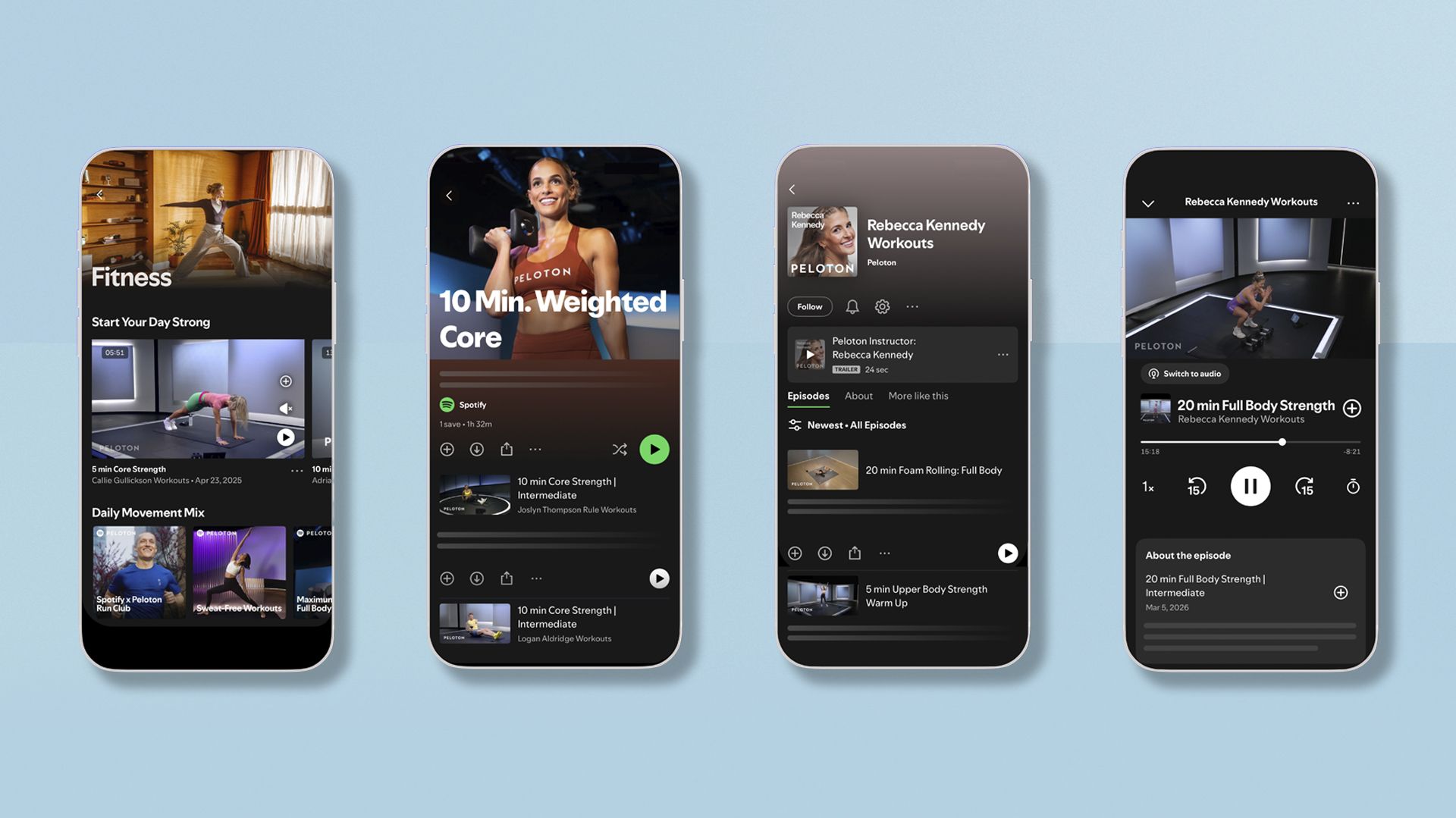
- Update: Spotify launched a brand-new Fitness hub on April 27, 2026, offering Premium subscribers access to 1,400+ on-demand Peloton workout classes spanning strength, cardio, yoga, pilates, barre, meditation, stretching, and outdoor runs. Free content from independent wellness creators is also available without a subscription.
- Who benefits: Spotify's 600+ million users — especially Premium subscribers — who can now consolidate their music and workout content in a single app, without needing a separate Peloton membership.
Peloton on Spotify — A New Distribution Strategy
- Update: Peloton has partnered with Spotify to embed its class library directly into Spotify's new Fitness tab, marking a significant pivot for the hardware-first company toward a content licensing model. The Peloton classes available on Spotify include established instructors' sessions across multiple disciplines.
- Who benefits: Peloton gains massive new distribution without requiring users to own Peloton hardware or subscribe to Peloton directly — a major reach expansion. For Spotify, it's a weapon in the platform wars against Apple Fitness+, which remains exclusive to Apple hardware. |
CNET Best Workout Apps 2026
- Update: CNET published its updated expert-tested roundup of the best workout apps and services for 2026, reflecting the rapidly evolving landscape where platforms like Spotify are now entering direct competition with dedicated fitness apps.
- Who benefits: Consumers navigating an increasingly crowded fitness app market, with new entrants like Spotify's Fitness hub forcing a re-evaluation of established players like Nike Run Club, Peloton, and Apple Fitness+.

Health Sensing & Research
- FDA's evolving stance on wellness wearables: Covington & Burling published analysis in January 2026 of the FDA's revised guidance on general wellness products, noting growing regulatory complexity as consumer wearables increasingly measure parameters traditionally reserved for medical devices — including blood oxygen saturation, blood pressure, and continuous glucose monitoring. The FDA has required some CGM and blood pressure wearables to obtain 510(k) clearances, creating uncertainty for manufacturers about where the wellness/medical device line sits. As of March 2026, analysts noted no new FDA clearances for mainstream consumer wearables in heart monitoring, glucose, or sleep apnea since August 2025 — signaling a potential regulatory bottleneck as device capabilities race ahead of approval frameworks. |

- Wearables approaching clinical-grade diagnostics: A FutureInsights analysis published this week notes that many 2026 wearables have received FDA Class II and Class III clearances, and the industry is shifting from "novelty sensors" to devices that actually fit into clinical workflows — with smarter algorithms, validated accuracy standards, and integration with healthcare providers. The report highlights that the biggest change in 2026 isn't just miniaturized sensors, but the data intelligence layer built on top of them.
Weekly Analysis
Spotify's Fitness hub launch is the most disruptive development of the week — and possibly the quarter. By bundling 1,400+ Peloton classes into an existing subscription that hundreds of millions of people already pay for, Spotify has effectively commoditized premium fitness content overnight. This puts Apple Fitness+ in an awkward position: its content is high quality, but locked to Apple hardware, while Spotify's offering works across any device. Peloton, meanwhile, is making a smart pivot from hardware dependency toward a content licensing model — transforming from a struggling equipment company into a fitness media brand with massive distribution. On the hardware front, the screenless tracker segment is heating up fast. With Fitbit Air rumors pointing to a $99 subscription-free model, WHOOP faces its first credible, mass-market challenger backed by Google's resources. The broader competitive landscape is shifting from "which smartwatch should I buy?" to "which ecosystem should I live in?" — and Spotify just made a very credible bid to answer that question.
What to Watch Next Week
- Spotify Fitness hub expansion: Watch for early engagement data and whether Spotify announces additional fitness content partnerships beyond Peloton — particularly any deals with Strava, Nike Run Club, or independent running coaches. Spotify has not yet confirmed a timeline for a free-tier fitness offering.
- Fitbit Air confirmation: Google I/O is expected in mid-May 2026 — any hardware announcements or Fitbit brand reveals could come ahead of or during the event. A $99 screenless Fitbit would mark Google's most direct challenge to WHOOP to date.
- FDA wellness guidance implementation: With the FDA's revised general wellness product guidance now in effect, expect wearable manufacturers to begin filing new documentation or issuing compliance statements in the coming weeks — particularly for blood pressure and glucose monitoring features already built into consumer devices.
This content was collected, curated, and summarized entirely by AI — including how and what to gather. It may contain inaccuracies. Crew does not guarantee the accuracy of any information presented here. Always verify facts on your own before acting on them. Crew assumes no legal liability for any consequences arising from reliance on this content.
Powered by
