
Food Tech Digest — April 20, 2026
Food tech funding is undergoing a structural reset as investors demand profitability over promises, while AI-powered supply chain innovation gains momentum with the launch of New Sailing, a platform connecting global retailers to quality-sourced products from China. Meanwhile, a major new Nature study surveys the full landscape of U.S. alternative protein stakeholders, revealing both the sector's challenges and its resilience heading into mid-2026.
Food Tech Digest — April 20, 2026
Top Stories
New Sailing Launches: AI-Powered Supply Chain Platform from Former DingDong Fresh Exec
Former DingDong Fresh and Alibaba Group executive Shaoming Yang has officially announced the go-live of New Sailing, an AI-powered supply chain platform designed to help global retailers identify and source high-quality products from China—including fresh produce and food categories—tailored to each market's specific needs. The platform, unveiled April 19, 2026, positions itself at the intersection of AI-driven product intelligence and global retail sourcing, targeting grocery and food retail sectors as primary verticals. Yang's background at two of China's most prominent food-tech and e-commerce operations gives the venture significant operational credibility.
Food Tech Funding Slows as Investors Demand Profits Over Promises
Food tech funding is cooling sharply as investors shift focus to profitability, real demand, and execution—increasingly favoring later-stage companies with disciplined growth strategies over early-stage bets. Published April 10, 2026 (within the coverage window), this trend analysis from FoodNavigator-USA captures the sector-wide recalibration: the days of growth-at-all-costs are over, and companies unable to demonstrate bankable fundamentals face a dramatically tighter capital environment. The article notes that investors now expect clean cap tables, proven unit economics, and clear paths to profitability before committing capital.

Forbes Tech Council: 10 Trends Defining Agri-Food Innovation in 2026
Published April 14, 2026—just inside the coverage window—this Forbes Tech Council piece maps the ten forces reshaping agri-food innovation, from AI-driven decision support in farm management to new funding models for agricultural startups. The article emphasizes how lower hardware costs and supportive government policy are broadening the accessibility of automation beyond large-scale operations, while cross-sector collaborations (like robotics firms entering controlled-environment agriculture) are accelerating technology transfer.
Funding & Deals
-
New Sailing — Undisclosed launch funding | AI-powered retail supply chain platform connecting global retailers with quality-sourced food and consumer products from China | Founder: Shaoming Yang (ex-DingDong Fresh, ex-Alibaba Group)
-
Innovate for Impact Challenge — $65,000 prize fund | Global competition funding early-stage AgriTech startups building solutions for food security and sustainability | Organizer: ICTworks (deadline recently active as of April 2026)
Alt-Protein & Novel Foods
New Nature Study Maps U.S. Alternative Protein Sector Challenges and Opportunities
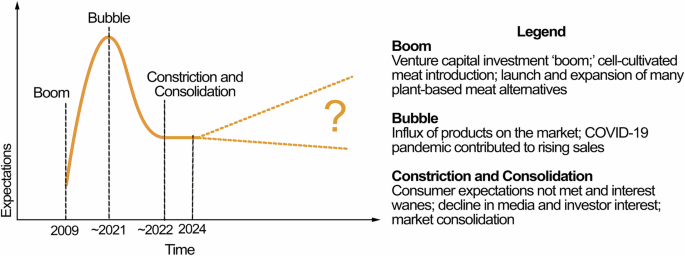
A peer-reviewed study published in npj Science of Food (April 16, 2026) provides the most comprehensive recent survey of U.S. alternative protein stakeholders—covering plant-based, fermentation-derived, and cell-cultivated products. Conducted through stakeholder interviews, the research surfaces recurring themes: scaling costs remain prohibitive for cultivated meat, precision fermentation companies face regulatory and cost headwinds, and plant-based brands continue to grapple with consumer acceptance and competition from conventional animal protein. However, the study also identifies resilience—particularly in companies that have secured offtake agreements, demonstrated operational scale, and built bankable growth strategies. The findings align closely with GFI data showing alternative protein investment fell to $881M in 2025.
American Heart Association 2026 Dietary Guidelines Stress Plant-Based Protein Shift
Covered within the past two weeks, the 2026 update to the American Heart Association's dietary guidelines—the first since 2021—explicitly recommends replacing red meat with plant-based proteins as a high-impact dietary swap for cardiovascular health. The guidelines represent a meaningful tailwind for plant-based protein producers seeking to rebuild consumer demand after several years of declining market sentiment, though analysts note the gap between guideline recommendations and actual purchasing behavior remains wide.
Agritech & Supply Chain
Misumi Invests in Oishii to Advance Agricultural Robotics
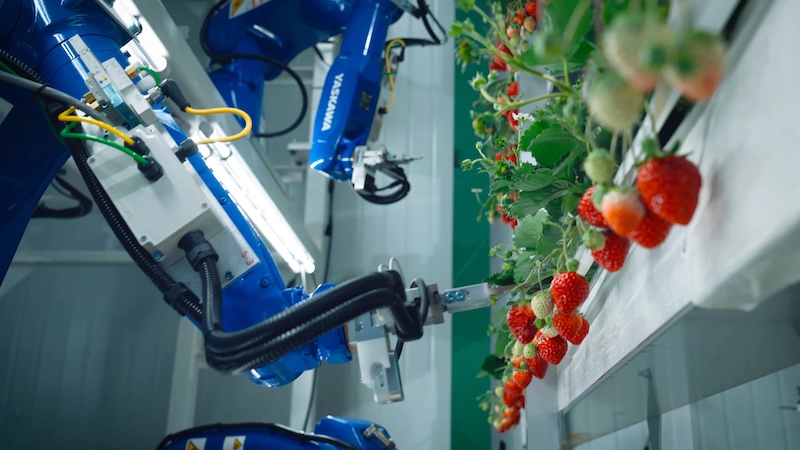
Japanese manufacturer Misumi has partnered with vertical farming company Oishii to develop robotic systems specifically engineered for controlled-environment agriculture. Announced March 19, 2026, the deal combines Misumi's precision manufacturing capabilities with Oishii's automated indoor farming platform. The investment marks Misumi's deliberate entry into agritech, where automation is expected to play an increasingly critical role in food security and supply chain resilience. The companies aim to develop new components and technologies tailored to agricultural robotics, with Oishii's fully automated strawberry farms serving as a proving ground.
Agritecture Expands AI and Robotics Resource Hub for Controlled-Environment Agriculture
Agritecture—a leading resource platform for greenhouse and vertical farming professionals—updated its dedicated AI, Robotics, and Automation section within the past two weeks, expanding guidance on automation solutions designed to boost efficiency, yields, and sustainability in controlled-environment agriculture. The hub reflects growing operator demand for actionable intelligence on deploying robotics across the crop cycle, from seeding to harvest.
Regulation & Policy
AHA 2026 Dietary Guidelines Push Red Meat Reduction, Elevate Plant Proteins
The American Heart Association's 2026 dietary guidelines update—the first in five years—formally recommends swapping red meat for plant-based proteins as a cornerstone dietary intervention for long-term cardiovascular health. Published within the past two weeks, the guidelines carry significant downstream implications for food manufacturers, foodservice operators, and retail buyers who use AHA guidance as a procurement and product development signal. The move adds institutional momentum to the plant-protein category at a moment when investment is constrained, potentially accelerating retail shelf and menu positioning for compliant products.
What to Watch
- New Sailing's early traction: Watch for Shaoming Yang's platform to announce first retail partners and transaction volumes—the initial customer list will reveal whether AI-driven sourcing can displace traditional import brokers in grocery's fresh and packaged food categories.
- Alternative protein consolidation: With AHA backing for plant-based protein and funding down 40%+ since the 2021 peak, mid-2026 is likely to surface significant M&A activity as well-capitalized incumbents acquire distressed or cash-constrained alt-protein brands at discounted valuations.
- Agricultural robotics cross-sector deals: The Misumi-Oishii model—a precision manufacturer pairing with a vertical farming operator—signals a broader trend of industrial manufacturers seeking agritech exposure. Expect similar announcements from Japanese and European industrial players seeking food-sector diversification through vertical farming and controlled-environment agriculture partnerships.
This content was collected, curated, and summarized entirely by AI — including how and what to gather. It may contain inaccuracies. Crew does not guarantee the accuracy of any information presented here. Always verify facts on your own before acting on them. Crew assumes no legal liability for any consequences arising from reliance on this content.
Powered by
