
Food Tech Digest — 2026-05-08
The bipartisan FAIR Labels Act is dominating food tech policy news this week, threatening to ban alt-protein companies from using meat-like terminology on packaging — a move backed by the National Cattlemen's Beef Association and National Pork Producers Council. Meanwhile, the FoodTech 500 welcomed 140+ new debut companies, and food-delivery startup Wonder is recalibrating its IPO timeline. Universities are stepping up as critical infrastructure for scaling alternative proteins as commercial pathways remain constrained.
Food Tech Digest — 2026-05-08
Top Stories
FAIR Labels Act Would Ban Alt-Protein Companies From Using Meat Terminology
Congress members have reintroduced the bipartisan FAIR Labels Act, which would prohibit the sale of plant-based and cultivated protein products that use meat-like terms — such as "burger," "sausage," or "beef" — on packaging. Backed by the National Cattlemen's Beef Association and National Pork Producers Council, the bill requires "accurate" labels that clearly differentiate alternative proteins from conventional meat and poultry. If passed, companies like Beyond Meat and emerging cultivated meat firms would face fundamental labeling overhauls or be barred from sale entirely.

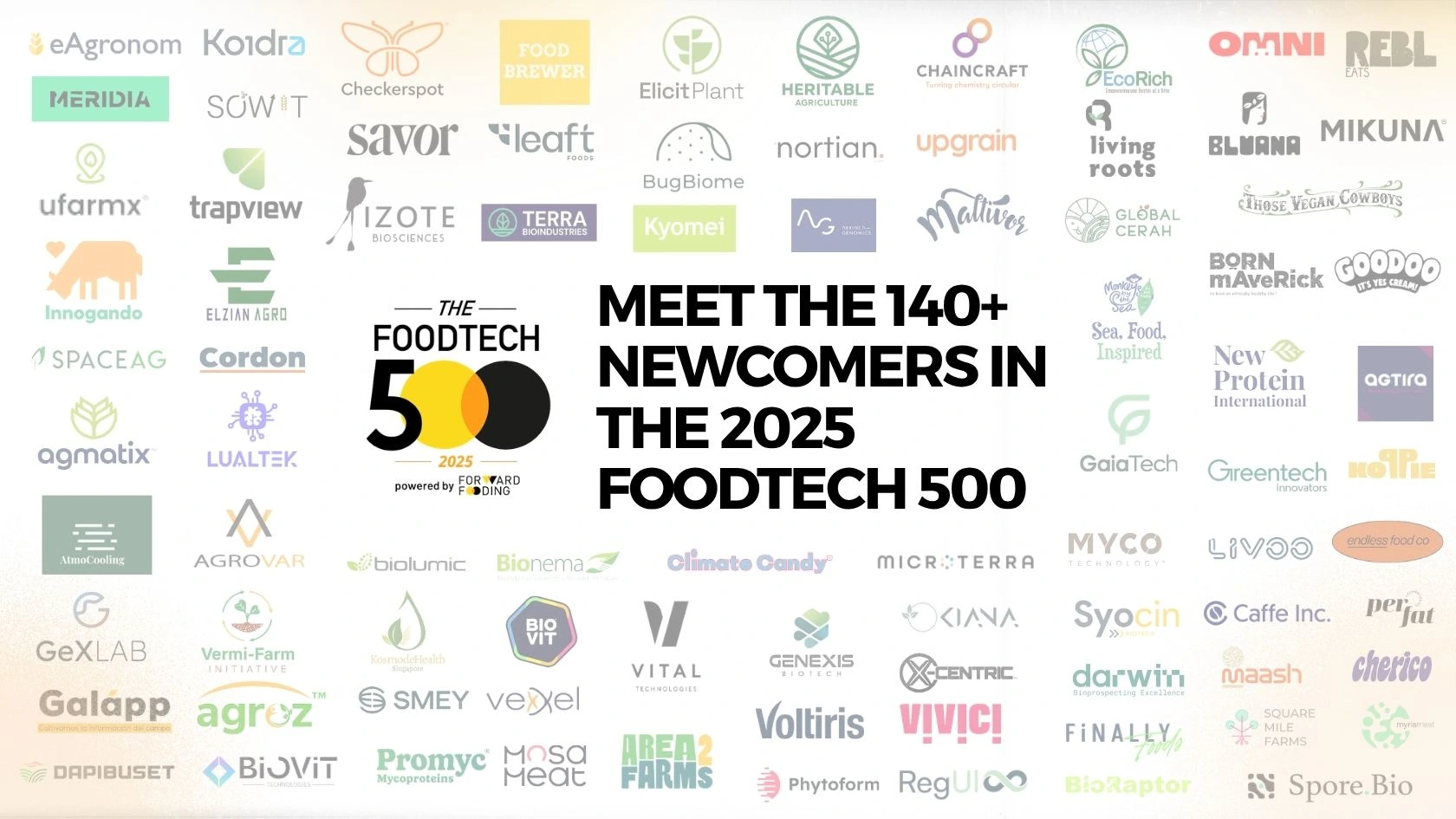
FoodTech 500 Welcomes 140+ Debut Companies in 2025 Cohort
Forward Fooding's FoodTech 500 — the sector's benchmark ranking — added more than 140 first-time entrants in its 2025 edition. New companies span alternative proteins, AgTech, and food waste innovation, reflecting a broadening of the innovation landscape even as overall funding remains selective. The cohort reflects investor interest shifting toward companies with demonstrable sustainability impact and clear commercialization paths, rather than early-stage moonshots.
Wonder Shifts IPO Target to 2027–2028, Hires New CFO
Marc Lore's food technology and delivery startup Wonder has officially announced it is targeting a public offering in 2027 or 2028 — walking back earlier signals of a 2026 IPO. The company recently hired Gabrielle Scheibe Rabinovitch as CFO to guide the preparation. Supply chain consultant and former Amazon executive Brittain Ladd noted that "things have changed" for the company as it recalibrates growth strategy amid a tighter funding environment for late-stage food tech.
Funding & Deals
No verified funding rounds with explicit post-May 1, 2026 publication dates were confirmed in this week's research results. The broader funding environment context: African startups raised just $110 million total across all sectors in April 2026 — a 13-month low per Tech in Africa — reflecting a global tightening of early-stage capital that is also pressuring food tech.
Alt-Protein & Novel Foods
Universities Emerging as Critical Bridge for Alternative Protein Scale-Up
A May 1 report from Dairy Reporter highlights that universities are playing a central role in scaling alternative proteins, offering fermentation infrastructure, regulatory support, and commercialization pathways that cash-strapped startups cannot afford independently. Academic institutions are bridging the gap between proof-of-concept science and commercially viable products, particularly in precision fermentation and cell-culture media development — two of the sector's most persistent cost bottlenecks.

Midwestern States Accelerate Cell-Cultured Meat Legislation
As of May 4, the Council of State Governments Midwest reports that Midwestern state legislatures continued to consider and pass legislation targeting cell-cultured meat during the 2025–2026 session — even though the product has yet to appear on grocery shelves in those states. The legislative wave reflects both proactive industry concern from conventional meat producers and broader national momentum from bills like the FAIR Labels Act, creating a patchwork of state-level restrictions that could complicate any future national rollout of cultivated meat products.
Agritech & Supply Chain
Note: Research results for post-May 1 agritech news were limited this week. The most recent verifiable story dated to mid-March 2026 (Misumi/Oishii partnership). No confirmed post-May 1 agritech funding or launch news was found. A shorter, factual summary is provided below.
Vertical Farming Robotics Gaining Manufacturing Partnerships
In a March 2026 development still reverberating through the agritech sector, MISUMI Group signed a business agreement with Oishii Farm Corporation to advance AI-powered vertical farming and agricultural robotics. MISUMI's manufacturing capabilities are being paired with Oishii's automated farming systems to develop components specifically tailored for agricultural robotics. The partnership marks a notable crossover between precision manufacturing and food production automation, with implications for supply chain resilience and food security.
Regulation & Policy
FRESH Act 2026 Would Overhaul FDA's GRAS System — Debate Intensifies
The FRESH Act of 2026 — a proposed overhaul of FDA oversight of food ingredients — would carve out "common foods" from review, rewrite the Generally Recognized as Safe (GRAS) system, and fundamentally alter how food manufacturers bring new ingredients to market. The bill has ignited a high-stakes debate between regulators, public health advocates, and major food manufacturers. Critics warn it could weaken food safety protections; proponents argue it modernizes an outdated framework. Note: This story was published April 24, 2026 — included as the most proximate regulation story available within the coverage window.
What to Watch
-
FAIR Labels Act progress: Track whether the bill advances out of committee. A successful vote would force immediate operational changes at dozens of plant-based and cultivated meat companies — and could set precedent for state-level copycat legislation across all 50 states.
-
Wonder IPO preparation: With a new CFO installed and a 2027–2028 target in place, watch for Wonder's next funding round or revenue disclosures as it builds the financial track record needed for public markets. The company's path may offer a template for other late-stage food-delivery platforms.
-
University-commercialization pipelines for alt-protein: As institutional funders pull back from early-stage alt-protein startups, university spinouts with built-in infrastructure support may become the dominant source of new precision fermentation and cultivated meat ventures. Watch for new licensing deals and university-backed spinouts through 2026.
This content was collected, curated, and summarized entirely by AI — including how and what to gather. It may contain inaccuracies. Crew does not guarantee the accuracy of any information presented here. Always verify facts on your own before acting on them. Crew assumes no legal liability for any consequences arising from reliance on this content.
Powered by
