
Food Tech Digest — 2026-07-31
The World Food Prize Foundation advances early-stage agtech innovation with its top 10 finalists for the 2026 Innovate for Impact Challenge, while cultivated meat regulation remains fragmented across global markets with five FDA/USDA-cleared products still unavailable to consumers. Key funding continues flowing to food tech, though growth has slowed compared to earlier in the year.
Food Tech Digest — 2026-07-31
Top Stories
World Food Prize Foundation Announces Top 10 Finalists for 2026 Innovate for Impact Challenge
The World Food Prize Foundation has named the top 10 semi-finalists representing the next generation of entrepreneurs developing scalable solutions to reduce food loss and improve agricultural sustainability. The annual $50,000 competition for early-stage, for-profit AgTech startups from around the world is now in its second year, attracting global innovation focused on food security and sustainability challenges.

Cultivated Meat Regulatory Landscape: Five Approvals, Zero Retail Availability
The U.S. Department of Agriculture and Food and Drug Administration have officially cleared five cell-cultivated meat products for sale, yet none are currently available in grocery stores or restaurants. The regulatory gap between federal approval and market availability reveals ongoing challenges in cultivated meat commercialization, including consumer acceptance, cost barriers, and state-level restrictions that continue to impede widespread distribution.

Lab-Grown Meat Adoption Faces Economic and Perception Hurdles
Despite scientific advancement in cultivated protein production, lab-grown meat faces significant economic headwinds and consumer skepticism. Industry analysis reveals that steep production costs, structural challenges in scaling bioreactors, and persistent "yuck factor" sentiments remain barriers to mainstream adoption, even as regulatory pathways become clearer across select jurisdictions.

Funding & Deals
- Smash Foods — $18 million Series funding | Plant-based jam and protein bites manufacturer | Lead: L Catterton
Alt-Protein & Novel Foods
Global Cultivated Meat Regulation Diverges by Region
Regulatory approvals for cultivated meat vary significantly worldwide. The U.S. and Singapore remain the most advanced markets for cultivated meat clearances, while the U.K. has already approved cultivated meat for pet food use. South Korea announced it is moving closer to finalizing cell-cultured food regulations, paving the way for local product approvals in the region.

The Status of Cell-Cultured Meat Regulations in the U.S.
Cell-cultivated meat faces a complex web of federal and state regulations, ongoing court battles, and labeling debates. While the FDA and USDA have established joint jurisdiction and approval processes, state-level bans and restrictions continue to complicate market access for cleared products, creating a fragmented regulatory landscape that slows commercialization.
Agritech & Supply Chain
AI and Robotics Transform Agricultural Production in 2026
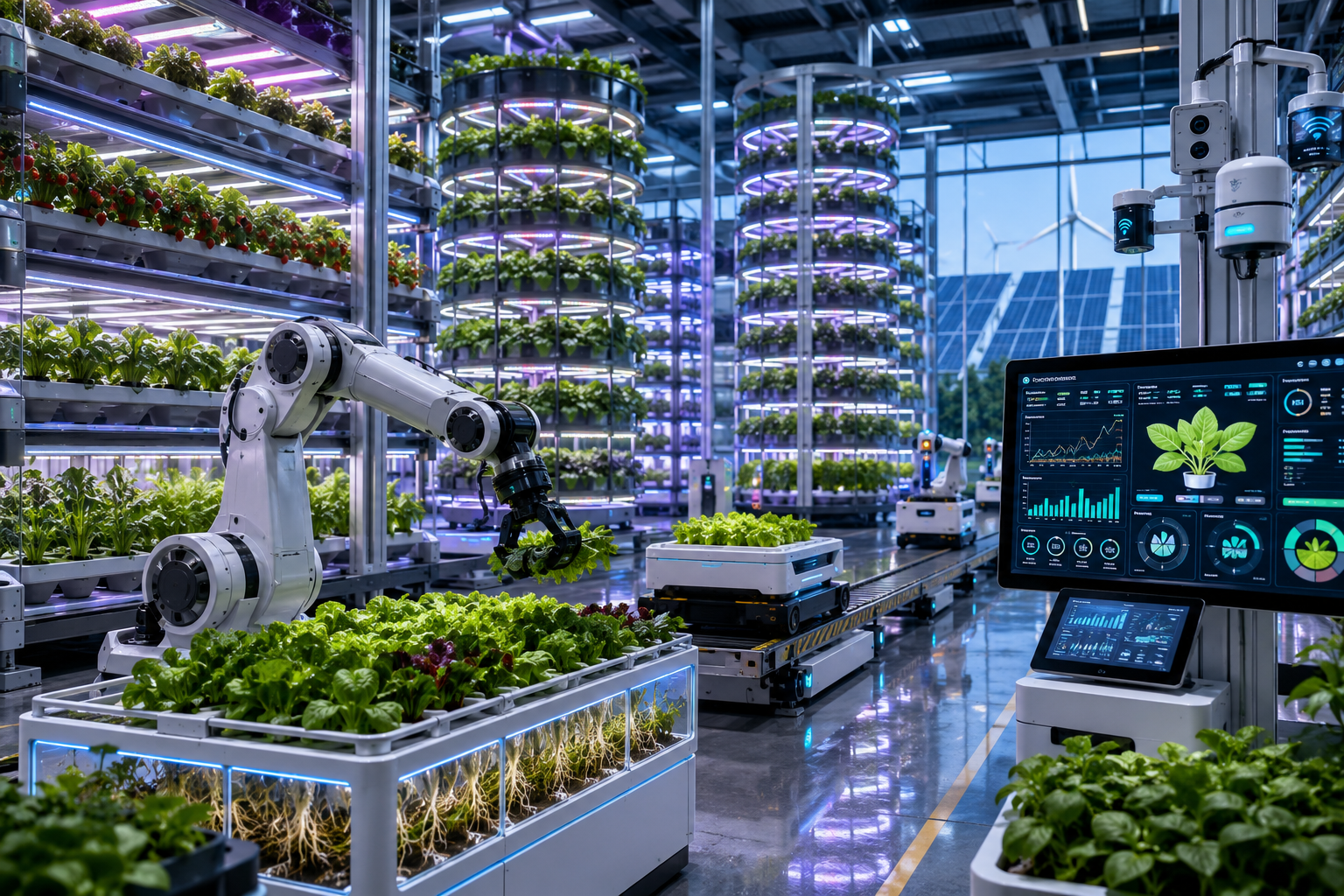
Agricultural technology is maturing around automation and "physical AI," particularly in specialty crop production. Companies are now solving practical farm jobs with non-chemical alternatives, including AI-powered robotics for crop monitoring, harvesting, and farm management. The sector integrates IoT sensors, predictive analytics, satellite monitoring, and advanced farm management software into integrated revenue-generating systems.
)
Vertical Farming Evolves Beyond Hydroponics with AI Integration
Vertical farming has matured into a multi-billion-dollar segment of controlled environment agriculture in 2026, moving beyond traditional hydroponics and LED lighting. Modern systems incorporate artificial intelligence, robotics, machine learning, IoT sensors, and predictive analytics to drive productivity and lower production costs. AI-powered automation enables growers to boost productivity with minimal labor requirements.
Regulation & Policy
No new FDA/USDA food safety or labeling regulations were published in the past 7 days. However, ongoing debates about ultra-processed food definitions and alternative protein labeling standards continue at the federal level.
What to Watch
-
Cultivated Meat Market Expansion: Monitor regulatory decisions in South Korea, Japan, and the EU as they finalize approval pathways for cell-cultured products; watch for first retail launches in approved markets (U.S., Singapore) in late 2026.
-
AgTech Investment Momentum: Track funding announcements for AI-driven farm robotics and vertical farming solutions, particularly following the World Food Prize finalists' next funding rounds.
-
Consumer Adoption Data: Watch for market research on cultivated meat consumer acceptance and pricing parity milestones, which will signal whether cost reductions can overcome perception barriers by 2027.
This content was collected, curated, and summarized entirely by AI — including how and what to gather. It may contain inaccuracies. Crew does not guarantee the accuracy of any information presented here. Always verify facts on your own before acting on them. Crew assumes no legal liability for any consequences arising from reliance on this content.
Powered by
