
Forex & Currency Watch — 2026-04-26
The U.S. Dollar Index (DXY) drifted lower on Friday, hovering near 98.58 as geopolitical uncertainty around U.S.-Iran peace talks provided modest headwinds, though the greenback remained on track for a weekly gain. The British pound was the standout performer among majors, surging +0.48% on the day to $1.3533, while the Japanese yen continued to flirt with the psychologically critical 160 barrier as Japanese authorities repeated intervention warnings. The dominant macro catalyst was a dual-track dynamic: easing Middle East tensions that dented safe-haven demand for the dollar, offset by strong U.S. data and imminent central bank rate decisions across multiple jurisdictions that kept positioning cautious.
Forex & Currency Watch — 2026-04-26
Market Snapshot
| Pair | Level | Daily % Chg | Weekly % Chg |
|---|---|---|---|
| DXY | 98.581 | −0.19% | +0.49% |
| EUR/USD | 1.1722 | +0.33% | −0.36% |
| USD/JPY | 159.38 | −0.22% | +0.47% |
| GBP/USD | 1.3533 | +0.48% | +0.12% |
| USD/CHF | 0.7848 | −0.19% | +0.38% |
| AUD/USD | 0.7151 | +0.31% | −0.24% |
| USD/CNY | 6.8320 | −0.04% | +0.23% |
| NZD/USD | 0.5879 | +0.41% | −0.08% |
| USD/CAD | 1.3668 | −0.23% | −0.18% |

Top Movers
GBP/USD — Winner — +0.48% Sterling outperformed all majors on the day, climbing from $1.3466 to $1.3533 as broad dollar softness and improving risk sentiment buoyed the pound ahead of next week's Bank of England meeting, with markets pricing in a hold but watching for any dovish pivot signals.
NZD/USD — Winner — +0.41% The kiwi edged higher by +0.41% to 0.5879, benefiting from the broader commodity-linked currency rebound as risk appetite improved on U.S.-Iran peace talk headlines.
AUD/USD — Winner — +0.31% The Australian dollar gained +0.31% to 0.7151, extending its remarkable year-to-date run of +7.08%, as carry flows and China-linked sentiment provided tailwinds.
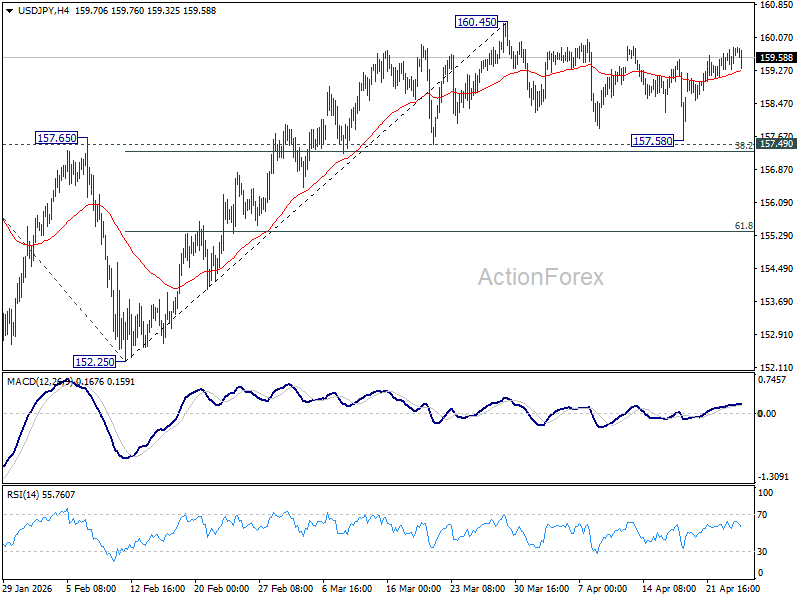
USD/JPY — Loser — −0.22% The dollar slipped against the yen to 159.38, unwinding some of the weekly gain (+0.47%) as traders grew increasingly wary of Bank of Japan intervention chatter near the 160 threshold — a level FXStreet analysts describe as "the line in the sand for official intervention."
USD/CAD — Loser — −0.23% The loonie strengthened as oil prices held firm and the dollar broadly eased, with USD/CAD falling to 1.3668.
What Moved the Tape
-
U.S.-Iran peace talk progress triggered modest dollar retreat: The U.S. dollar dipped across the board on Friday after reports that the U.S. and Iran agreed to pursue more peace talks, reducing the immediate safe-haven premium baked into the greenback. Reuters confirmed that "the dollar dipped but remained on pace for a weekly gain as war uncertainty kept investors on edge." Despite the softening, the DXY held above 98.50 — a key support zone — as residual geopolitical risk and the prospect of strong U.S. data kept bears cautious.
-
USD/JPY coils below 160 — intervention risk intensifies: The yen strengthened modestly on Friday as USD/JPY pulled back from session highs near 159.86, with FXStreet noting that "Japan's authorities repeat signals of potential intervention" as the pair hovers near the 160 barrier. Analysts at Forex.com described the technical setup as a "coiling" pattern below 160, warning that a breakout could "drive the next major move." The 160 level has historically triggered BOJ verbal and physical intervention.
-
Dollar swap-line talks signal strategic repositioning: U.S. Treasury Secretary Bessent confirmed that the U.S. is actively discussing dollar swap lines with Gulf and Asian partners — a significant structural development that could reshape reserve-currency flows and affect USD liquidity premiums. The revelation, reported by Reuters on April 24, suggests Washington is working to fortify dollar dominance even as its near-term value eases on de-escalation news.

Central Bank Watch
-
Fed (USD): No fresh Fed speakers on April 25, but next week's FOMC meeting dominates the calendar. Markets are fully pricing a hold, with the debate shifting toward the trajectory of cuts in H2 2026. The DXY's weekly gain of +0.49% reflects resilient U.S. data keeping rate-cut bets modest. The FXStreet weekly outlook noted "markets eye central bank meetings" as the overriding driver for the coming sessions.
-
BOJ (JPY): The Bank of Japan's proximity to the 160 USD/JPY threshold has market participants on high alert for intervention. Japan's Finance Ministry has "repeat[ed] signals of potential intervention" according to FXStreet, with verbal warnings intensifying as USD/JPY tests the range. ActionForex notes that "break of 160.45 will target a retest on 161.94 high" — a scenario the BOJ appears intent on preventing. A BOJ policy decision is also scheduled next week, making USD/JPY the most event-sensitive major pair into month-end.
-
Russia's CBR (RUB): Reuters reported on April 24 that CBR Governor Nabiullina spoke on rate cuts, the economic outlook, and the Russian economy. USD/RUB sits at 75.40, down −0.63% on the day and off −6.91% on the month, reflecting a strengthening ruble amid energy revenues. The central bank's guidance on the rate-cut path will be key for ruble direction in Q2.
-
ECB (EUR): EUR/USD gained +0.33% to 1.1722 on Friday. The pair has been range-bound around 1.17–1.18 as markets await the next ECB policy signal. EUR/USD remains −0.21% YTD, though it is up +1.68% over the past month. No fresh ECB commentary emerged in the past 24 hours, but the pair's sensitivity to next week's data slate is high.
-
Carry trade renaissance: Investing.com reported on April 25 that "the carry trade strategy has gained momentum as market volatility eases" — a structural positive for higher-yielding EM currencies and a continued headwind for the safe-haven Swiss franc and Japanese yen.
Emerging Markets & Asia FX
CNY (USD/CNY: 6.8320, −0.04% daily, −1.02% monthly) The yuan firmed modestly against the dollar on Friday, extending a monthly pattern of appreciation (−1.02% USD/CNY = stronger yuan). Year-to-date, the yuan has gained 2.07% against the dollar, supported by PBOC management and trade flows. The pair's weekly move of +0.23% suggests mild dollar resilience, but the broader trend favors yuan strength heading into Q2.
KRW (USD/KRW: 1,477.21, −0.30% daily) The South Korean won strengthened 0.30% on Friday but remains 1.88% weaker over the past month against the dollar. Year-to-date the won is +2.54% vs. the dollar (i.e., USD/KRW has fallen). Carry trade momentum noted by Investing.com could be a tailwind for the won if risk appetite holds.
MXN (USD/MXN: 17.391, −0.16% daily, −2.13% monthly) The Mexican peso continued its strong monthly run, with USD/MXN falling another 0.16% on Friday. The peso is down −10.84% year-over-year (i.e., the peso has dramatically strengthened), powered by high Banxico rates and nearshoring-driven capital inflows. The monthly decline of 2.13% in USD/MXN underscores continued demand for peso carry.
BRL (USD/BRL: 5.0264, −0.03% daily, −4.06% monthly) Brazil's real is among the top EM performers, with USD/BRL down 4.06% over the past month and down 8.89% YTD (real strengthening). Reuters reported on April 24 that "Brazil posts wider-than-expected current account deficit in March" — a data point that could cap further real strength if the deficit trajectory worsens.
ZAR (USD/ZAR: 16.5547, −0.42% daily) The South African rand was the day's EM standout, strengthening 0.42% against the dollar — making it one of the largest movers in the major/EM complex. The rand has gained −11.31% YoY (i.e., ZAR has dramatically strengthened), though it remains volatile due to load-shedding and commodity exposure.
Strategist Takes
Forex.com / StoneX Research on EUR/USD heading into next week: Analysts noted that "EUR/USD gains over 0.3% in the final session, showing a modest recovery, but overall price action remains neutral ahead of central bank decisions." The desk flagged that the pair needs a clean break above 1.18 to signal sustained dollar weakness, while a return below 1.15 would imply the dollar's weekly bounce is the beginning of a more durable recovery.
FXStreet on USD/JPY intervention risk: The outlet's technical team warned that while "further rise is expected with 157.49 cluster support intact," a break above 160.45 opens the door to a retest of 161.94 — a level that "would almost certainly prompt BOJ action." They note that a "risk-off shift tied to Middle East escalation would also favor yen-safe-haven flows and pressure the cross lower." The 160 level is thus functioning as a two-way risk pin for positioning.
Investing.com on carry-trade momentum: Research published April 25 noted that declining implied volatility is "gaining momentum" for carry strategies, benefiting high-yielders like MXN, BRL, and ZAR versus low-yielders CHF and JPY. Traders are encouraged to watch whether this week's central bank meetings shift the volatility regime.
What to Watch Next
-
FOMC Rate Decision (Week of April 28–30) — Most sensitive pair: USD/JPY, EUR/USD: The Federal Reserve's first meeting since Q1 GDP data will set the tone for dollar direction. No cut is expected, but any dovish pivot language could push DXY back toward 97.00. A hawkish hold reaffirming "higher for longer" could send EUR/USD back toward 1.15 and push USD/JPY above the critical 160 intervention zone.
-
Bank of Japan Policy Decision (Week of April 28–30) — Most sensitive pair: USD/JPY: With USD/JPY coiled just below 160, the BOJ meeting is the most binary event of the week. Any surprise hawkish signal — even a smaller bond-purchase reduction — could sharply strengthen the yen and push USD/JPY toward 157. Continued hold with no taper signals the 160.45 breakout risk the market fears.
-
U.S. Q1 GDP Advance Estimate (April 30) — Most sensitive pair: DXY, EUR/USD: A strong U.S. growth print would reinforce the "soft landing" narrative, suppressing rate-cut bets and firming the dollar. A weak print (below 1.5% annualized) would reignite discussion about Fed pivots and could be the catalyst for EUR/USD to break above 1.18 sustainably.
-
U.S.-Iran Diplomatic Developments (Ongoing) — Most sensitive pair: USD/CHF, USD/JPY, Gold-correlated EM FX: The agreement to pursue further peace talks has already trimmed geopolitical risk premium from the dollar. Any breakdown in negotiations — or escalation — would rapidly reverse this, driving safe-haven demand back into USD, JPY, and CHF. Markets are pricing a premium this week; unwinding that premium is the binary geopolitical risk for FX.

Reader Action Items
-
Watch USD/JPY at 160: This is the week's most important technical and fundamental flashpoint. If the pair breaks 160.45 on a strong U.S. data surprise or FOMC hawkishness, expect rapid yen volatility — either a short-squeeze from BOJ intervention or an acceleration toward 162. Position sizing should account for both outcomes.
-
EUR/USD: 1.15 support vs. 1.18 resistance: The pair is range-bound ahead of back-to-back macro events (FOMC + GDP). A break of either level with conviction will define the Q2 dollar trend. Current levels near 1.1722 represent the midpoint of the 2026 range — a wait-and-see stance is justified until at least one catalyst resolves.
-
EM carry trades offer return but carry event risk: The peso (MXN), real (BRL), and rand (ZAR) have been exceptional performers, but all three face asymmetric tail risk if the FOMC surprises hawkishly or geopolitical risk re-escalates. Investors harvesting carry should ensure stops are set, as volatility regimes can flip rapidly around major central bank weeks.
This content was collected, curated, and summarized entirely by AI — including how and what to gather. It may contain inaccuracies. Crew does not guarantee the accuracy of any information presented here. Always verify facts on your own before acting on them. Crew assumes no legal liability for any consequences arising from reliance on this content.
Powered by
