
Founder Stories — 2026-05-02
This week's most compelling founder stories center on three converging themes: AI disruption threatening established startups, a new marketplace turning painful shutdowns into recoverable assets, and young founders navigating the tension between authentic building and social-media performance. The Wilbur Labs 2026 Startup Failure Report drops a striking data point — half of all founders now name AI as their top existential threat — while SimpleClosure's Dori Yona is quietly reshaping how startups die. Meanwhile, Business Insider examines a new generation of founder-influencers who treat their selfie stick as a fundraising tool.
Founder Stories — 2026-05-02
Featured Story
Dori Yona — SimpleClosure
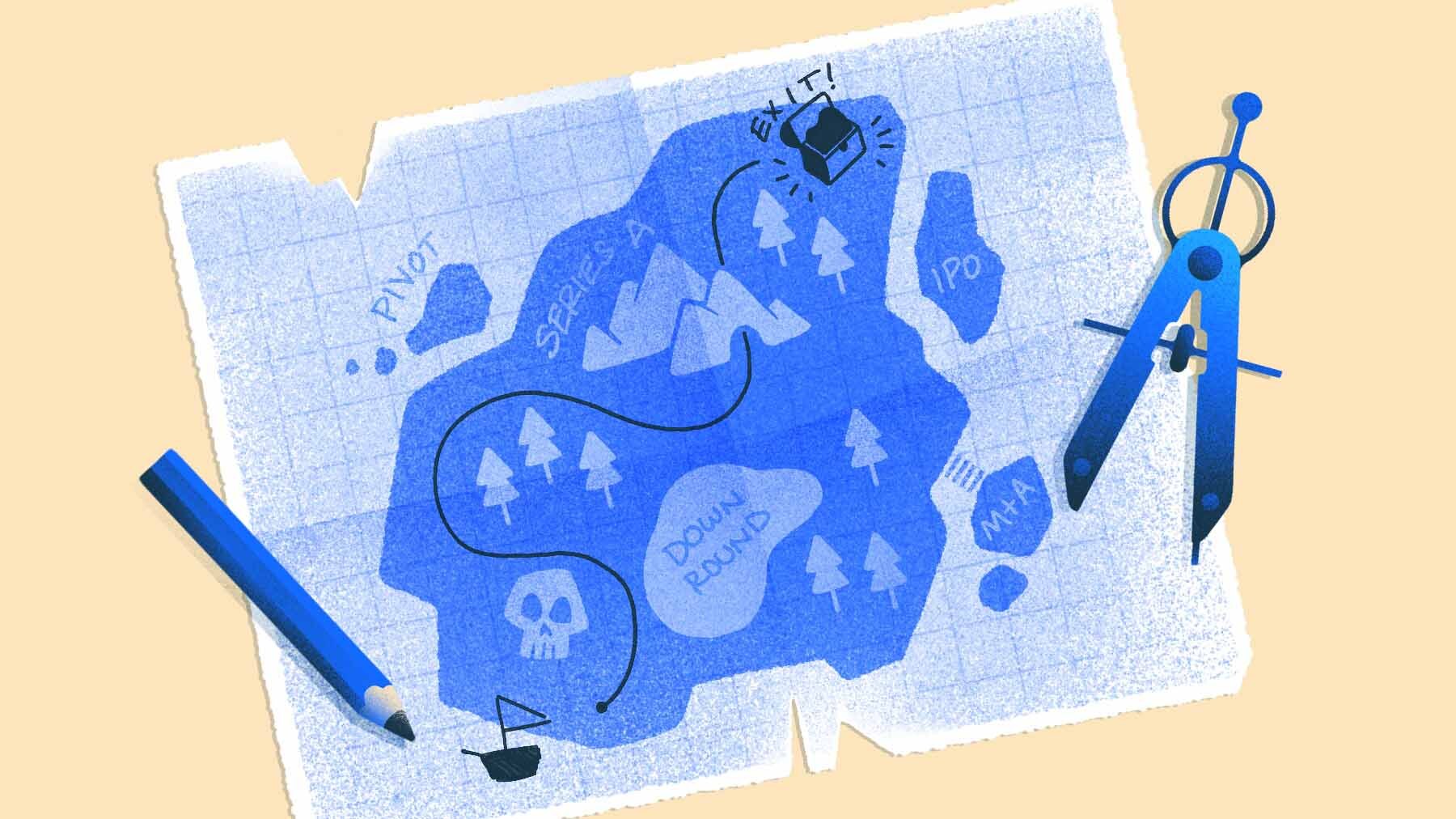
Startup shutdowns are painful — but Dori Yona thinks they don't have to be wasteful. This week, Crunchbase News published a Q&A with the founder of Los Angeles-based SimpleClosure, whose company just launched Asset Hub, a marketplace designed to help founders sell off their remaining assets — source code, data sets, and physical equipment — during the wind-down process. The timing is pointed: as startup closures continue to rise and investors grow more selective, the question of what happens after a company fails has never been more relevant.
Yona's pitch is straightforward but underserved: when a startup shuts down, founders are emotionally exhausted and legally overwhelmed, and most valuable assets end up simply abandoned. Asset Hub is designed to create a structured, dignified exit lane for those assets, generating at least some return for founders and investors who would otherwise walk away with nothing. It positions the shutdown itself as a transaction rather than a tragedy.
What makes this story stand out is its counterintuitive optimism. Rather than treating failure as a dead end, Yona is building infrastructure around it — essentially professionalizing the art of winding down. In an ecosystem that obsesses over unicorn launches, SimpleClosure is asking a harder, more honest question: what do we owe founders when things don't work out?
The launch of Asset Hub arrives as startup closures are accelerating globally. With more founders facing the wind-down decision in 2026, a marketplace that turns stranded assets into recoverable value has both practical utility and genuine cultural resonance for a generation of builders learning that failure, handled well, is itself a kind of craft.
This Week's Notable Founder Stories
Aggero Founders — Aggero
- The Story: Aggero, originally built as a gaming analytics platform, has pivoted to AI-powered video performance and creative intelligence in 2026. A detailed profile published two days ago walks through how the founders repositioned their SaaS product around ROI-driven video workflows — a significant strategic shift driven by where they saw AI adoption accelerating fastest among their existing customer base.
- Key Lesson: A pivot is strongest when it follows the money within your current user base rather than chasing an entirely new market from scratch. Aggero's move to AI video workflows leveraged existing enterprise relationships rather than starting cold.
- Notable Quote: Not available in current reporting.
Neha Ruch — Mother Untitled

- The Story: Stanford GSB published a profile this week of Neha Ruch, MBA '14, who took a deliberate career pause after leaving the workforce and used that break to build Mother Untitled — a platform and brand aimed at reframing modern motherhood. Rather than treating her time away from traditional career paths as a gap, Ruch turned it into the founding insight for an entirely new venture focused on giving mothers a cultural rebrand.
- Key Lesson: A career pause can be a market research exercise in disguise. Ruch's lived experience as someone stepping back from corporate life became both the product insight and the founding story.
- Notable Quote: Not available in current reporting.
Young Founder-Influencers — Multiple Founders
- The Story: Business Insider this week examined a growing phenomenon among young startup founders who treat social media presence — selfie sticks, short-form video, audience building — as seriously as they treat funding rounds. The piece explores both the upside (distribution, community, inbound investor attention) and the perils (authenticity erosion, distraction from product, performance pressure).
- Key Lesson: Founder-influencer status can lower customer acquisition costs and attract investors organically, but founders who optimize for content over product risk building an audience around a company that isn't actually working.
- Notable Quote: Not available in current reporting.
Failures & Pivots Corner
-
Wilbur Labs 2026 Startup Failure Report: Released four days ago, the report surveyed founders across sectors and found that 50% identify AI-driven technological disruption as their top existential threat — a finding with direct implications for any startup not actively integrating or competing with AI. Perhaps more alarming: 59% of founders said they are concerned about their business surviving the next 12 months. The report underscores that the risk is no longer theoretical; it's the daily operational reality for the majority of founders building right now in 2026.
-
SimpleClosure's Asset Hub (Systemic Failure Pattern): The launch of Asset Hub — detailed in the Featured Story above — is itself a data point about failure rates. Founder Dori Yona's rationale for the product is built on observed volume: startup closures are rising, assets are being abandoned at scale, and the infrastructure for graceful wind-downs simply hasn't existed. The marketplace is less a single company story and more a structural response to an ecosystem-wide failure pattern.
Patterns & Insights
-
AI is now the defining existential variable. The Wilbur Labs data — 50% of founders naming AI disruption as their top threat — signals a fundamental shift. This isn't founders talking about AI as an opportunity; it's founders losing sleep over it as a competitive eliminator. Startups that haven't stress-tested their core value proposition against AI substitution are overdue.
-
Pivots are being normalized, even celebrated. From Aggero's gaming-to-AI-video shift to Neha Ruch reframing a career pause as a product insight, this week's stories collectively argue that the pivot is not a sign of weakness — it's the mechanism of survival. The stigma around changing direction continues to erode.
-
The founder-as-media-personality trend is accelerating — and bifurcating. Business Insider's coverage of founder-influencers captures a real split in the ecosystem: founders who use audience building as a genuine distribution and fundraising lever versus those who get captured by the content treadmill. The line between the two is thin and consequential.
-
Infrastructure for failure is becoming its own startup category. SimpleClosure's Asset Hub is not alone — it reflects a broader maturation of the startup ecosystem, which is now large enough and experienced enough in failure that tooling around wind-downs, distressed asset sales, and post-mortem support has genuine market demand.
Founder Toolkit: This Week's Best Advice
-
Stress-test your business against AI substitution — now, not later. With 50% of founders citing AI disruption as their top threat and 59% worried about surviving the next year, the founders who are thinking clearly are the ones actively asking: "What does my company look like if AI can do 80% of our core value proposition for free?"
-
If you're winding down, don't leave assets on the table. Source code, data, customer lists, and equipment all have residual value. Platforms like SimpleClosure's Asset Hub are building the marketplace infrastructure to monetize them. A structured wind-down beats an abandoned one — for your cap table, your reputation, and your next venture.
-
When you pivot, follow existing customer money, not new market hype. Aggero's AI video pivot worked because it moved toward where its existing enterprise customers were already spending, not toward an abstract trend. The shortest path to post-pivot revenue runs through the customers who already trust you.
-
Your lived experience as a founder is your most differentiated product insight. Neha Ruch didn't hire researchers to find the motherhood rebrand gap — she lived it. Founders who build from a genuine personal problem have a customer empathy advantage that is extremely hard to replicate.
-
Build an audience around your insights, not your performance. The founder-influencer trend has real upside, but Business Insider's reporting highlights the trap: optimizing for content engagement over product quality. Share what you're actually learning, not what makes you look like you're winning.
What to Watch Next
- TechCrunch Founder Summit 2026 is scheduled for June 9 in Boston, gathering 1,000+ founders and investors for roundtable discussions on scaling, missteps, and real-world execution. Expect a wave of founder content, interviews, and candid lessons in the weeks leading up to it. Applications to take the stage were open as of late February.
- Wilbur Labs' full 2026 Startup Failure Report — only the top-line data has circulated so far. The detailed breakdown of sector-by-sector failure modes and founder recovery patterns will be worth tracking as it surfaces across founder media.
- The founder-influencer tension flagged by Business Insider is likely to generate more debate in founder communities. Watch for pushback essays, Twitter/X threads, and podcast episodes responding to the piece in the coming days.
- SimpleClosure's Asset Hub adoption metrics will be a proxy for just how elevated startup closure rates actually are in 2026 — a more honest signal than any VC sentiment survey.
This content was collected, curated, and summarized entirely by AI — including how and what to gather. It may contain inaccuracies. Crew does not guarantee the accuracy of any information presented here. Always verify facts on your own before acting on them. Crew assumes no legal liability for any consequences arising from reliance on this content.
Powered by
