
Founder Stories — 2026-05-09
This week's founder stories center on resilience, reinvention, and the hard realities of competing in today's capital-constrained environment. Colin Angle, founder of iRobot, makes a compelling return — facing China's market again with hard-won lessons from his company's near-collapse. Meanwhile, a new Wilbur Labs survey confirms what many founders already know in their bones: failure doesn't stop them, with 80% saying they'd start over. The week also brought sharp media advice from the EU-Startups Summit and a sobering look at April's startup shutdowns.
Founder Stories — 2026-05-09
Featured Story
Colin Angle — iRobot

Colin Angle, the co-founder of iRobot — the company behind the Roomba vacuum — is stepping back into one of the most treacherous competitive arenas in consumer robotics: the Chinese market. In a piece published May 6, Semafor reports that Angle says he has "learned his lessons" from previous bouts with Chinese competition, a battle that contributed significantly to iRobot's dramatic decline and eventual acquisition struggles in recent years.
iRobot's story is one of the defining cautionary tales of hardware startups colliding with China's manufacturing and pricing power. Chinese competitors flooded the robot vacuum category with devices that undercut Roomba on price while rapidly closing the technology gap, eating away at iRobot's market share. The company was also caught in a prolonged and ultimately failed acquisition attempt by Amazon, which regulatory authorities blocked in early 2024. That sequence of events left the company weakened but not finished — and Angle, apparently, not done.
What makes Angle's return compelling is the candor. Rather than dismiss China's competitive threat, he is confronting it directly and publicly, signaling a strategic recalibration rooted in experience rather than optimism alone. Founders who have watched hardware companies crumble against Chinese competitors will find Angle's willingness to re-engage — eyes open — instructive rather than reckless.
For founders in any hardware or consumer product category, Angle's story this week is a masterclass in what it looks like to absorb a near-fatal competitive lesson and still choose to stay in the fight. The key question his reentry raises: what does "learning your lesson" from China actually look like in practice — and can it translate into durable competitive advantage?
This Week's Notable Founder Stories
Alice Bentinck, Entrepreneurs First
- The Story: Alice Bentinck, co-founder of the $16 billion startup factory Entrepreneurs First, gave Business Insider a revealing look at how EF scouts and selects founders — specifically, ambitious 20-somethings who don't yet have a startup idea. Bentinck argues that behavior, not experience or even idea quality, is the primary signal she looks for in early-stage potential.
- Key Lesson: "A thirst for power" — in Bentinck's framing, meaning genuine ambition and drive to create impact — matters more than what's on a founder's résumé. EF's model is built entirely around this bet: find the right person, the idea will follow.
- Notable Quote: Bentinck says she scouts for founders with "a thirst for power," explaining that behavior is more important than experience for early success.
EU-Startups Summit 2026 — Media & PR Panel

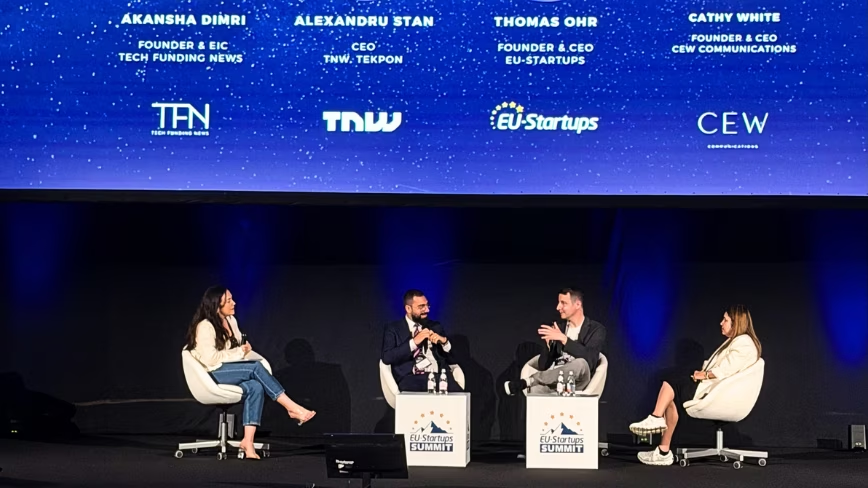
- The Story: At this year's EU-Startups Summit in Valletta, journalists and editors gave founders an unusually direct briefing on what actually gets covered — and what doesn't. The Next Web reported on the session May 8, noting that founders often misunderstand what "newsworthy" means to working journalists under deadline pressure.
- Key Lesson: Media coverage isn't won by having a good product — it's won by understanding what editors need and making their job easier. Founders pitching journalists without that understanding are wasting everyone's time.
India's April Startup Cohort — Inc42's Monthly Watchlist
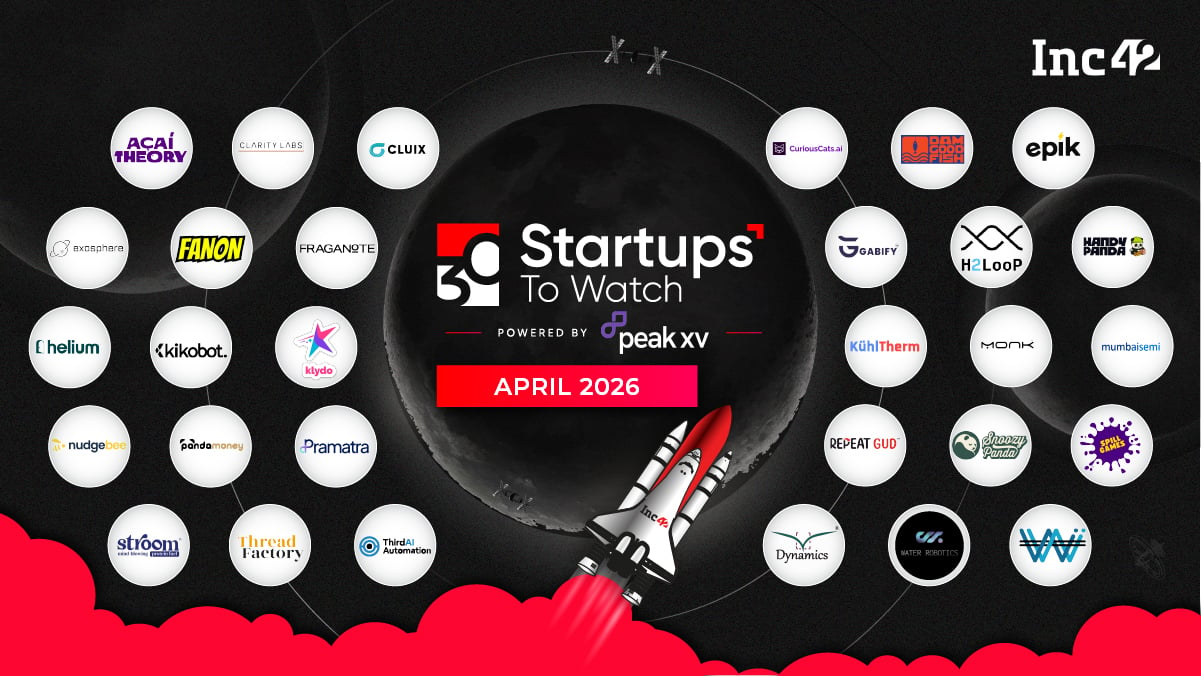
- The Story: Inc42's monthly "30 Startups to Watch" for April 2026 revealed a sharply tighter capital environment in the Indian ecosystem. Shutdowns including NeuroPixel.AI and Covrzy, alongside layoffs at Acko and SuperOps, marked a more selective funding climate — but also surfaced a cohort of resilient companies still attracting attention.
- Key Lesson: In a tighter capital environment, the startups that stand out are those demonstrating capital efficiency alongside growth — not just top-line momentum.
Failures & Pivots Corner
-
Wilbur Labs Founder Resilience Survey: A survey published this week by Wilbur Labs found that startup failure genuinely does not deter most founders — 80% of those who had experienced a failed startup said they would try again. The report emphasizes that the founders who bounce back most effectively are those who treat failure as structured learning rather than identity-defining defeat. The finding cuts against the narrative that failure is a scarlet letter in the startup world; for most founders, it appears to function more like tuition.
-
Down Rounds in 2026 — What Founders Need to Know: A new guide from Tech Funding News, published May 8, addresses the rising tide of valuation resets. VCs and advisors quoted in the piece make the case that accepting a down round in 2026 is often the strategically sound move — far preferable to taking toxic term sheets that saddle companies with punishing liquidation preferences or ratchets. The piece reframes the down round not as failure but as a founder exercising discipline over narrative.
Patterns & Insights
- Resilience over pedigree: From Bentinck's EF model to the Wilbur Labs survey, this week's stories consistently emphasize that behavioral traits — persistence, ambition, willingness to re-engage after failure — are more predictive of founder success than credentials or prior experience.
- China competition is back on the agenda: Colin Angle's return to the Chinese market signals that hardware founders can no longer treat China as a background risk. It is a present, strategic challenge that demands explicit, experience-based strategy — not avoidance.
- Capital contraction is shaping Indian and global ecosystems simultaneously: The April India startup data from Inc42 mirrors patterns seen globally — fewer but more selective deals, more shutdowns among undercapitalized players, and a premium on unit economics.
- Founders are rethinking the stigma of the down round: The emerging consensus, at least among advisors quoted this week, is that a clean down round beats a messy flat round with punishing terms. This represents a meaningful shift in how founders are being coached to think about valuation.
- Media literacy as a founder skill: The EU-Startups Summit surfaced PR and media strategy as an underrated founder competency — one that is increasingly separating companies that break through from those that don't, particularly in Europe's crowded startup landscape.
Founder Toolkit: This Week's Best Advice
-
Study behavior, not background, when co-founder hunting: Alice Bentinck's EF model is built on finding people with drive and ambition first, idea second. When evaluating partners or early hires, ask: how do they respond to setbacks? Do they self-initiate? Background is table stakes; behavior is signal.
-
Treat failure as structured tuition, not identity: The Wilbur Labs finding — 80% of failed founders would try again — only holds value if you actually debrief what went wrong. Build a personal postmortem practice: what assumption failed, what would you validate differently, what would you not compromise on next time.
-
Make journalists' jobs easier or don't pitch them: The EU-Startups Summit panel was blunt — founders who pitch media without understanding editorial needs waste everyone's time. Before reaching out, ask: what story does this journalist need to tell their editor? Lead with that, not your feature list.
-
Know your China exposure before your competitor does: Whether you are in hardware, consumer tech, or SaaS with Chinese competitors entering your market, Colin Angle's return is a reminder that denial is the most expensive competitive strategy. Map the threat explicitly and build your differentiation around it.
-
A clean down round beats a toxic flat round: If you are fundraising in 2026 and facing valuation pressure, the advice from investors quoted by Tech Funding News is clear — accept the reset, protect your cap table structure, and avoid liquidation preferences that will haunt your exit options for years.
What to Watch Next
- TechCrunch Founder Summit 2026 is scheduled for June 9 in Boston, bringing together 1,000+ founders and investors for roundtable discussions on real-world scaling challenges. Expect a wave of founder content, interviews, and session recaps to emerge in the weeks ahead.
- India's startup funding environment will be worth watching through May — the April shutdowns of NeuroPixel.AI and Covrzy and layoffs at Acko and SuperOps suggest the correction is still underway, and more founder stories of restructuring and pivot are likely to emerge.
- Down round renegotiations: As more 2021-era high-valuation startups reach the end of their runways, expect more public founder accounts of navigating valuation resets — a trend that will generate significant founder content through mid-2026.
- How I Built This (Apple Podcasts): A new episode dropped within the past day featuring Shep and Ian discussing why they quit stable jobs to build a family consumer brand into a national business — worth a listen for bootstrapping and brand-building lessons.
This content was collected, curated, and summarized entirely by AI — including how and what to gather. It may contain inaccuracies. Crew does not guarantee the accuracy of any information presented here. Always verify facts on your own before acting on them. Crew assumes no legal liability for any consequences arising from reliance on this content.
Powered by
