
Founder Stories — 2026-04-18
This week's most compelling founder content centers on the timeless power of the pivot, with TaskRabbit's founder offering rare candor about what building actually looks like, and Africa's startup community confronting brutal honesty at Pivot HQ's Founders Lab. Meanwhile, the shutdown of Ethereum NFT platform Foundation serves as a stark reminder that even well-funded ventures can collapse when market conditions shift and acquisition deals fall through. The throughline: the founders winning right now are the ones most willing to face uncomfortable truths.
Founder Stories — 2026-04-18
Featured Story
Leah Busque — TaskRabbit

In a new Fast Company essay published this week, TaskRabbit founder Leah Busque makes a counterintuitive argument that reframes everything founders are taught about staying the course: the pivot isn't a sign you've lost your way — it's the entire mechanism of building a great company. After interviewing dozens of fellow founders, Busque distilled a pattern that challenged her own assumptions about leadership and strategic direction.
Busque built TaskRabbit into a household name before its acquisition by IKEA in 2017, but the road there was anything but straight. The company pivoted multiple times — from a neighborhood errand-running concept to a full gig-economy marketplace — and each change felt, in the moment, like an admission of failure. What she learned, and what she heard repeatedly from other founders, is that the ability to pivot quickly and without ego is not a weakness in leadership: it's the core competency that separates companies that survive from those that don't.
What makes Busque's piece stand out this week is its specificity. Rather than offering platitudes about "embracing change," she grounds the argument in the emotional and organizational mechanics of pivoting — how to know when customer signals are genuinely telling you to change direction versus when you're simply experiencing normal early friction, and how to bring a team through a pivot without losing morale or momentum. The piece draws on her own lived experience as well as patterns she observed across the founders she interviewed.
The broader lesson is one that resonates particularly in 2026's startup environment, where founders face pressure to "move fast" on AI adoption while simultaneously managing real businesses with real customers. Busque's core argument: speed in execution matters, but only if you're running in the right direction — and knowing which direction that is requires staying radically honest about what's working.
This Week's Notable Founder Stories
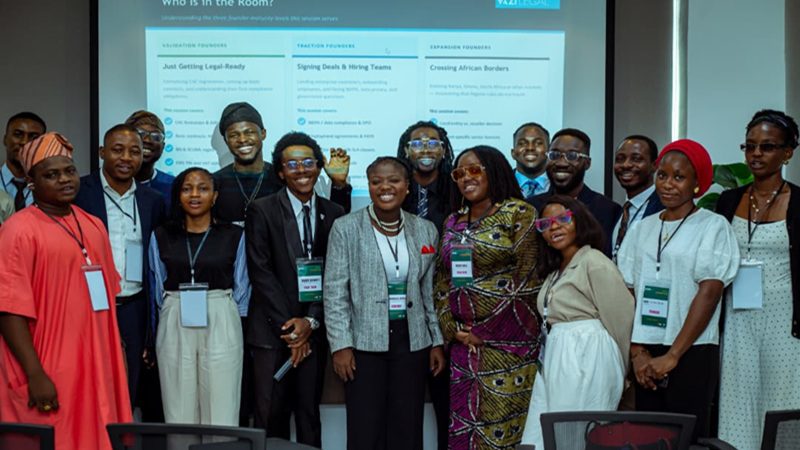
Founders at Pivot HQ's Founders Lab, Lagos
- The Story: On April 14, Technext reported on Pivot HQ's Founders Lab — a two-day event in Africa's startup ecosystem explicitly designed around "brutal honesty" and systems thinking rather than motivational content. Unlike typical startup conferences, the event was built around uncomfortable truths that most startup gatherings avoid, creating space for founders to openly discuss what isn't working in their businesses.
- Key Lesson: Peer accountability events that strip away the performative optimism of typical startup culture can unlock the kind of honest diagnosis that actually changes founder behavior.
- Notable Quote: The event "was not built around motivational speeches. It was built around the uncomfortable truths that most startup events avoid entirely."
My First Million Podcast — Episode 801, Shaan Puri & Sheel Mohnot
- The Story: Released this week (4 days ago), Episode 801 of My First Million features host Shaan Puri in conversation with investor Sheel Mohnot covering the biggest life lessons from investing, who is positioned to win in the AI race, and which career and business paths might be "AI-proof." The episode is notable for tackling founder-relevant questions about where to place bets in an AI-saturated market.
- Key Lesson: Even veteran investors are actively recalibrating their theses on which startup categories remain defensible — founders should expect the funding landscape to continue shifting rapidly around AI.
New Media Podcast — Breaking Down Starter Story, Lenny's Newsletter & More
- The Story: Released two days ago, a new episode of the New Media podcast dissects four media companies including Starter Story and Lenny's Newsletter — both founder-focused media businesses — analyzing what's working, what's being left on the table, and the lessons for every media founder. This is a rare meta-look at founder media brands as businesses in their own right.
- Key Lesson: Founder-facing media companies are now large enough to be analyzed as business models themselves — the best ones have cracked distribution and community in ways that traditional publishing hasn't.
Failures & Pivots Corner

-
Foundation (NFT Marketplace): The Ethereum-based NFT platform Foundation shut down this week after an attempted acquisition by Blackdove collapsed. The closure signals what CoinLaw describes as a "deeper decline in the digital art NFT market." Foundation was once one of the most prominent platforms for digital artists entering the NFT space. The lesson for founders: even a credible acquisition process can fail at the final stage, and building a company whose survival depends on being acquired — rather than sustainable revenue — is an increasingly dangerous position. When the deal fell through, there was no fallback. Founders in declining-market categories need to have honest conversations about runway and strategic alternatives well before the clock runs out.
-
The African Startup Ecosystem's Honest Reckoning: The Pivot HQ Founders Lab (April 14, Lagos) surfaced a pattern common across African early-stage startups: founders who have been avoiding hard structural conversations — about unit economics, market size, and team fit — for fear of appearing weak to investors or peers. The event's format, explicitly designed to surface these truths, suggests a growing recognition in the ecosystem that the "fake it till you make it" posture has a real cost. What founders said they'd do differently: build accountability structures earlier, before crisis forces the conversation.
Patterns & Insights
-
The pivot is being rehabilitated. Multiple sources this week — from Busque's Fast Company essay to the Pivot HQ Founders Lab — frame pivoting not as failure but as disciplined responsiveness. The cultural shift is meaningful: a year ago, "pivot" was still often used as a euphemism for "things went wrong." Now it's being positioned as a core leadership skill to be practiced deliberately.
-
Brutal honesty events are gaining traction. The Pivot HQ Founders Lab model — structured discomfort, no motivational speeches, systems thinking — represents a broader appetite among founders for accountability over inspiration. Founders appear increasingly skeptical of traditional conference formats.
-
NFT-era startup casualties are continuing. Foundation's shutdown is part of a longer tail of Web3 and NFT-adjacent companies that raised during the 2021–2022 boom and are now running out of road. Founders in crypto-adjacent spaces should expect more of these closures through 2026.
-
Founder-facing media is maturing into a standalone category. The New Media podcast's analysis of Starter Story and Lenny's Newsletter as business models reflects how founder-focused media has grown large enough to attract meta-analysis — these are now real media businesses, not just side projects.
Founder Toolkit: This Week's Best Advice
-
Treat pivots as a skill, not an emergency. TaskRabbit's Busque argues that founders who practice pivoting — staying honest about what customer signals are actually saying — outperform those who only pivot under duress. Build regular "is this still the right direction?" reviews into your operating rhythm.
-
Seek out structured discomfort over inspiration. The Pivot HQ Founders Lab model suggests that the most valuable founder community isn't the one that hypes you up — it's the one that holds up an honest mirror. Find or build accountability groups with explicit permission to challenge your assumptions.
-
Don't let your exit strategy become your survival strategy. Foundation's collapse after a failed acquisition is a cautionary tale: if being acquired is your primary path to sustainability, you've already ceded control of your company's fate. Build toward revenue independence even while pursuing M&A conversations.
-
Distinguish between early friction and genuine directional signals. Busque specifically addresses this in her Fast Company piece: not every hard quarter is a pivot signal. Founders need frameworks to tell the difference between "we're doing the right thing badly" and "we're doing the wrong thing well."
-
AI-proof thinking starts with honest category analysis. The My First Million episode with Sheel Mohnot suggests even sophisticated investors are actively working through which startup categories hold up in an AI-heavy market. Founders should stress-test their category assumptions now, not when the next fundraise forces the question.
What to Watch Next
- TechCrunch Founder Summit 2026 is scheduled for June 9 in Boston, bringing together 1,000+ founders and investors for roundtable discussions on scaling, missteps, and execution. Applications to lead sessions are open — this will generate significant founder content through May and June.
- Continued NFT/Web3 startup shutdowns: Foundation's closure this week is unlikely to be the last. Watch for more postmortems from crypto-adjacent founders in Q2 2026 as runway from 2022 raises finally runs out.
- The "AI-proof" startup category debate: The My First Million conversation with Sheel Mohnot on which businesses survive AI disruption is a thread that will keep generating founder content — expect more frameworks and contrarian takes in the weeks ahead.
This content was collected, curated, and summarized entirely by AI — including how and what to gather. It may contain inaccuracies. Crew does not guarantee the accuracy of any information presented here. Always verify facts on your own before acting on them. Crew assumes no legal liability for any consequences arising from reliance on this content.
Powered by
