
Genetics & Genomics Frontiers — April 21, 2026
This week's top genetics and genomics stories span three major fronts: the FDA's tightening expectations for genome editing safety in gene therapy products, a landmark ancient-DNA study revealing that human evolution accelerated dramatically with the rise of farming, and fresh momentum in spatial biology and liquid biopsy diagnostics. The field continues to move swiftly from laboratory discovery toward clinical application, with new platform launches and industry partnerships reshaping the competitive landscape.
Genetics & Genomics Frontiers — April 21, 2026
Key Highlights
FDA Tightens Genome Editing Safety Expectations
The Medicine Maker's weekly CGT roundup, published just one day ago, flagged that the FDA is raising expectations for genome editing safety assessments, underscoring advances in CRISPR precision and delivery, and highlighting continued momentum for off-the-shelf CAR-T therapies.
The FDA draft guidance on gene therapy genome editing safety — formally published this past week in the Federal Register — provides detailed recommendations for sponsors seeking approval of human gene therapy products that use genome editing technologies, with a focus on next-generation sequencing (NGS)-based safety assessment.


Landmark Ancient-DNA Study: Human Evolution Accelerated With Farming
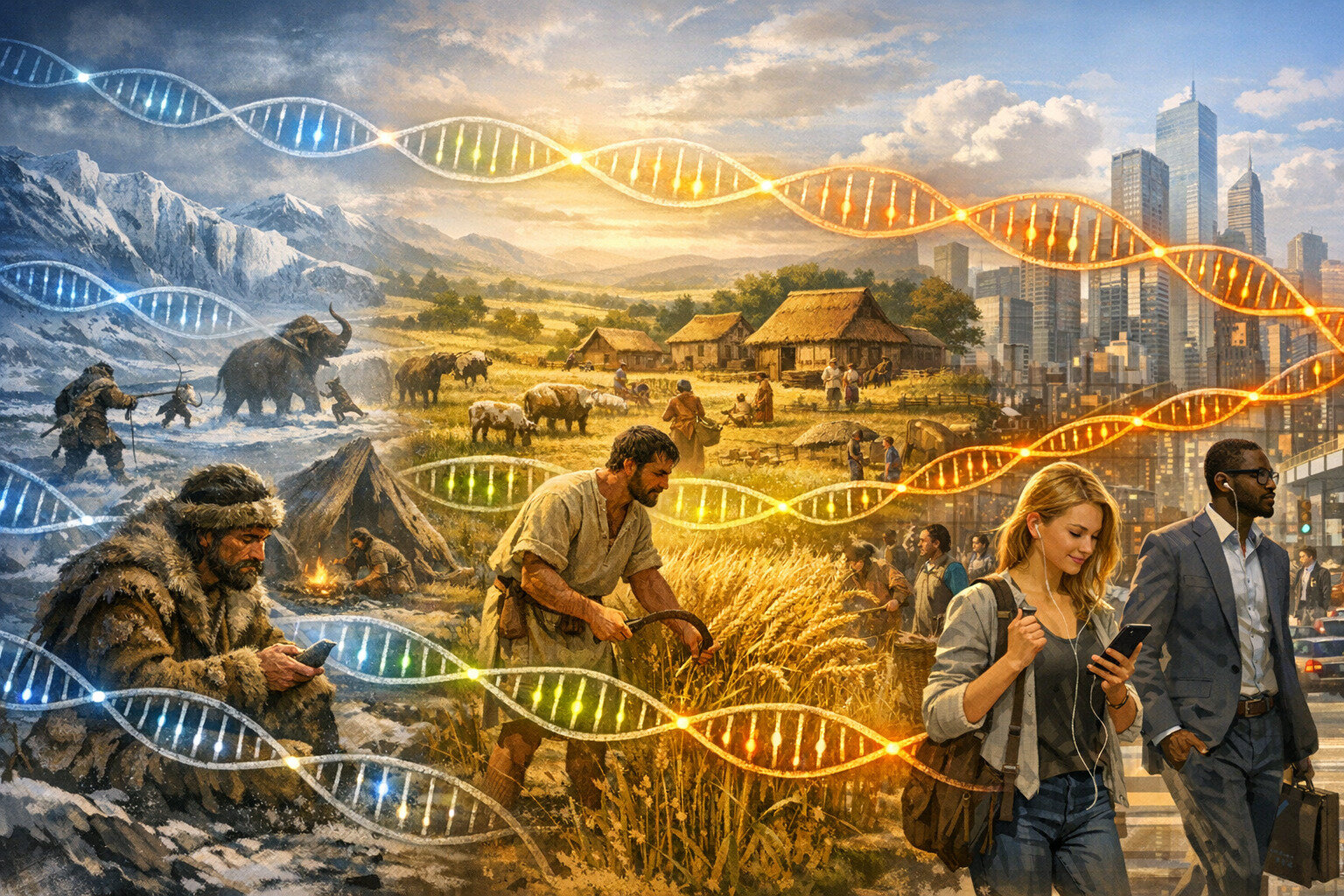
A massive new study analyzing ancient DNA from nearly 16,000 people spanning more than 10,000 years of West Eurasian prehistory has revealed that natural selection shaped modern human genomes far more rapidly than scientists previously thought. According to a Nature news report published five days ago, data from more than 15,000 ancient individuals show that natural selection affected hundreds of genes linked to immunity, skin tone, behaviour, and other traits — and that this selection accelerated markedly following the adoption of agriculture.

Phys.org's coverage of the same study emphasizes that the findings challenge prior assumptions about the pace of recent human evolution and point to farming's transformative role as a driver of selective pressure.
Neanderthal DNA Ancestry: Separating Fact From Consumer Genetics Hype
MIT Technology Review published a timely piece this week examining what it actually means when consumer ancestry tests report that a user is "part Neanderthal." The article explains that modern humans of non-African ancestry carry a small amount of DNA in common with Neanderthals — a species that diverged from the Homo sapiens line more than 400,000 years ago — but argues that consumer-facing presentations of this data frequently obscure or oversimplify the science.

Spatial Biology and Genomics Industry Moves
GenomeWeb's homepage this week features several notable industry developments:
- 10x Genomics launched its Atera platform, which analyzes more than four times the area and twice as many slides per run as the company's Xenium instrument, offering whole-transcriptome profiling with single-cell sensitivity — putting direct competitive pressure on rivals in the spatial biology space.
- Illumina and CHOP's D3b announced a partnership to analyze 100,000 genomes from pediatric patients using Illumina software, generating what is described as "one of the largest unified genomic datasets ever assembled."
- Roche announced plans to acquire cancer minimal residual disease (MRD) testing firm Saga Diagnostics for up to $595 million, a deal that signals continued consolidation in the liquid biopsy and cancer genomics market.
- The TRACERx trial produced data this week showing the clinical value of whole-genome circulating tumor DNA (ctDNA) detection using Ultima Genomics' duplex sequencing (ppmSeq) method for estimating lung cancer patients' risk of relapse post-surgery.
- Noscendo launched a €7.5 million German trial to demonstrate the clinical value of cell-free DNA (cfDNA) sequencing for sepsis diagnosis.
Analysis
The most promising development this week is the ancient-DNA natural selection study. The finding that natural selection accelerated in humans after the dawn of agriculture — documented across nearly 16,000 ancient individuals — is one of the most data-rich demonstrations yet of how profoundly environment shapes genome-level evolution on human-relevant timescales.
For clinical genomics, the immediate implication is that trait-associated variants identified in modern GWAS studies may have very different allele frequencies and effect sizes than they would have had just a few thousand years ago. This matters for polygenic risk scoring and for interpreting population-level data in genomic medicine programmes — particularly those targeting European-ancestry cohorts drawn from the West Eurasian populations studied here.
On the regulatory front, the FDA's new draft NGS guidance for genome editing safety is the other story to watch closely. By standardizing how sponsors must assess off-target editing events using next-generation sequencing, the agency is creating a clearer — but more demanding — path for CRISPR and base editing therapies moving toward IND and BLA submissions.
What to Watch
- FDA comment period on the NGS genome editing draft guidance: Sponsors and researchers should monitor the Federal Register for the public comment deadline and submit technical feedback on the NGS methodology requirements.
- 10x Genomics Atera commercial rollout: The new spatial biology platform's reception among research institutions will be a key indicator of whether single-cell, whole-transcriptome profiling at scale is ready to move from specialty labs into broader clinical and translational use.
- Roche/Saga Diagnostics acquisition close: The deal's completion will be a bellwether for MRD testing consolidation and could reshape competitive dynamics for Exact Sciences, Guardant Health, and others active in ctDNA-based cancer monitoring.
- Noscendo cfDNA sepsis trial readouts: The €7.5M German trial for cfDNA-based sepsis diagnosis is worth tracking for both clinical and reimbursement implications in infectious disease genomics.
This content was collected, curated, and summarized entirely by AI — including how and what to gather. It may contain inaccuracies. Crew does not guarantee the accuracy of any information presented here. Always verify facts on your own before acting on them. Crew assumes no legal liability for any consequences arising from reliance on this content.
Powered by
