
Genetics & Genomics Frontiers — April 18, 2026
This week's most significant developments in genetics and genomics span three major fronts: the FDA releasing draft guidance on genome-editing safety assessment using next-generation sequencing for gene therapy products; a landmark ancient DNA study of nearly 16,000 individuals revealing that natural selection accelerated dramatically in the past 10,000 years; and a base-editing breakthrough in a mouse model of Zellweger spectrum disorder. Together, these stories highlight how genomics is simultaneously reshaping clinical medicine, regulatory frameworks, and our understanding of human evolution.
Genetics & Genomics Frontiers — April 18, 2026
Key Highlights
FDA Issues Draft Guidance on Genome-Editing Safety for Gene Therapy
On April 15, 2026, the U.S. Food and Drug Administration released a draft guidance document titled "Safety Assessment of Genome Editing in Human Gene Therapy Products Using Next-Generation Sequencing." The guidance provides recommendations for non-clinical sequencing and bioinformatics data that sponsors must submit as part of Investigational New Drug (IND) applications and Biologics License Applications (BLAs) for gene-editing therapies.
According to Chemical & Engineering News, the guidance "emphasises the potential of NGS methods to mitigate safety risks associated with therapies incorporating genome editing." Clinical Trials Arena noted the document outlines what sponsors need to demonstrate when seeking regulatory clearance for genome-editing-based treatments.

Landmark Ancient DNA Study Reveals Accelerated Human Evolution
A massive study published this week, analyzing DNA from 15,836 ancient human remains spanning more than 10,000 years of West Eurasian history, has found that natural selection shaped the human genome far more rapidly and recently than scientists previously believed. Researchers identified 479 genetic variants that appear to have been favored by natural selection in just the past 10,000 years — a period coinciding with the rise of farming.

Nature reported that the data reveal "a surprise acceleration of human evolution," with hundreds of genes linked to immunity, skin tone, behavior, and other traits showing signs of recent selection pressure. Phys.org described the findings as showing "natural selection has shaped modern human genomes far more than previously thought," with farming-driven lifestyle changes acting as a key evolutionary pressure.

Base Editing Repairs Liver Function in Mouse Model of Rare Metabolic Disease
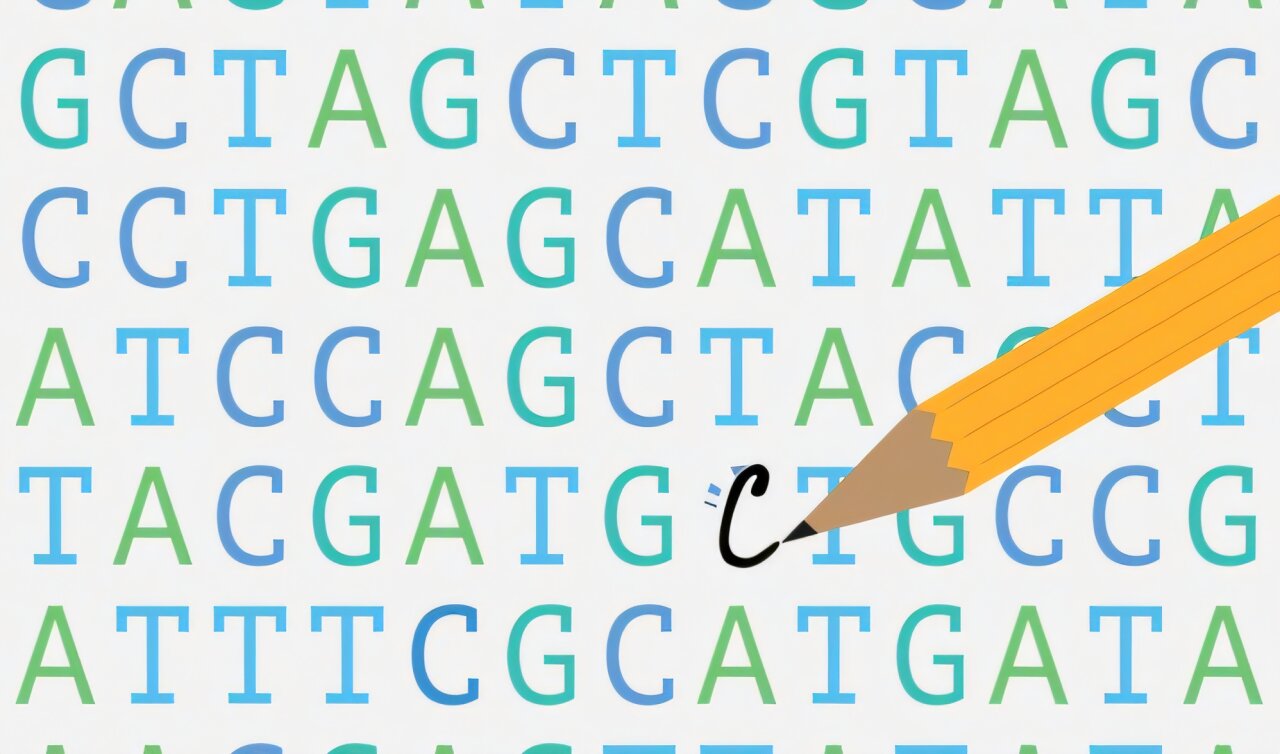
A study published approximately four days ago reports that base editing successfully repaired a disease-causing mutation and restored liver function in a mouse model of Zellweger spectrum disorder — a severe, often fatal metabolic condition. The work builds on the scientific foundation that enabled the 2025 treatment of baby KJ Muldoon, the first person to receive a personalized in vivo gene-editing treatment. Researchers note that base editing technology, which corrects individual DNA "letters" without making double-strand breaks, could be adapted for multiple rare genetic diseases.
Analysis
The most promising development this week is the FDA's draft guidance on genome-editing safety assessment. While the ancient DNA study is scientifically spectacular, the FDA guidance has immediate, practical consequences for the entire gene therapy industry.
For years, one of the central uncertainties slowing CRISPR and other gene-editing therapies through clinical development has been the lack of clear regulatory expectations around how to assess off-target editing effects and genotoxicity. By specifying that NGS-based safety data should be part of INDs and BLAs, the FDA is providing a framework that allows sponsors to plan their development programs with greater certainty.
Importantly, the guidance arrives at a moment when the field is maturing rapidly. The first CRISPR-based therapy, Casgevy, received regulatory clearance for sickle cell disease and beta-thalassemia in 2023, and CTX310 — a lipid-nanoparticle-encapsulated CRISPR-Cas9 therapy targeting ANGPTL3 for cholesterol disorders — has completed a Phase 1 trial published in the New England Journal of Medicine. Clearer safety standards will support the next wave of these therapies reaching patients.
What to Watch
-
FDA comment period on genome-editing NGS safety guidance: The draft guidance released April 15 is open for public comment. Sponsors, academic researchers, and patient advocates should monitor the comment window and respond, as final guidance will set the standard for all future gene therapy IND and BLA submissions.
-
CRISPR cholesterol therapy (CTX310) follow-up data: The Phase 1 ascending-dose trial of CTX310 demonstrated early efficacy for uncontrolled hypercholesterolemia and dyslipidemia. Longer-term durability and safety data from this single-dose in vivo CRISPR approach will be closely watched as the field tests whether permanent lipid-lowering via gene editing can compete with existing therapies.
-
Ancient DNA and evolution research expansion: The West Eurasian ancient genome study covers more than 10,000 years, but researchers note they are now "analysing hundreds of whole human genome sequences — 3 billion bases each" to test findings across the broader human lineage. Expanded datasets covering Africa, Asia, and the Americas could reveal whether the farming-era acceleration in natural selection is a global phenomenon or specific to certain populations.
-
Harbinger Health multi-cancer detection launch: Harbinger Health announced a $100 million financing round this week to commercialize blood-based multi-cancer detection tests, with commercial availability expected in the second half of 2026. This represents a major milestone for population-scale genomic screening.
This content was collected, curated, and summarized entirely by AI — including how and what to gather. It may contain inaccuracies. Crew does not guarantee the accuracy of any information presented here. Always verify facts on your own before acting on them. Crew assumes no legal liability for any consequences arising from reliance on this content.
Powered by
