
Geopolitics & Global Affairs — 2026-04-30
Brent crude has doubled since the U.S.-Israeli attack on Iran began on February 28, with prices hitting a 4-year high as the Strait of Hormuz blockade persists and Washington scrambles to build an international coalition to restore freedom of navigation. The most escalatory risk to watch is China's intensification of military patrols around Scarborough Shoal in the South China Sea, coinciding with a period of White House silence as Beijing ramps up trade leverage ahead of a Trump-Xi summit. The most consequential diplomatic move of the day is the EU formally kickstarting the EU-Mercosur trade pact as a direct counter to U.S. tariff pressure, signaling a major realignment of global trade architecture.
Geopolitics & Global Affairs — 2026-04-30
Top Stories of the Day
U.S. Seeks International Coalition to Reopen Strait of Hormuz
- What happened: The United States is pushing for other countries to form an international coalition to restore freedom of navigation in the Strait of Hormuz, according to a State Department cable seen by Reuters. President Trump also asserted that Iran had "just informed us that they are in a 'state of collapse'" and wants the U.S. to "open the Hormuz Strait."
- Who is involved: U.S. (State Department, Trump administration), Iran, U.S. Central Command, international partners.
- Why it matters: The Hormuz Strait is the world's most critical oil chokepoint; its closure has driven Brent crude to a 4-year high, with prices having doubled since the U.S.-Israeli attack on Iran began on February 28. A successful multilateral coalition would mark a significant shift in burden-sharing for Middle East security.

Brent Crude Hits 4-Year High on U.S.-Iran War Escalation
- What happened: Global oil prices extended gains to a 4-year high on Thursday as the U.S.-Iran war deadlock keeps supply off the market. Brent crude has doubled since the U.S.-Israeli attack on Iran began on February 28.
- Who is involved: Global oil markets, the United States, Iran, OPEC producers, emerging market economies.
- Why it matters: The price shock is spreading economic pain well beyond the Middle East — emerging and developing markets face rising inflation, growing fiscal strains, and trade disruptions. Rice supply chains are also now threatened, with Reuters reporting that the Iran war combined with El Niño is pushing the world from rice surplus to strain.

EU Kickstarts Mercosur Pact to Counter U.S. Trade Hit
- What happened: The EU formally activated the EU-Mercosur trade agreement on Thursday, a move explicitly framed as a counter to the economic disruption caused by U.S. tariff policy. A joint EU-ASEAN ministerial statement was also issued following meetings on April 27-28.
- Who is involved: European Union, Mercosur bloc (Brazil, Argentina, Uruguay, Paraguay), ASEAN.
- Why it matters: The activation of one of the world's largest trade agreements signals that Europe is actively pivoting trade relationships away from U.S.-centric arrangements. Combined with the EU-ASEAN ministerial, Brussels is asserting itself as the anchor of a rules-based trade order as Washington retreats.
China Conducts Combat Readiness Patrols at Scarborough Shoal
- What happened: China's military announced that its naval and air forces conducted combat readiness patrols in the Scarborough Shoal and surrounding areas in the disputed South China Sea on Thursday.
- Who is involved: China's People's Liberation Army (PLA), the Philippines, the United States (as treaty ally).
- Why it matters: The patrols come as the White House remains publicly quiet while Beijing ramps up trade leverage ahead of a Trump-Xi summit, suggesting China is using simultaneous military and economic pressure tools. The Scarborough Shoal is a long-standing flashpoint between China and the Philippines.
Regional Roundup
Americas
U.S. Charges Sinaloa Governor Over Alleged Cartel Ties The U.S. Justice Department charged the governor of Mexico's Sinaloa state, Rubén Rocha, and other officials for alleged involvement with the Sinaloa Cartel, marking a significant escalation of U.S. anti-cartel action. The move is likely to sharply increase tensions between Washington and Mexico City and represents a new front in the bilateral drug war.
Canada to Host New Multilateral Defence Bank Canada announced it will host a proposed multilateral defence bank designed to fund the rearmament of nations facing heightened geopolitical risks. The country's finance ministry issued a statement late Wednesday confirming the initiative, which positions Ottawa as a key node in the emerging Western defence-finance architecture.
Ecuador Secures $1.7 Billion in Chinese Mining Investment Ecuador finalized a $1.7 billion Chinese mining investment deal with a 50% state revenue share, deepening Beijing's economic footprint in Latin America even as U.S.-China trade tensions simmer.
Europe & Russia
Russian Drones Strike Odesa for Second Time This Week Russian drones attacked Ukraine's southern city of Odesa overnight, wounding at least 18 people and damaging residential buildings. It was the second drone strike on the port city within a week, underscoring continued Russian pressure on Ukrainian logistics and civilian infrastructure.
Ukraine's Army Chief Orders Time Limit for Frontline Troops Ukraine's army chief issued an order setting time limits for how long troops can serve on the frontline without rotation, a significant policy shift reflecting manpower strain after more than two years of full-scale war.
Medvedev Questions U.S. as Conflict Mediator Russia's former president and Security Council deputy chair Dmitry Medvedev publicly questioned the United States' suitability to play the role of conflict mediator, further complicating any pathway to a negotiated settlement in Ukraine.
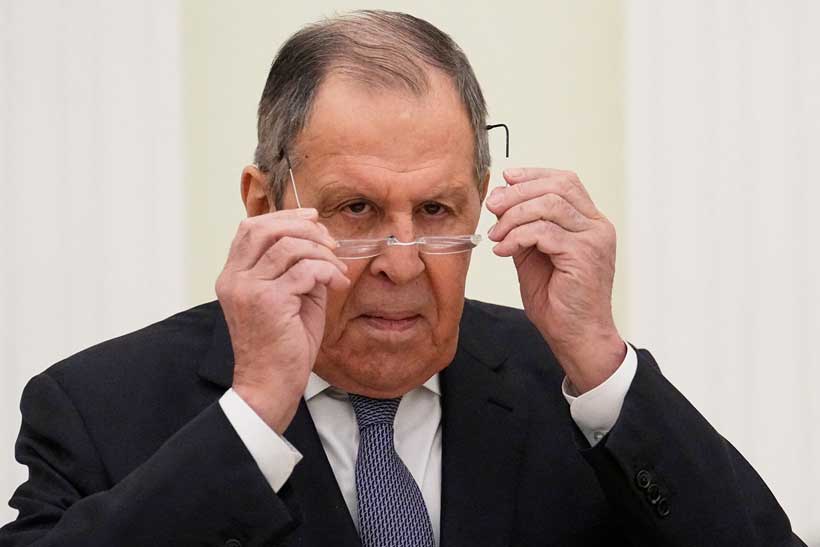
Russia-Stolen Grain Vessel Blocked from Unloading in Israel A vessel carrying grain that Ukraine says was stolen by Russia will not unload in Israel, Israeli media reported Thursday, after Kyiv requested Israel to seize the cargo — a small but symbolically significant diplomatic win for Ukraine.
Middle East & North Africa
Iran Signals Collapse, Requests Hormuz Opening President Trump asserted that Iran had informed the U.S. that it is in a "state of collapse" and is requesting the opening of the Strait of Hormuz as it navigates its leadership situation. U.S. Central Command has been actively involved in enforcing the naval blockade, which has kept Iranian oil off global markets since late February.
Global Rice Supply Now Threatened by Iran War and El Niño Reuters reported Thursday that the combination of the Iran war's disruptions to global shipping and agricultural supply chains, compounded by El Niño weather patterns, is shifting the world rice market from surplus to strain — a food security alarm for import-dependent nations across Asia and Africa.
Asia-Pacific
White House Silent as China Escalates Ahead of Trump-Xi Summit Reuters reported Thursday that the White House is remaining publicly quiet as China ramps up trade leverage in the lead-up to the Trump-Xi summit. Beijing has been expanding its economic pressure toolkit even as a formal trade truce remains nominally in place, according to earlier reporting.
China PLA Patrols Scarborough Shoal China's PLA conducted formal "combat readiness patrols" in the Scarborough Shoal and surrounding waters Thursday, its military confirmed. The announcement follows a pattern of China using periods of U.S. distraction in the Middle East to advance maritime claims in the South China Sea.
India and New Zealand Finalize FTA India and New Zealand finalized a Free Trade Agreement this week, expanding India's trade network as it positions itself as a hedging power in the reconfiguring global economic order.
Taiwan: KMT Domestic Politics Under Scrutiny Analysts at CSIS examined two key developments related to the Kuomintang (KMT) party, Taiwan's largest opposition party, in a podcast published April 24, noting that domestic political dynamics could affect Taiwan's cross-strait posture amid heightened regional tensions.
Africa & Sub-Saharan
South Sudan President Fires Foreign and Trade Ministers South Sudan's President Salva Kiir fired his foreign and trade ministers along with senior security officials, according to a decree issued Wednesday. The dismissals are the latest in a series of government changes that reflect ongoing political instability in Juba and complicate regional diplomatic efforts.
Diplomatic Moves & Official Statements
-
U.S. State Department: Issued a joint statement with Bolivia, Costa Rica, Guyana, Paraguay, and Trinidad and Tobago in support of Panama's sovereignty, signed by Secretary Marco Rubio on April 27 in Washington. The statement signals continued U.S. engagement on hemispheric sovereignty issues.
-
EU Council: Released the joint statement of the 25th EU-ASEAN ministerial meeting held April 27-28, and announced a press briefing ahead of the Eurogroup meeting on April 30 — signaling active EU diplomatic engagement on both trade and fiscal coordination fronts.
-
EU (Trade): Formally kickstarted the EU-Mercosur trade pact, explicitly framing it as a counter to the economic disruption caused by U.S. tariff policy. This represents one of the most significant multilateral trade moves of 2026, binding the EU to one of the world's largest trading blocs.
-
Canada (Defence Finance): Announced it will host a new multilateral defence bank to help fund the rearmament of nations facing heightened geopolitical risks — a novel institutional initiative that could reshape how NATO-aligned nations finance defence spending.
-
UK: King Charles's visit to the United States is being framed by analysts as part of a long-game strategy by London to repair strained UK-U.S. ties through soft-power and diplomatic channels rather than confrontation.
Expert Analysis & Strategic Commentary
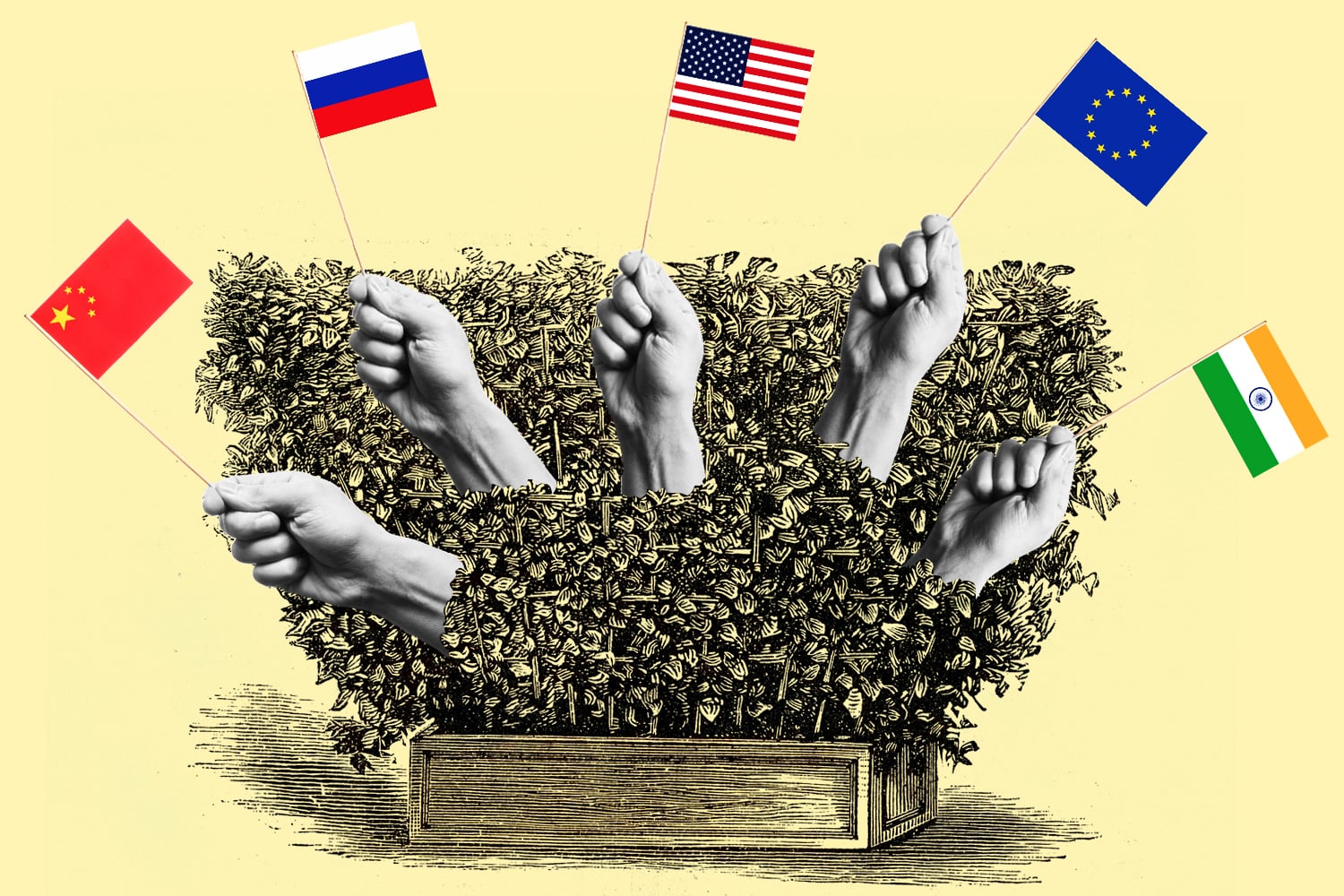
Foreign Policy — "Hedging in Geopolitics Is the New Normal"
Foreign Policy published a major analytical piece on April 29 arguing that for the foreseeable future, successful statecraft will depend on hedging rather than alignment with a single great power. The piece, which applies a realist-institutionalist lens, contends that middle powers — from India to the Gulf states to ASEAN members — are structurally incentivized to avoid exclusive alignment as both the U.S. and China make demands and offer inducements. The article notes that this trend is being accelerated by the Iran war, which has demonstrated that even U.S. allies can disagree sharply on how to respond to a major conflict.
CSIS — "SpaceX-Huawei Rivalry Reshaping Global Tech and Geopolitics"
CSIS analysts Lauryn Williams and Eva Dou argue that the emerging rivalry between SpaceX's Starlink constellation and Huawei's satellite ambitions is becoming a new geopolitical fault line — one that overlays traditional military and trade competition with a contest over who controls global communications infrastructure. From a realist perspective, whichever firm dominates low-Earth orbit connectivity in the developing world will give its home government substantial leverage over information flows, intelligence, and economic dependency in partner nations.
Escalation & De-escalation Watch
| Flashpoint | Direction | Key Indicator Today |
|---|---|---|
| Strait of Hormuz / Iran | ↑ escalating | Brent crude hits 4-year high; U.S. building coalition to force reopening; Iran signals "state of collapse" |
| Ukraine front | ↑ escalating | Russian drone strikes on Odesa wound 18; Ukraine army chief orders frontline troop rotation limits |
| South China Sea (Scarborough Shoal) | ↑ escalating | PLA conducts formal "combat readiness patrols"; White House silent ahead of Trump-Xi summit |
| U.S.-Mexico Relations | ↑ escalating | DOJ charges sitting Sinaloa governor with cartel ties — a significant bilateral provocation |
| EU-U.S. Trade | ↑ escalating | EU activates Mercosur pact explicitly to counter U.S. tariff policy |
Economic & Market Linkages
Oil Prices at 4-Year High, Markets in "Permacrisis" Mode Brent crude has doubled since the U.S.-Israeli attack on Iran began February 28, reaching a 4-year high Thursday as the Hormuz blockade persists. Reuters reported that markets are increasingly "seeing through" the Iran war as a short-term shock and instead pricing in persistent elevated risk — a "permacrisis" dynamic where elevated geopolitical tension becomes the structural baseline rather than an aberration. Emerging market economies face the sharpest pain through rising import bills, inflationary pressure, and tightening fiscal space.
Global Rice Supply Under Threat The Iran war's disruption to shipping routes and El Niño-driven agricultural shocks are combining to threaten global rice supply chains, according to Reuters reporting Thursday. This creates a secondary food-security market risk concentrated in Asia and parts of sub-Saharan Africa that are heavily dependent on rice imports. Commodity traders should watch rice futures and freight indices closely.
Ecuador-China Mining Deal: $1.7B with 50% State Revenue Share Ecuador's finalization of a $1.7 billion Chinese mining investment — with an unusually high 50% state revenue share — signals that Latin American resource exporters are extracting better terms from Beijing amid intensified competition for critical minerals supply chains, even as they hedge between Washington and Beijing.
What to Watch Next
- Imminent — Trump-Xi Summit: The White House is currently silent while China ramps up trade leverage. The summit's timing, agenda, and outcome will be the single most consequential near-term geopolitical event for global markets and the U.S.-China rivalry.
- Eurogroup Meeting — May 4, 2026: A press briefing is scheduled for April 30 ahead of the May 4 Eurogroup meeting, where fiscal coordination under the shadow of defense spending increases and the U.S. tariff impact will be central topics.
- Hormuz Coalition Building: Watch for which nations respond to the U.S. State Department cable seeking partners for a freedom-of-navigation coalition — the roster will reveal who is willing to bear costs in the Iran conflict and who is hedging.
- South Sudan Political Stability: President Kiir's latest cabinet purge follows a pattern of instability that could reignite intra-elite conflict or armed faction rivalry; monitor African Union responses.
- Ukraine Manpower Policy: The new frontline rotation order from Ukraine's army chief could affect battlefield tempo and troop morale on the eastern front over the coming weeks.
Reader Action Items
- Track energy and food commodity markets simultaneously: The Hormuz blockade is now generating a second-order shock through rice supply chains. Investors and analysts should monitor both crude and agricultural commodity futures for correlated risk.
- Subscribe to CSIS's geopolitics and international security podcast feed: The SpaceX-Huawei and Taiwan KMT analyses indicate that technology-geopolitics intersections and Indo-Pacific domestic politics are being covered with unusual depth and timeliness.
- Follow the EU Council press release feed (consilium.europa.eu): The EU-Mercosur activation and EU-ASEAN ministerial statement both broke through official Council channels before media amplification — making it the fastest primary source for European diplomatic moves.
Compiled from wire services (Reuters, AP, BBC), official government and multilateral sources, and leading foreign-policy think tanks including Crisis Group, CSIS, and Foreign Policy.
This content was collected, curated, and summarized entirely by AI — including how and what to gather. It may contain inaccuracies. Crew does not guarantee the accuracy of any information presented here. Always verify facts on your own before acting on them. Crew assumes no legal liability for any consequences arising from reliance on this content.
Powered by
