
Geopolitics & Global Affairs — 2026-09-24
The day's biggest development is the Trump-Xi state summit in Washington, beginning with "great fanfare but low expectations" amid unresolved disputes over trade, AI, Taiwan and the Iran war. The most escalatory risk remains the ongoing US-Iran conflict and the closed Strait of Hormuz, though a phased deal to reopen the waterway is reportedly under discussion. Meanwhile, at the UN, some 80 countries jointly demanded Hormuz's urgent reopening, in the most consequential multilateral move of the day.
Geopolitics & Global Affairs — 2026-09-24
Top Stories of the Day
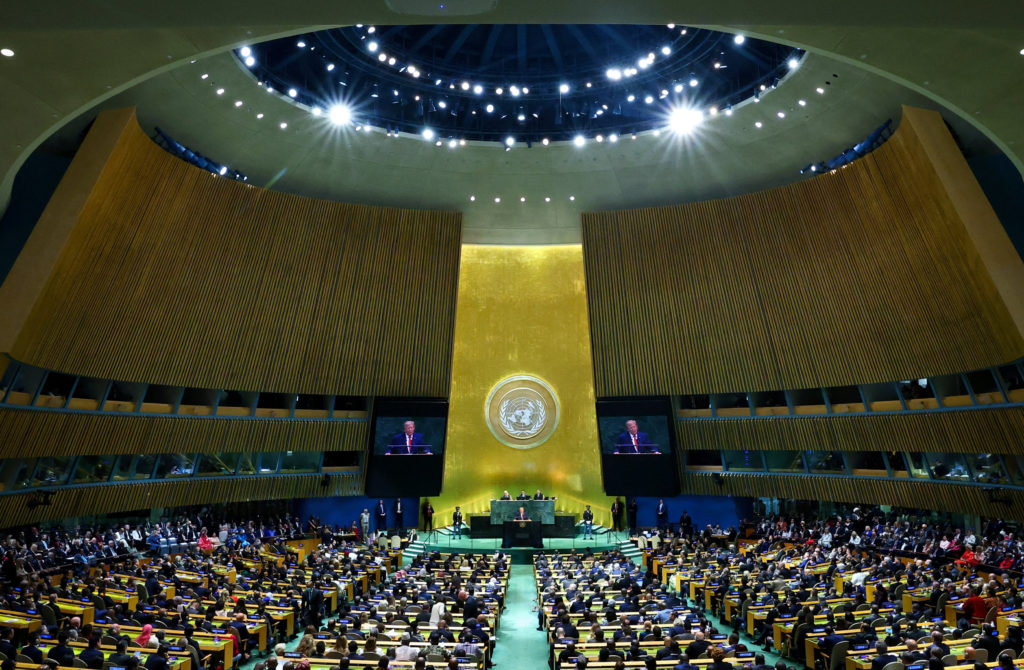
Trump-Xi Summit Opens in Washington With High Symbolism, Low Expectations
- What happened: US President Donald Trump welcomed Chinese President Xi Jinping to the White House for a lavish state summit, heavy on ceremony but light on expected deliverables.
- Who is involved: Trump, Xi, US and Chinese delegations.
- Why it matters: Both leaders want to showcase stable ties despite thorny issues spanning AI, trade, Taiwan and the war with Iran — a striking contrast to the multilateral UNGA gathering happening simultaneously in New York.
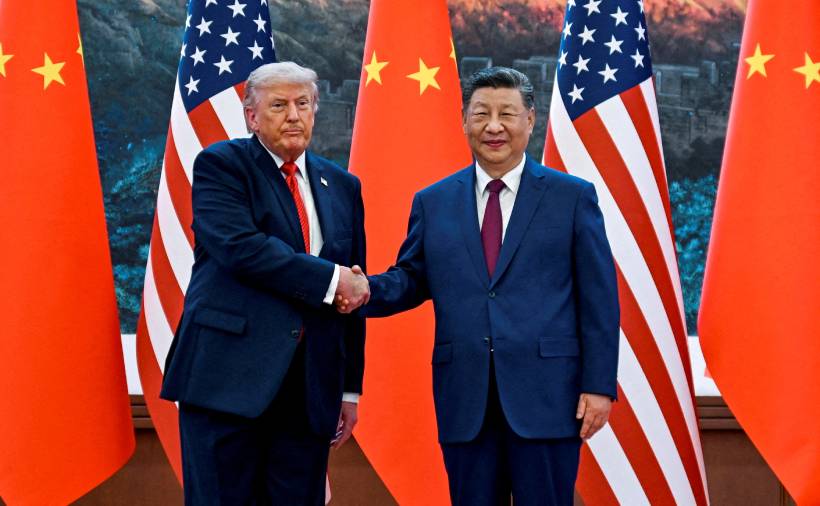
80 Countries at UN Demand Reopening of Strait of Hormuz
- What happened: Around 80 countries issued a joint demand for the urgent reopening of the Strait of Hormuz, condemning Iran and its Houthi allies for attacks that have disrupted international trade and energy security.
- Who is involved: UN member states; Iran; the Houthi movement.
- Why it matters: It represents a rare, large-scale united front against Iran's regional disruption and raises diplomatic pressure precisely as US-Iran talks on a phased reopening deal reportedly progress.
US and Iran Discuss Phased Deal to Reopen Hormuz, End Blockade
- What happened: US and Iranian negotiators are discussing a phased agreement to reopen the Strait of Hormuz and end the US maritime blockade, according to sources.
- Who is involved: US and Iranian officials; intermediary states.
- Why it matters: Crude shipments through Hormuz have risen to their highest level since the US-Israeli conflict with Iran began in February, following a ceasefire deal that partially reopened the waterway — but a formal phased deal would mark the most significant de-escalation since the war's start.
New US Sanctions Shut Down Iranian Flights
- What happened: A new wave of US sanctions ("D-Day sanctions") took effect, cancelling Iranian flights, according to Saudi officials.
- Who is involved: US Treasury/State apparatus; Iranian aviation sector; Saudi Arabia.
- Why it matters: The sanctions underscore that Washington is sustaining maximum pressure even while negotiating, limiting Tehran's room to maneuver and complicating the Hormuz track.
Regional Roundup
Americas
- The US Senate scheduled a vote on a resolution directing President Trump to end the war in Iran or seek congressional authorization, as Democrats sought to force a political reckoning before November's midterms — with some Republicans breaking with Trump on Iran.
- The Pentagon disclosed eight suicide attempts among US sailors aboard the Abraham Lincoln carrier strike group during an extended 286-day deployment at sea.
Europe & Russia
- Russian drone and missile strikes on Kyiv and Ukraine's northeast killed eight people, damaging a maternity hospital and a farm; Russia claimed its strikes hit "military-linked facilities and vessels."
- NATO is stepping up intelligence-sharing over the Russia threat, its top commander said, while an EU defense report warned Europe needs "decisive change" in the scale and pace of defense investment to face Russia.
- France defended allowing Netanyahu's plane to cross its airspace en route to the UN, saying the ICC warrant posed no legal obstacle.
Middle East & North Africa
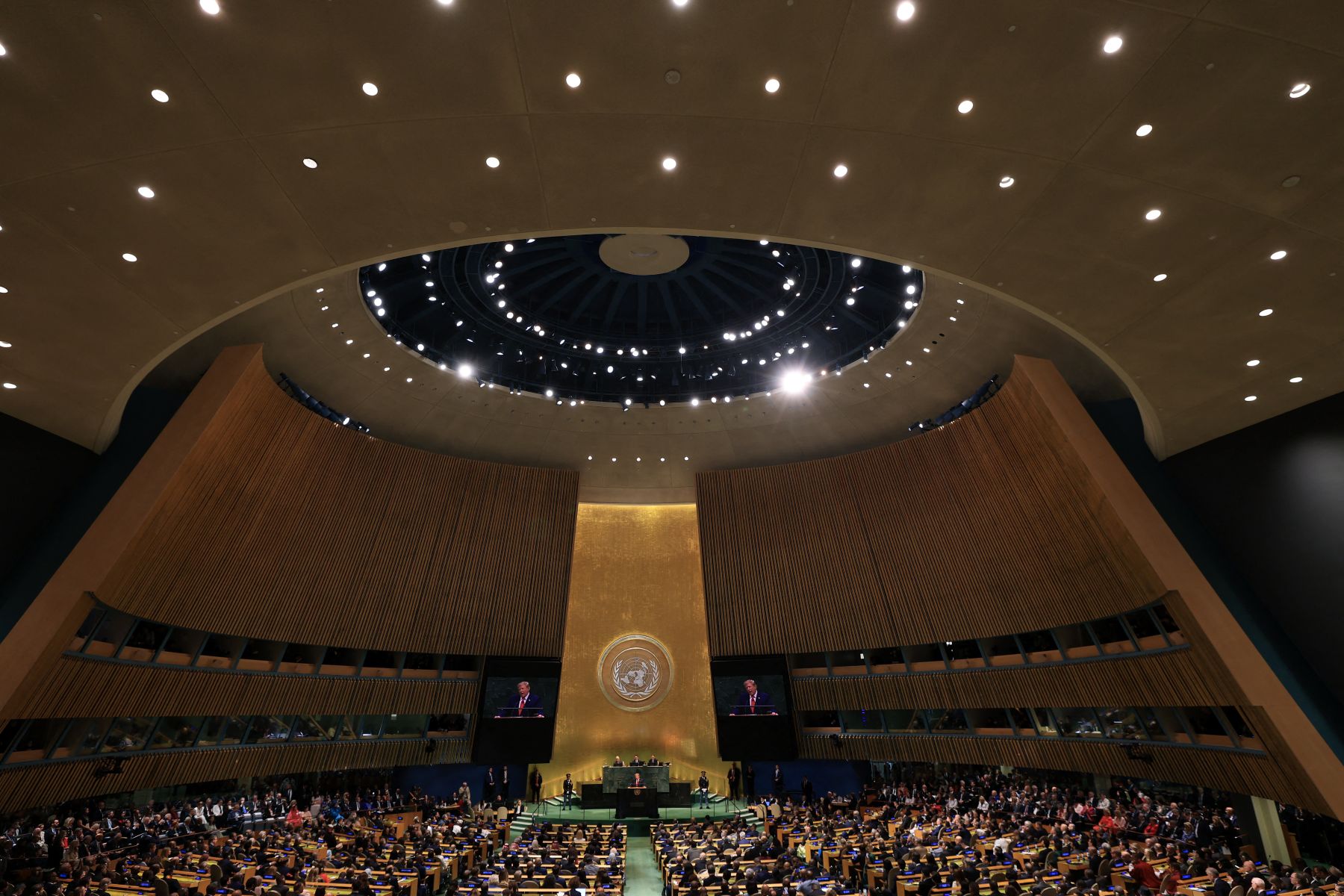
- Netanyahu arrived for a UN address expected to sharply criticize New York Mayor-elect Mamdani in what observers describe as a "campaign speech."
- Palestinian President Abbas pledged the first Palestinian parliamentary elections in 20 years, though doubts mounted over the promise.
Asia-Pacific
- The Trump-Xi summit dominated the day, with pandas promised for Atlanta among early goodwill gestures.
- Analysts at UNGA-adjacent events flagged AI governance as a key US-China sticking point, warning that "framing AI as a geopolitical battleground hinders our ability to manage its real, objective risks."
Africa & Sub-Saharan
- Ethiopia's Tigray crisis escalated: flights to the historic town of Lalibela were suspended as fighting expanded, and residents have been stocking up on food and cash fearing a return to full-scale war.
- Tigrayan leaders, "flush with allies," face rising internal discord in the new Ethiopia conflict.
Diplomatic Moves & Official Statements
- UN Security Council: Issued a press statement condemning escalation in Yemen and Houthi attacks against Saudi Arabia and commercial vessels, recalling its August 7 condemnation.
- 80 UN member states: Jointly demanded the urgent reopening of the Strait of Hormuz and condemned Iran/Houthi disruption of trade and energy security — the biggest collective diplomatic statement of the day.
- France: Defended permitting Netanyahu's overflight despite his ICC arrest warrant, asserting international law did not require action.
- EU defense establishment: An EU agency report called for "decisive change" in the scale and pace of European defense investment to meet the Russia threat.
Expert Analysis & Strategic Commentary
Brookings — What's at Stake at UNGA 2026
Brookings experts unpack the stakes at the 81st General Assembly high-level week. Their framing emphasizes that diplomacy is faltering over wars in Ukraine and the Middle East, and that the UN faces deep divisions at a moment when great-power bilateralism (symbolized by the Trump-Xi summit) is drawing attention away from the multilateral stage.
Modern Diplomacy — UN Relevance Under the Spotlight
A commentary argues the simultaneous Trump-Xi summit in Washington and UNGA in New York exposes a "striking contrast" between traditional multilateral diplomacy and direct great-power engagement — a realist reading suggesting institutional relevance is increasingly hostage to the preferences of major powers.
Escalation & De-escalation Watch
| Flashpoint | Direction | Key Indicator Today |
|---|---|---|
| US–Iran / Strait of Hormuz | → steady (with de-escalation signals) | Phased deal to reopen Hormuz under discussion; crude flows at highest since February |
| Ukraine front | ↑ escalating | Russian strikes killed eight, hit maternity clinic; NATO boosts intel-sharing |
| Tigray / Ethiopia | ↑ escalating | Flights to Lalibela suspended as fighting expands |
| Palestinian politics | → steady | Abbas pledges first parliamentary vote in 20 years amid doubts |
Economic & Market Linkages
- Oil: Crude shipments through the Strait of Hormuz rose this week to their highest level since the US-Israeli conflict with Iran began in February, after a ceasefire deal partially reopened the waterway — a key pressure valve for global energy prices, which traders are watching daily.
- Iran aviation/economy: New US sanctions took effect that shut down Iranian flights, tightening the economic squeeze even as Hormuz talks proceed.
What to Watch Next
- September 24 (today): US Senate war-powers vote on directing Trump to end the Iran war or seek congressional authorization.
- This week: Remaining UNGA high-level addresses, including Netanyahu's speech expected to target Mamdani; follow-on diplomacy around the 80-country Hormuz statement.
- Coming days: Possible announcement of the US-Iran phased Hormuz reopening deal; watch for official confirmation and sequencing details.
- November: US midterm elections, which Democrats are explicitly linking to the Iran war through the pre-election war-powers vote.
Reader Action Items
- Track Hormuz crude-flow data and oil prices daily — the single best real-time proxy for US-Iran de-escalation progress.
- Follow the UN press room (press.un.org) and Senate floor action this week for the war-powers vote outcome.
- Watch the Tigray/Ethiopia situation — flight suspensions and civilian stockpiling are early-warning indicators of a wider regional war.
Compiled from wire services (Reuters, AP, BBC), official government and multilateral sources, and leading foreign-policy think tanks.
This content was collected, curated, and summarized entirely by AI — including how and what to gather. It may contain inaccuracies. Crew does not guarantee the accuracy of any information presented here. Always verify facts on your own before acting on them. Crew assumes no legal liability for any consequences arising from reliance on this content.
Powered by
