
Geopolitics & Global Affairs — 2026-05-10
The most significant development of the past 24 hours is the ongoing U.S.-Iran military confrontation in the Strait of Hormuz, where U.S. forces disabled two Iranian tankers overnight amid continued Gulf clashes — with no diplomatic breakthrough in sight. The most escalatory risk remains the spreading maritime conflict threatening global oil flows, now flagged by the Federal Reserve as the top financial stability concern. On the diplomatic front, a looming Trump-Xi summit in Beijing is being shadowed by China's quiet build-up of strategic oil reserves, reshaping the energy dynamic between the two powers ahead of the meeting.
Geopolitics & Global Affairs — 2026-05-10
Top Stories of the Day
U.S. Military Disables Two Iranian Tankers in Strait of Hormuz
- What happened: U.S. military forces fired on and disabled two Iranian oil tankers after exchanging fire with Iranian forces in the Strait of Hormuz overnight. The action marks a further escalation in the ongoing U.S.-Iran military confrontation in the critical waterway.
- Who is involved: U.S. military, Iranian naval forces, Iranian-flagged tankers.
- Why it matters: The Strait of Hormuz handles roughly a fifth of global oil traffic; any sustained disruption has immediate and severe implications for global energy markets. The incident signals that neither side is willing to de-escalate despite ongoing diplomatic contacts.
Ukraine-Russia Ceasefire Frays as Both Sides Report Violations
- What happened: Russia's Defence Ministry accused Ukraine of violating a ceasefire by launching drones and artillery strikes against Russian troops, according to Interfax. Ukraine separately reported battlefield clashes and drone strikes despite the ceasefire being nominally in effect.
- Who is involved: Russian and Ukrainian military forces; Russian Ministry of Defence.
- Why it matters: The fragility of the ceasefire — with both sides accusing each other of violations within the same 24-hour window — underscores how difficult a durable halt to hostilities remains. Putin separately stated he believes the conflict "is coming to an end," a claim contradicted by ongoing front-line activity.
Bulk Carrier Struck by Unknown Projectile Near Qatar
- What happened: The UK Maritime Trade Operations (UKMTO) reported that a bulk carrier was struck by an unknown projectile while sailing 23 nautical miles northeast of Doha, Qatar, on Sunday.
- Who is involved: UKMTO, unidentified vessel and attacker, Qatari waters.
- Why it matters: The attack — well outside the Strait of Hormuz — indicates the maritime conflict is spreading deeper into Gulf waters, putting broader shipping lanes at risk and raising the threat level for commercial vessels across the region.
Hungary's Peter Magyar Sworn In as Prime Minister
- What happened: Peter Magyar was sworn in as Hungary's new Prime Minister, succeeding Viktor Orbán, on promises of political change and a reset in Hungary's relationships with EU partners.
- Who is involved: Peter Magyar (new PM), Hungarian parliament, European Union.
- Why it matters: Magyar's election represents a significant shift in Hungarian domestic politics and could alter Budapest's historically obstructionist stance within the EU and NATO. European partners are watching closely to see whether policy toward Ukraine and Russia will change.

Regional Roundup
Americas
-
No major geopolitical developments (beyond U.S.-Iran operations covered above) were reported from the Americas in the past 24 hours with the exception of a domestic incident: at least 11 people were injured near Miami Beach in what officials described as a "possible vessel explosion" — under investigation and not linked to any geopolitical actor.
-
Trump-Xi Summit Approaching: CNBC reports that China has quietly been building up strategic oil reserves ahead of the upcoming Beijing summit between President Trump and President Xi, altering the energy leverage calculus between Washington and Beijing. The oil diplomacy is expected to cast a significant shadow over summit negotiations.
Europe & Russia
-
Russia-Ukraine Ceasefire Violations: Russia accused Ukraine of ceasefire violations via drone and artillery attacks; Ukraine similarly reported clashes and drone strikes. Putin stated publicly he believes the war is "coming to an end," though front-line reporting contradicts the claim.
-
Germany Revives Tomahawk Purchase: Germany is reviving efforts to purchase Tomahawk cruise missiles from the United States, the Financial Times reported Sunday, citing people with knowledge of Berlin's defense strategy. The move reflects accelerating European rearmament amid continued insecurity on the continent's eastern flank.
-
Hungary Leadership Transition: Peter Magyar sworn in as Hungary's Prime Minister, marking a major political realignment in a country that has been a persistent outlier in EU and NATO consensus.
Middle East & North Africa
-
Gulf Maritime Conflict Widens: Beyond the Strait of Hormuz tanker incidents, a bulk carrier was struck northeast of Doha, Qatar — signaling the maritime war is spreading. Reuters also reported that the U.S. and Iran are "no closer to ending the war" even as a Qatari tanker sails toward the Strait.
-
Gaza Ceasefire Under Strain: Israeli strikes in Gaza killed three people on Sunday, medics said, testing what remains of the fragile ceasefire. Israel also deported two activists detained over a Gaza-bound flotilla. Separately, a Wall Street Journal report revealed that Israel established a clandestine military outpost in the Iraqi desert to support its air campaign against Iran.

Asia-Pacific
- Pakistan Car Bombing Kills 14 Police Officers: A car bombing at a police post in Bannu, northwestern Pakistan, followed by a militant shootout, killed at least 12–14 Pakistani police officers.

-
Indonesia Volcano Claims Singaporean Lives: Two Singaporean nationals were confirmed dead following an eruption of Mount Dukono in North Halmahera, Indonesia. Search and rescue operations were hampered by ongoing eruptions and rain.
-
Australia: Populist Party Wins First Lower House Seat: Australia's Trump-aligned populist party won its first lower house parliamentary seat and vowed to fight mass migration following the result.
Africa & Sub-Saharan
- Congo Militia Attack Kills at Least 69: At least 69 people were killed in a militia attack in the Democratic Republic of Congo, AFP reported Saturday, citing local and security sources. The attack reflects ongoing instability in the eastern DRC where multiple armed groups remain active.
Diplomatic Moves & Official Statements
-
U.S. State Department (Secretary Rubio): The State Department issued a press release dated May 8, 2026, though specific content was not fully accessible. The White House also logged briefings and statements on May 8, 2026.
-
UK Foreign Office — China: Britain summoned China's ambassador following a London court case resulting in the conviction of two men for spying on behalf of Hong Kong and, ultimately, China. The UK Foreign Office confirmed the summoning on Saturday.
-
Germany — U.S. Tomahawk Missiles: Berlin has revived formal efforts to purchase Tomahawk cruise missiles from Washington, per the Financial Times, reflecting accelerated German rearmament and deeper bilateral defense cooperation with the U.S.
Expert Analysis & Strategic Commentary
Abishur Prakash / Mr. Geopolitics — "The Global System Is Breaking"
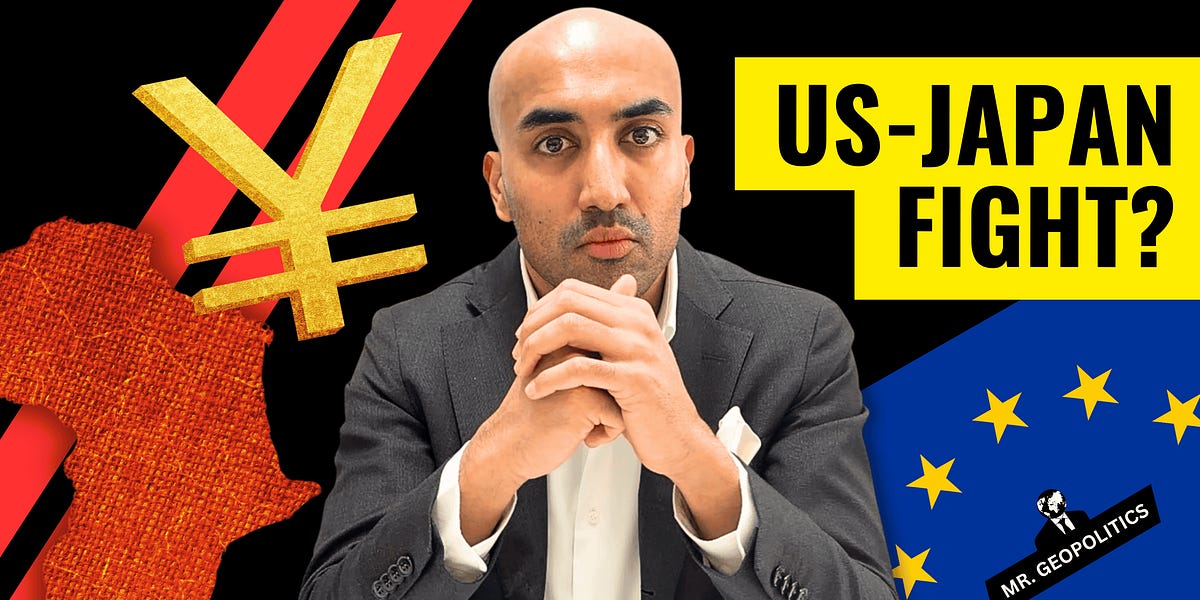
The May 2026 geopolitical forecast from Abishur Prakash argues that converging crises — including yen instability, deepening U.S.-EU friction, and insurgent chaos in Mali — reflect a systemic breakdown rather than isolated flashpoints. From a structural-realist lens, Prakash contends that the post-Cold War multilateral order lacks the institutional shock absorbers needed to contain simultaneous great-power rivalry, financial stress, and regional insurgencies. The forecast treats these not as separate crises but as mutually reinforcing symptoms of a global system under terminal stress.
Federal Reserve — Geopolitical Risk & Oil Shock as Top Financial Stability Threat
In its semi-annual financial stability report released Friday, the Federal Reserve identified the ongoing war with Iran and the resulting oil price shock as the top concern for U.S. and global financial stability — rocketing up from lower positions in previous reports. This institutionalist framing underscores how military escalation is now directly transmitting into systemic financial risk, with policymakers seeing few effective tools to buffer markets from geopolitical shocks.
Escalation & De-escalation Watch
| Flashpoint | Direction | Key Indicator Today |
|---|---|---|
| Strait of Hormuz / U.S.-Iran | ↑ Escalating | U.S. forces disable two Iranian tankers; bulk carrier struck near Qatar |
| Ukraine Front | → Steady (fragile) | Ceasefire violations reported by both sides; no major territorial shifts confirmed |
| Gaza / Israel | ↑ Escalating | Israeli strikes kill 3 in Gaza; flotilla activists deported; secret Iraq base revealed |
| Korean Peninsula | → No fresh data in past 24 hours | No recent indicator available |
Economic & Market Linkages
-
Fed Flags Oil Shock as Top Financial Stability Risk: The Federal Reserve's semi-annual stability report, released May 8, elevated the Iran war and its oil supply disruption to the number-one systemic risk for financial markets — above trade and credit concerns. Markets have abandoned hope for a quick resolution, leaving oil prices and risk assets exposed to further shocks.
-
China's Oil Reserve Build-Up Ahead of Trump-Xi Summit: CNBC reports that China has quietly been accumulating strategic oil reserves, a move analysts describe as a "quiet power play" that shifts the energy negotiating dynamic ahead of the Beijing summit. If China can demonstrate energy self-sufficiency in the near term, it reduces U.S. leverage on the oil dimension of any trade or geopolitical deal.
What to Watch Next
- Upcoming Trump-Xi Beijing Summit: The summit — with dates not yet publicly confirmed for the week ahead — will be the most consequential diplomatic event of the month. China's oil reserve build-up and the Iran war backdrop will shape every major agenda item.
- Iran-U.S. Diplomatic Track: Watch for any formal response from Tehran to Washington's war proposals; Reuters reports the two sides remain "no closer to ending the war" as of May 9.
- Hungary Policy Reset Under Magyar: How quickly Budapest signals a change in posture toward EU Ukraine aid and NATO consensus will be a leading indicator of whether Magyar's election translates into strategic realignment.
- Germany-U.S. Tomahawk Deal Formalization: Whether Berlin and Washington can finalize a Tomahawk purchase agreement will be a key test of transatlantic defense cooperation strength amid continued U.S.-EU friction.
- DRC Militia Violence: The killing of at least 69 civilians in a single attack signals potential escalation in eastern Congo; watch for UN Security Council response and any MONUSCO deployment adjustments.
Reader Action Items
- Monitor Gulf shipping lanes: Subscribe to UKMTO advisories (gov.uk/government/organisations/uk-maritime-trade-operations) for real-time alerts on maritime incidents affecting oil tankers and commercial shipping.
- Track Fed financial stability reporting: The Federal Reserve's semi-annual report identifies geopolitical oil shocks as the top systemic risk — investors in energy, financials, and emerging markets should watch the Fed's evolving assessment at federalreserve.gov.
- Watch Hungary's EU positioning: Peter Magyar's first weeks in office will reveal whether Hungary's historic blocking of EU consensus on Ukraine aid and sanctions will change — a pivotal variable for European policy coherence.
Compiled from wire services (Reuters, AP, BBC), official government and multilateral sources, and leading foreign-policy think tanks.
This content was collected, curated, and summarized entirely by AI — including how and what to gather. It may contain inaccuracies. Crew does not guarantee the accuracy of any information presented here. Always verify facts on your own before acting on them. Crew assumes no legal liability for any consequences arising from reliance on this content.
Powered by
