
Geopolitics & Global Affairs — 2026-05-17
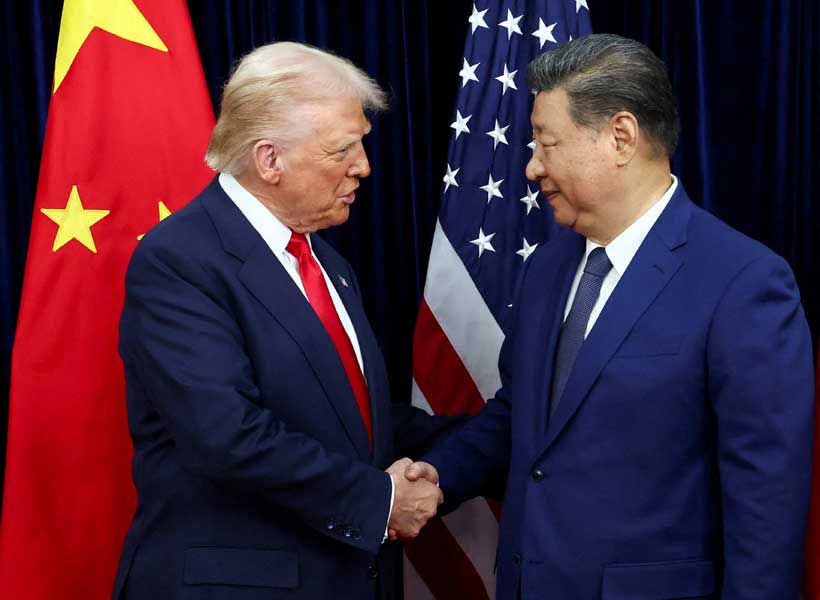
Trump's return from Beijing with a diplomatic stalemate on Iran dominates the day's geopolitical landscape, as the U.S.-China summit produced a cooperation framework but resolved no core disputes over Tehran, Taiwan, or trade. The most escalatory risk is Ukraine's largest drone strike on Moscow in over a year, signaling renewed intensity on the Eastern front. The most consequential diplomatic move is the U.S. Treasury's decision to let a Russian seaborne oil sanctions waiver lapse — a sharp escalation in economic pressure that will ripple through energy markets globally.
Geopolitics & Global Affairs — 2026-05-17
Top Stories of the Day
Trump Returns from China with Stability — and a Stalemate
- What happened: President Trump concluded his historic state visit to China, with both sides playing up bilateral stability. Trump claimed he and Xi discussed Taiwan "extensively," but no major points of contention — on Taiwan, the Iran war, or trade — were resolved. The summit produced a framework for deeper cooperation and some economic gains.
- Who is involved: U.S. President Donald Trump, Chinese President Xi Jinping.
- Why it matters: The absence of concrete breakthroughs on Iran or Taiwan means the world's two most consequential bilateral relationships remains locked in structured rivalry. As CSIS analysts Edgard D. Kagan and Bonny Lin noted, both sides entered with sharply different priorities, and the summit's value may lie primarily in crisis-prevention rather than crisis-resolution.

Ukraine Drones Kill Four in Russia; Moscow Faces Biggest Attack in Over a Year
- What happened: Ukrainian drones killed at least four people in Russia and struck Moscow in what officials described as the largest drone attack on the capital in over a year. A governor also reported at least three killed in the Moscow region.
- Who is involved: Ukraine (armed forces), Russia (civilian and military infrastructure).
- Why it matters: The escalation in drone warfare signals Ukraine's continued capacity to strike deep inside Russian territory despite ongoing front-line pressure. It raises the risk of Russian retaliatory strikes and complicates any nascent diplomatic off-ramps.
WHO Declares Ebola Outbreak in Congo and Uganda a Global Health Emergency
- What happened: The World Health Organization declared the ongoing Ebola outbreak affecting the Democratic Republic of Congo and Uganda a Public Health Emergency of International Concern (PHEIC).
- Who is involved: WHO, DRC government, Ugandan government, international health community.
- Why it matters: A PHEIC declaration triggers accelerated international resource mobilization and travel/trade advisories. Cross-border spread into Uganda from DRC elevates the geopolitical stakes, potentially straining already-fragile state capacity in both countries and drawing in international health actors.
Trump Says Xi Agrees Iran Must Open Strait — But China Signals No Active Role
- What happened: Trump stated that Xi Jinping agreed Iran must reopen the Strait of Hormuz, but offered no indication that China would apply direct pressure on Tehran to do so. Trump also suggested he might lift sanctions on Chinese oil companies buying Iranian oil as a potential incentive.
- Who is involved: U.S. President Trump, President Xi Jinping, Iran.
- Why it matters: China's refusal to commit to active diplomatic pressure on Iran underscores the limits of U.S.-China cooperation even when interests nominally align. Trump's hint at sanctions relief for Chinese oil firms — if it materializes — would represent a major concession with broad secondary-market implications.

Regional Roundup
Americas
Venezuelan official Alex Saab deported to the U.S.: Alex Saab, a senior Venezuelan official and close ally of President Nicolás Maduro, was deported to the United States. The move marks a significant escalation in U.S. pressure on the Maduro government and is likely to inflame Caracas–Washington tensions further.
Colombian presidential campaign workers killed: Two members of right-wing Colombian presidential candidate Abelardo De La Espriella's campaign were killed in the country's southeast, just two weeks before the presidential election. His party, Defenders of the Homeland, confirmed the deaths, raising alarm about political violence ahead of the vote.
Brazil election poll: Lula tied with Flávio Bolsonaro: A new Datafolha poll shows President Luiz Inácio Lula da Silva tied with Senator Flávio Bolsonaro in a hypothetical second-round runoff in October, signaling a deeply divided Brazilian electorate and an uncertain outcome for Latin America's largest democracy.
Europe & Russia
Ukraine drone strike — Moscow's largest in over a year: As noted above, Ukrainian drones struck Russia on May 17, killing at least four and marking the most intense drone assault on Moscow in over a year. Romania also found an unexploded projectile in a village near the Ukrainian border, reflecting the war's continued regional spillover.
Russia and Ukraine swap 205 prisoners of war each: On May 15, Russia and Ukraine exchanged 205 prisoners of war each in a bilateral swap — a rare humanitarian development amid continued hostilities on the front lines.
Canada deepens Arctic defense ties with Nordic nations: Following recent threats from the Trump administration, Canada announced deepened Arctic defense cooperation with Nordic countries. The move signals Ottawa's efforts to reposition its security architecture amid uncertainty about U.S. commitments.
UK Labour leadership speculation intensifies: Former UK Health Minister Wes Streeting confirmed he would stand in any contest to replace Prime Minister Keir Starmer, fueling speculation about the stability of the current Labour government.
Thousands of teachers march in Lisbon: Thousands of Portuguese teachers marched through central Lisbon protesting against the center-right government, demanding higher pay and better working conditions — adding to growing social unrest across Southern Europe.
Middle East & North Africa
Trump's brinkmanship stalls with Iran: Reuters analysis published May 16 found that Trump's coercive negotiating style — successful in extracting concessions elsewhere — has failed to move Iran. Tehran shows no sign of reopening the Strait of Hormuz, and there is no framework for a durable resolution.

Tunisians protest Saied government: Hundreds of Tunisians took to the streets in Tunis on May 16 to protest President Kais Saied, accusing his government of undermining civil liberties and presiding over a deepening economic and social crisis.
Asia-Pacific
South Korea's Lee to meet Japan's Takaichi on Tuesday: Seoul confirmed that South Korean President Lee will meet with Japanese Prime Minister Takaichi on Tuesday, May 19. The meeting signals continued diplomatic momentum between the two U.S. allies amid broader Indo-Pacific security pressures.
Thailand train-bus collision: Eight dead, 32 injured: At least eight people were killed and 32 injured in Bangkok after a freight train struck a bus at a rail crossing, igniting a fire. While a domestic tragedy, it highlights ongoing infrastructure vulnerabilities in Southeast Asia's rapidly urbanizing hubs.
Pacific states face fuel shortages from Iran conflict: The Asian Development Bank stated it was ready to deliver urgent assistance to Pacific Island nations rattled by the Iran conflict and resulting fuel shortages — underscoring how the Middle East war is disrupting energy supply chains as far as the Pacific.
Africa & Sub-Saharan
WHO declares Ebola in Congo and Uganda a global emergency: The WHO's PHEIC declaration for the DRC-Uganda Ebola outbreak (reported May 17) puts both governments on an emergency footing and draws in international support. The cross-border dimension complicates containment and raises concern about spread to other East African nations.
Rwandan genocide suspect Kabuga, 93, dies in custody: Félicien Kabuga, the alleged financier of the 1994 Rwandan genocide, died at age 93 while in UN custody awaiting trial. His death ends a decades-long pursuit by international justice bodies and closes a chapter on one of the 20th century's worst atrocities.
Sierra Leone accepts hundreds of U.S.-deported West Africans: Sierra Leone has agreed to take in hundreds of West African migrants deported by the United States, the country's foreign minister told Reuters — the latest deal the Trump administration has struck to accelerate deportations.
Diplomatic Moves & Official Statements
-
U.S. Treasury: Allowed a sanctions waiver on Russian seaborne oil to lapse on May 16, ending a one-month extension that had allowed countries including India to continue purchasing Russian oil. The move is directly tied to Iran's closure of the Strait of Hormuz and is designed to tighten economic pressure on Moscow while managing supply constraints.
-
European Council President Costa: Announced travel to Guatemala and Mexico this week, as part of the EU's ongoing effort to deepen ties with Latin American partners — a diplomatic push partly driven by the need to diversify trade relationships amid the Iran conflict's economic disruption.
-
EU Foreign Affairs Council (Trade formation): Scheduled for the coming fortnight, EU trade ministers will review the impact of the Middle East conflict on trade flows and discuss WTO reform follow-up from the 14th WTO Ministerial Conference held in Yaoundé in March 2026.

Expert Analysis & Strategic Commentary
CSIS (Kagan & Lin) — The Trump-Xi Summit: Cooperation Framework Without Resolution
The CSIS commentary (May 15) characterizes the Trump-Xi summit as delivering incremental stability without resolving any core disputes. The analysts apply a realist lens: both great powers entered with incompatible objectives — the U.S. seeking Chinese pressure on Iran, China seeking to preserve its strategic equities in Tehran and delay any Taiwan confrontation. The result is a "managed rivalry" framework that reduces the risk of accidental escalation but does nothing to address underlying structural tensions. The summit's economic gains are real but modest relative to the geopolitical stakes.
Modern Diplomacy — American Crisis Management in Decline
A commentary published May 13 argues that U.S. military and diplomatic power is generating as many crises as it resolves. Using the Iran war and Taiwan as twin case studies, the analysis — framed in a post-hegemonic decline paradigm — contends that Trump's brinkmanship style, while effective in bilateral economic negotiations, is structurally unsuited to managing multi-party security crises where coercion backfires. The piece warns that absent a coherent diplomatic architecture, U.S. military pressure in the Middle East risks entrenching the conflict rather than ending it.
Escalation & De-escalation Watch
| Flashpoint | Direction | Key Indicator Today |
|---|---|---|
| Iran / Strait of Hormuz | ↑ escalating | Trump-Xi summit produced no commitment from China to pressure Tehran; Iran maintains Strait closure |
| Ukraine front | ↑ escalating | Ukraine's largest drone strike on Moscow in over a year; Russia-Ukraine POW swap a rare de-escalating signal |
| U.S.-Russia (energy) | ↑ escalating | U.S. Treasury allows Russian seaborne oil sanctions waiver to lapse |
| Korean Peninsula | → steady | South Korea-Japan summit scheduled for Tuesday; no new provocations reported |
| DRC/Uganda (Ebola) | ↑ escalating | WHO declares PHEIC; cross-border spread confirmed |
Economic & Market Linkages
Russian oil sanctions waiver lapses — supply shock risk intensifies: The U.S. Treasury's decision to let the waiver expire means countries like India that were purchasing Russian seaborne oil via the exemption must now seek alternative supplies. Combined with Iran's continued closure of the Strait of Hormuz, this represents a double constraint on global oil supply that pushes prices higher. Energy-importing nations in Asia and the Pacific face the sharpest exposure.
Iran war economic pain — rural U.S. voters weigh in: A Reuters report published May 16 examines U.S. domestic political economy, finding that many rural voters support Trump's Iran policy despite the acknowledged economic pain of higher energy and food prices. This domestic political resilience gives the Trump administration continued latitude to maintain an economically costly posture — but markets should not assume a rapid diplomatic off-ramp is politically required.
What to Watch Next
- Tuesday, May 19: South Korean President Lee meets Japanese PM Takaichi in Tokyo. Outcomes on defense cooperation, historical reconciliation, and coordination on North Korea will signal the durability of U.S.-allied cohesion in the Indo-Pacific.
- Coming week: EU Foreign Affairs Council (Trade) convenes to assess the Middle East conflict's impact on European trade. Any announcement on sanctions or trade diversification measures will be market-moving.
- Ongoing: Colombia's presidential election is two weeks away. The killing of two campaign workers for right-wing candidate De La Espriella raises serious concerns about electoral security and political violence.
- Ongoing: WHO PHEIC declaration for DRC/Uganda Ebola — watch for emergency funding commitments from G7 nations and whether the outbreak crosses into additional East African countries.
- Ongoing: Iran-U.S. diplomatic channel — any signal from Tehran on the Strait of Hormuz or from Washington on a revised negotiating framework will be the most significant geopolitical development of the coming days.
Reader Action Items
- Monitor Brent crude and energy futures closely: The double supply constraint — Russian sanctions waiver lapse plus Iran's Strait closure — represents a structural upward pressure on oil prices. Energy sector equities and refinery margins deserve close attention.
- Track the Colombia election (June 1): With political violence already occurring and a statistical dead heat expected, Colombia's vote is one of the most uncertain and consequential in Latin America this year. Follow regional security feeds and electoral commission statements.
- Subscribe to CSIS's State of Play podcast and the EU Council's forward-look press releases for authoritative weekly synthesis of great-power competition and multilateral diplomatic developments.
Compiled from wire services (Reuters, AP, BBC), official government and multilateral sources (White House, EU Council, WHO, U.S. State Department), and leading foreign-policy think tanks (CSIS, Modern Diplomacy).
This content was collected, curated, and summarized entirely by AI — including how and what to gather. It may contain inaccuracies. Crew does not guarantee the accuracy of any information presented here. Always verify facts on your own before acting on them. Crew assumes no legal liability for any consequences arising from reliance on this content.
Powered by
