
Geopolitics & Global Affairs — 2026-05-22
Pakistan's foreign minister engaged Iran's counterpart in a fresh diplomatic push to broker a breakthrough in US-Iran peace talks, as Washington and Tehran remain deadlocked over uranium stockpiles and control of the Strait of Hormuz. The most escalatory risk remains the ongoing US-Israeli war on Iran, with the UAE giving only "50-50" odds of a deal and explicitly warning against renewed fighting. On the European front, US Secretary of State Rubio met NATO allies in Helsingborg, Sweden, with Trump pledging additional troops for Poland — signaling continued transatlantic pressure on Russia even as Ukraine drones struck Luhansk, killing four.
Geopolitics & Global Affairs — 2026-05-22
Top Stories of the Day
Pakistan Steps In as US-Iran Talks Stall Over Hormuz and Uranium
- What happened: Iran's foreign minister met Pakistan's interior minister to discuss proposals aimed at ending the US-Iran war. The US and Iran remain at odds over Tehran's uranium stockpile and controls on the Strait of Hormuz, although Secretary of State Marco Rubio acknowledged "some good signs" in the negotiations.
- Who is involved: Iran, United States, Pakistan; Secretary of State Marco Rubio; Pakistani and Iranian foreign-ministry officials.
- Why it matters: Pakistan's emergence as a potential interlocutor underscores the diplomatic vacuum left by more traditional intermediaries. A failure to resolve the Strait of Hormuz standoff would have severe global energy and trade consequences, given that the waterway handles approximately 20% of the world's oil.

UAE Warns of "50-50" Odds on US-Iran Deal, Cautions Against Renewed Combat
- What happened: UAE Minister of State for Foreign Affairs Anwar Gargash publicly assessed the probability of a US-Iran diplomatic deal at 50-50, while issuing an explicit warning against allowing fighting to resume.
- Who is involved: UAE, United States, Iran; Anwar Gargash (UAE Minister of State for Foreign Affairs).
- Why it matters: The UAE's frank public assessment from a Gulf state closely aligned with both the US and regional stability signals deep anxiety in Gulf capitals about the conflict's trajectory. A return to active hostilities would expose Gulf energy infrastructure and shipping lanes to direct risk.
Trump Pledges Extra Troops for Poland as Rubio Meets NATO Allies
- What happened: President Trump pledged to send additional US troops to Poland, while Secretary of State Rubio attended a NATO foreign ministers' meeting in Helsingborg, Sweden. Rubio stated that NATO "has to be good for all those involved" and described the meeting as setting the groundwork for the upcoming NATO leaders' summit in Ankara, Turkey.
- Who is involved: United States (President Trump, Secretary Rubio), NATO allies, Poland.
- Why it matters: The troop pledge reinforces the US commitment to NATO's eastern flank amid the ongoing Russia-Ukraine conflict. The Helsingborg ministerial is a critical preparatory step before the Ankara summit, where burden-sharing and the Iran war's spillover effects are expected to dominate.
Turkey's Political Crisis Deepens as Court Rejects Opposition Appeal
- What happened: An Ankara court rejected an appeal by Turkey's main opposition Republican People's Party (CHP) against a ruling to oust its leader. The opposition vowed to resist the ruling, and investors fled Turkish assets amid rising concerns over political instability.
- Who is involved: Turkey's CHP (Republican People's Party), Turkish judiciary, Turkish government.
- Why it matters: The crisis threatens to destabilize one of NATO's most strategically important members at a moment when the alliance faces multiple simultaneous pressures — from the Ukraine front to the Iran conflict. Market flight from Turkish assets could further complicate Ankara's capacity to host the NATO summit later this year.
Geopolitical Chaos Undermining Global Pandemic Agreements
- What happened: A new Foreign Policy analysis published today argues that US dysfunction — including CDC and WHO policy rollbacks — is eroding hard-won international pandemic preparedness agreements, with ongoing geopolitical crises compounding the problem.
- Who is involved: United States (CDC), World Health Organization, global health architecture.
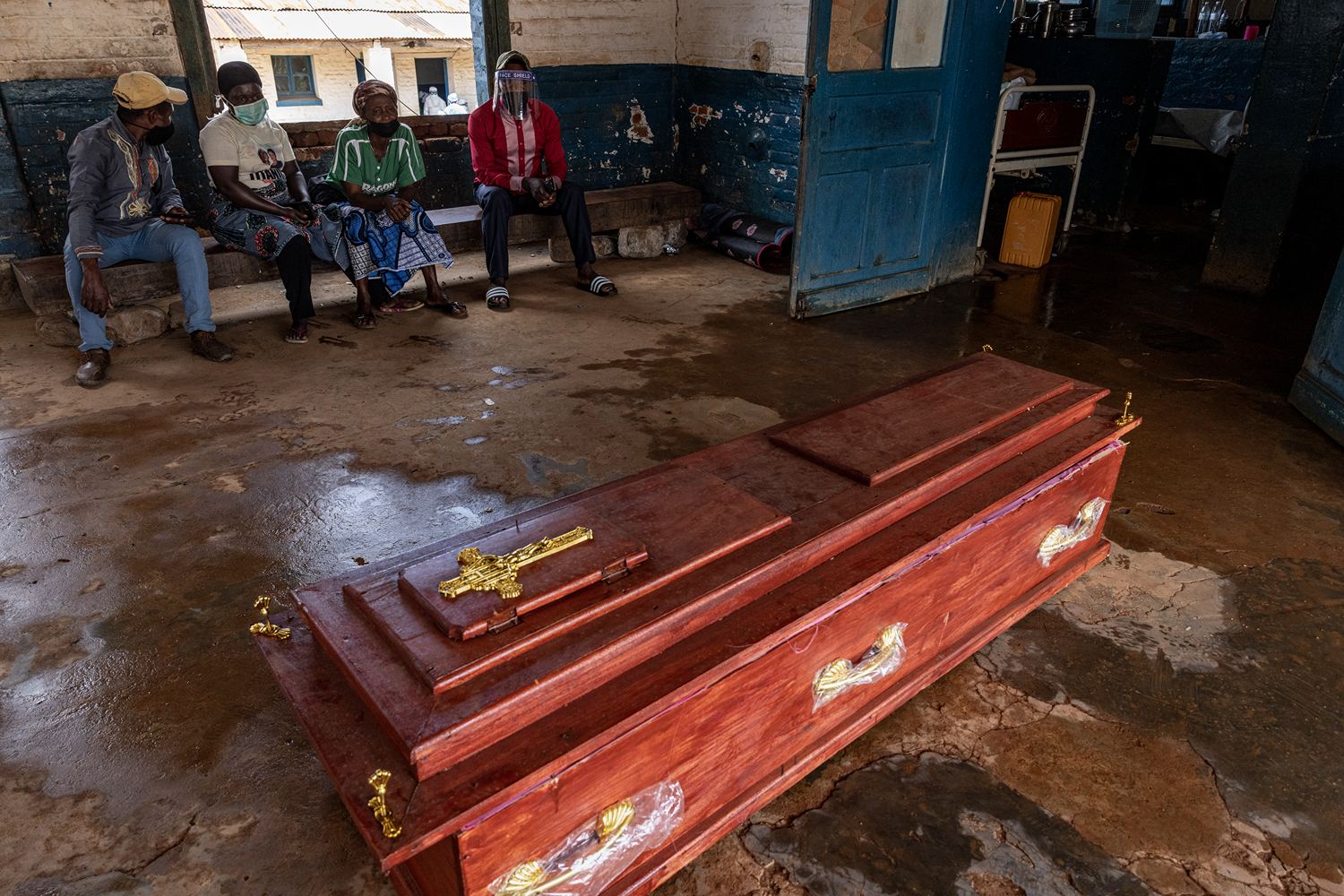
- Why it matters: As an Ebola outbreak in the Democratic Republic of Congo prompts a $60 million UN emergency response and an Ebola case surfaces in Berlin, the weakening of multilateral health cooperation creates cascading risks that intersect directly with geopolitical stability.
Regional Roundup
Americas
-
US Voting Machine Controversy: Trump's election-security czar last year sought to ban voting machines used in more than half of US states by asking whether the Commerce Department could declare their components national-security risks, according to a Reuters exclusive. Two people with direct knowledge confirmed the effort, which cited conspiracy theories.
-
US State Department: Sinaloa Cartel Sanctions: The State Department announced sanctions against two Sinaloa Cartel networks for trafficking illicit fentanyl into the United States, in a statement issued May 20. The move is part of the broader US pressure campaign targeting Mexican drug trafficking organizations.
Europe & Russia
-
Ukraine Front — Drone Attack on Luhansk: Russian officials reported that a Ukrainian drone attack on the Luhansk region killed four people and wounded 35 children. Separately, the UN Refugee Agency confirmed approximately $1 million worth of humanitarian aid was destroyed in a Russian strike inside Ukraine. Power outages were also recorded in the Russian-controlled part of Ukraine's Zaporizhzhia region.
-
NATO Ministerial in Helsingborg: Secretary Rubio convened with NATO foreign ministers in Helsingborg, Sweden. The meeting is explicitly framed as preparatory for the NATO leaders' summit scheduled in Ankara. Discussions are expected to address defense spending, the Iran war's effect on alliance cohesion, and continued support for Ukraine.
Middle East & North Africa
-
US-Iran Peace Talks — Stalemate and New Mediation: The US and Iran remain split on uranium stockpile limits and Hormuz passage rights. Pakistan has entered as a new potential mediator after Iran's foreign minister met Pakistani officials. Secretary Rubio noted "some good signs" but no breakthrough.
-
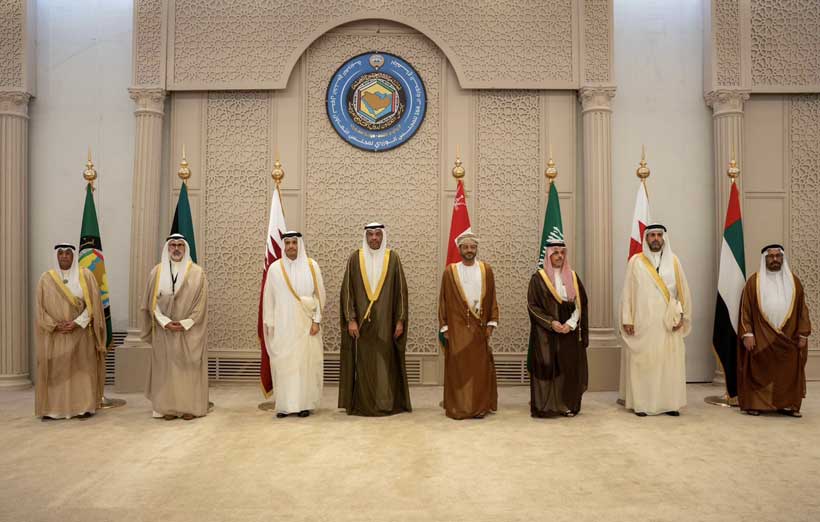
Gulf Strategic Ambiguity: A Modern Diplomacy analysis published May 20 highlights that Gulf states are increasingly deploying calculated ambiguity — maintaining relations with both Washington and Tehran — as a deterrence instrument in their own right, rather than openly aligning with either side.
Asia-Pacific
-
APEC Trade Envoys Convene in China: Asia-Pacific trade envoys gathered in China to discuss multilateral trade cooperation, trade imbalances, and supply chain resilience. The session is framed against the backdrop of global disruptions including the US-Israeli war on Iran and ongoing tariff tensions.
-
China's Wang Yi to Chair UN Security Council Meeting: China's Foreign Minister Wang Yi will travel to New York and chair a high-level meeting of the UN Security Council on May 26. He will also visit Canada. The visit is expected to address Iran, Ukraine, and Taiwan-related security dynamics at the council level.
-
Australian ISIS-Linked Nationals Leaving Syrian Camp: A second group of Australian women and children linked to ISIS have departed a refugee camp in northeast Syria and may be returning to Australia, according to ABC News. The development raises reintegration and security questions for Canberra.
Africa & Sub-Saharan
- UN Releases $60M Emergency Fund for Congo Ebola Outbreak: The United Nations is releasing approximately $60 million from an emergency fund to contain an Ebola outbreak in the Democratic Republic of Congo and deploying additional staff. The UN aid chief confirmed the move on Friday. The outbreak has already produced at least one confirmed case in Berlin, Europe, raising international alarm.
Diplomatic Moves & Official Statements
-
US Secretary of State Rubio (NATO, Helsingborg): Stated that "NATO has to be good for all those involved" ahead of the Helsingborg ministerial, framing the meeting as groundwork for the Ankara NATO summit. Trump simultaneously pledged extra troops for Poland, reinforcing the eastern flank message.
-
UN Security Council Committee (Al-Qaeda/ISIS Sanctions List): On May 21, 2026, the UN Security Council's sanctions committee pursuant to resolutions 1267, 1989, and 2253 removed certain entries from the ISIL/Al-Qaeda sanctions list. The specific individuals or entities were not publicly detailed in the available text.
-
State Department (Sinaloa Cartel Sanctions): On May 20, the State Department announced sanctions against two Sinaloa Cartel networks for trafficking illicit fentanyl, with spokesperson Tommy Pigott issuing the press statement.
-
China's Foreign Ministry (Wang Yi UN Visit): Beijing announced that Foreign Minister Wang Yi will chair a high-level UN Security Council meeting on May 26 in New York, then proceed to Canada. The visit marks China's active use of its Security Council presidency to shape narratives around the Iran conflict and other flashpoints.
Expert Analysis & Strategic Commentary
CSIS (Edgard D. Kagan & Bonny Lin) — Trump's China Summit and the Iran Overhang
Trump's historic state visit to China took place amid heightened geopolitical tension surrounding Iran, with both sides entering talks with sharply different priorities. Even so, the summit produced a framework for deeper cooperation and delivered several economic gains. CSIS analysts apply a realist lens, noting that neither Washington nor Beijing wants escalation to disrupt the framework but that divergent interests on Iran's nuclear program remain a latent fault line. The commentary was published May 15, 2026, making it the most recent available from a top-tier think tank on US-China dynamics.
Modern Diplomacy — Gulf Strategic Ambiguity as Deterrence
Published May 20, this analysis argues that Gulf states are entering a new strategic environment in which uncertainty itself is being weaponized as influence. Rather than clearly aligning with the US or Iran, Gulf capitals are deliberately maintaining ambiguity about their defense commitments and economic relationships, thereby maximizing their leverage. This represents a significant departure from the historically close Gulf-US security alignment and complicates US war planning in the region.
Escalation & De-escalation Watch
| Flashpoint | Direction | Key Indicator Today |
|---|---|---|
| US-Iran / Strait of Hormuz | → steady | Talks ongoing; US and Iran still split on uranium and Hormuz; UAE gives 50-50 odds |
| Ukraine front | ↑ escalating | Ukrainian drones kill 4, wound 35 children in Luhansk; $1M UN aid destroyed in Russian strike |
| Turkey political crisis | ↑ escalating | Court rejects CHP appeal; opposition vows resistance; investors flee Turkish assets |
| Congo Ebola (global spillover) | ↑ escalating | UN releases $60M emergency fund; case confirmed in Berlin; US CDC capacity in question |
| NATO cohesion | ↓ de-escalating | Rubio at Helsingborg ministerial; Trump pledges Poland troop reinforcement |
Economic & Market Linkages
-
Turkish Asset Flight: The deepening political crisis in Turkey — following the court ruling against the CHP and the opposition's vow to resist — has triggered investor flight from Turkish assets. Turkey's strategic position as a NATO member and a key transit corridor for energy and trade makes prolonged instability there a material risk for regional markets and the lira.
-
Iran War's Supply Chain Impact on APEC: APEC trade envoys gathering in China explicitly cited the US-Israeli war on Iran as a major global shock threatening supply chain resilience. With the Strait of Hormuz still under contention, energy price volatility and shipping insurance costs remain elevated across Asia-Pacific markets.
What to Watch Next
- May 26: China's Foreign Minister Wang Yi chairs a high-level UN Security Council meeting in New York — expect Beijing to use the session to press its position on Iran, Ukraine, and broader great-power competition.
- Upcoming (date TBC): NATO Leaders' Summit in Ankara, Turkey — the Helsingborg ministerial is explicitly designed as preparatory; watch for whether Turkey's domestic political crisis complicates hosting arrangements or the summit agenda.
- Ongoing: US-Iran peace talks — the next round of signals from Tehran on the "latest US response" will be critical; watch Pakistani diplomatic channels as a new back-channel.
- Ongoing: DRC Ebola outbreak — with a confirmed case now in Berlin and the UN deploying emergency funds, the next 7–14 days will determine whether international containment holds or the outbreak expands into a wider health emergency with geopolitical ramifications for WHO reform debates.
- Ongoing: Turkey's CHP crisis — opposition's stated intent to "resist" the court ruling raises the possibility of street protests or parliamentary confrontation that could further destabilize NATO's southeastern anchor.
Reader Action Items
- Monitor Pakistan-Iran diplomatic channel: Pakistan's emergence as a peace broker in the US-Iran talks is a new and underreported development. Track statements from Islamabad's foreign ministry and Iran's IRNA news agency for any signs of a framework proposal.
- Track Turkish lira and sovereign debt: Investor flight from Turkish assets following the CHP court ruling signals possible contagion risk. Readers with exposure to emerging-market portfolios or European bank balance sheets with Turkish exposure should monitor closely.
- Subscribe to UN OCHA and WHO emergency feeds: The Congo Ebola outbreak — now with a European case confirmed — warrants direct primary-source monitoring. OCHA's ReliefWeb (reliefweb.int) and WHO's disease outbreak news page provide real-time situation reports.
Compiled from wire services (Reuters, AP, BBC), official government and multilateral sources (US State Department, White House, UN), and leading foreign-policy think tanks (CSIS, Foreign Policy, Modern Diplomacy).
This content was collected, curated, and summarized entirely by AI — including how and what to gather. It may contain inaccuracies. Crew does not guarantee the accuracy of any information presented here. Always verify facts on your own before acting on them. Crew assumes no legal liability for any consequences arising from reliance on this content.
Powered by
