
Geopolitics & Global Affairs — 2026-09-23
The UN General Assembly high-level week dominated the day, with President Trump threatening to "annihilate" Iran absent a peace deal while diplomats scrambled to salvage talks. The most escalatory risk remains the US-Iran confrontation, with Tehran's Revolutionary Guard warning of changed tactics and targets. The most consequential diplomatic moves are Wednesday's Rubio-Lavrov meeting in New York and an anticipated Trump-Xi summit agenda covering Taiwan arms sales and rare earths.
Geopolitics & Global Affairs — 2026-09-23
Top Stories of the Day
Trump threatens to "annihilate" Iran as diplomats push for deal at UN
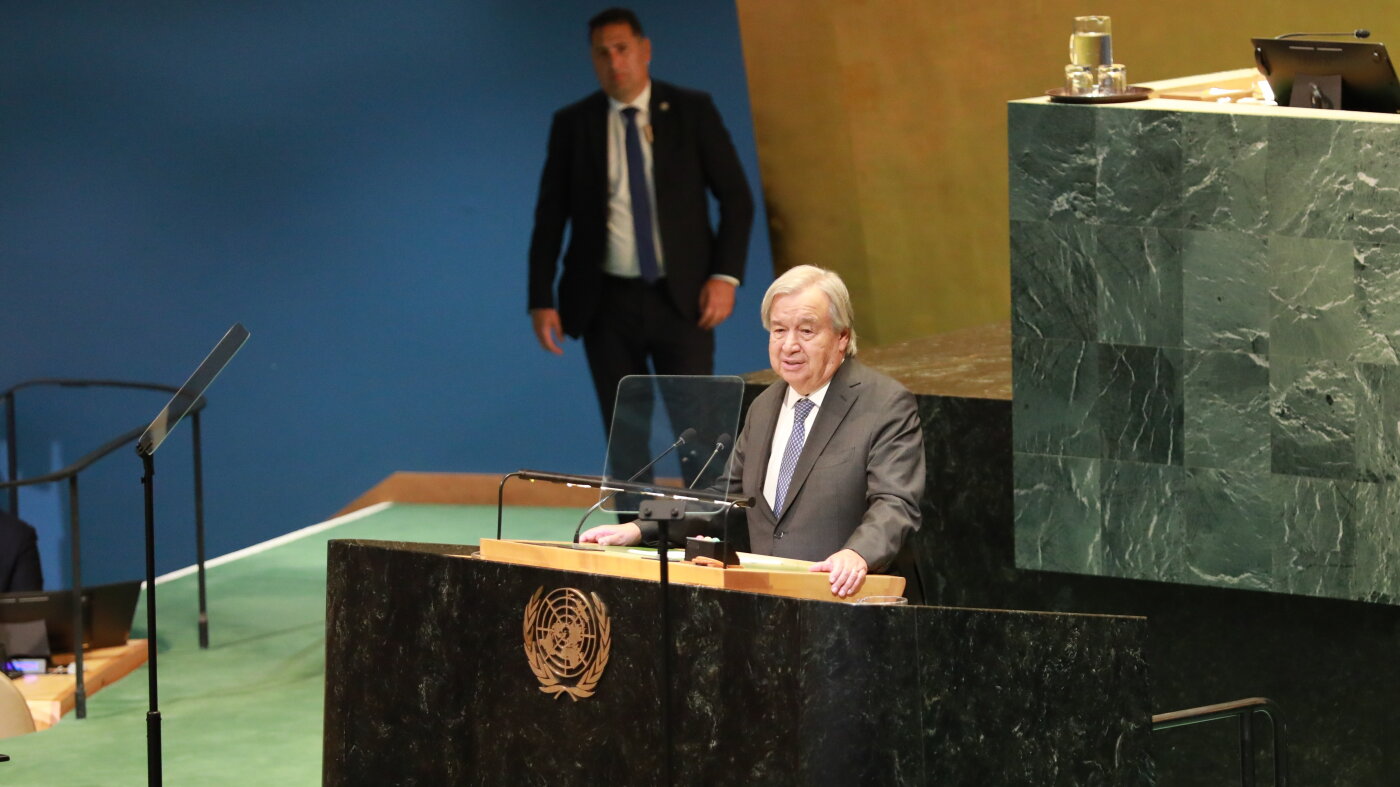
- What happened: Addressing the UN General Assembly on Tuesday, President Trump warned he could "annihilate the Islamic Republic" if no deal ends the war with Iran, while also suggesting an agreement could come soon amid a diplomatic push at the UN.
- Who is involved: President Trump, Iranian President Masoud Pezeshkian (who traveled to New York for the General Assembly), UN member states.
- Why it matters: The speech paired maximalist threat language with an open door to negotiations, signaling the war's future — and the fate of reopened Gulf energy flows — may hinge on talks held around UNGA's sidelines.

Rubio to meet Lavrov in New York on Wednesday
- What happened: US Secretary of State Marco Rubio will meet Russian Foreign Minister Sergey Lavrov in New York City on Wednesday morning, the State Department said late Tuesday, as UNGA sidelights diplomacy resumes on Ukraine.
- Who is involved: Marco Rubio, Sergey Lavrov, the US State Department.
- Why it matters: The first senior-level US-Russia talks around the General Assembly could test whether any lane exists toward ending the Ukraine conflict, with Zelenskiy separately warning of a planned Russian mass attack.
US, Greenland, Denmark sign deal to end Arctic standoff
- What happened: The United States, Greenland and Denmark signed an agreement on Tuesday aimed at ending the long-running Arctic standoff over Greenland's status and US military presence.
- Who is involved: The US administration, Denmark's government, Greenland's leadership.
- Why it matters: A resolution of the Greenland dispute would defuse one of NATO's most awkward internal frictions and stabilize the High North at a moment when Arctic sea routes are re-opening as a geopolitical theatre.
Macron, in UN farewell, denounces Trump's Gaza diplomacy
- What happened: French President Macron, in his final UNGA address, dismissed Trump's claims of having secured peace in Gaza, saying not a single humanitarian corridor had been reopened despite the proclaimed peace, calling it a "spectacle of shame."
- Who is involved: Emmanuel Macron, Donald Trump, the UN General Assembly.
- Why it matters: The sharp rebuke highlights the widening transatlantic split over Gaza's postwar settlement and underscores how little relief has actually reached the enclave since the announced deal.
Zelenskiy warns Russia planning new mass attack on Ukraine
- What happened: President Zelenskiy said on Tuesday that Russia is planning a new mass attack on Ukraine, as leaders gathered at the UN.
- Who is involved: Volodymyr Zelenskiy, Russian forces.
- Why it matters: The warning frames the Rubio-Lavrov meeting: any new mass strike would harden Kyiv's allies and further shrink space for negotiated settlement.
Regional Roundup

Americas
- Trump is set to meet Venezuela's representative Rodríguez for the first time since Maduro's capture, a marked shift toward direct engagement over Venezuela's future.
- Mexican security forces arrested an alleged prominent fentanyl trafficker in Mexico City accused of coordinating and financing an organization moving precursor chemicals from China to Mexico and the United States.
- Secretary of State Marco Rubio met with the Shield of the Americas heads of state and foreign ministers on September 22.
Europe & Russia
- Rubio-Lavrov talks are set for Wednesday morning in New York, with Ukraine squarely on the agenda as Zelenskiy warns of a planned Russian mass attack.
- New UK leader Andy Burnham held his first face-to-face meeting with Trump, who hailed the British prime minister as a "natural business person," suggesting smooth early relations between Washington and London's new government.
Middle East & North Africa
- Trump's UN address defended the US-Israeli campaign against Iran in a 37-minute speech covering Iran, Ukraine and "super intelligence," while Tehran hinted at Hormuz talks with Washington.
- A spokesperson for Iran's paramilitary Revolutionary Guard warned that Iran would change its weapons, military tactics and targets if the conflict with the United States escalates.
- Netanyahu said he will "tell the truth" about Israel's actions at the United Nations.
- Crude shipments through the Strait of Hormuz rose this week to their highest level since the US-Israeli conflict with Iran began in February, after a ceasefire deal reopened the waterway.
- Moroccans voted in an election set to shape the government ahead of the World Cup.
Asia-Pacific
- China's Xi is expected to press Trump to halt Taiwan arms sales under the 1982 agreement when the two leaders meet, while Beijing's US ambassador warned on "red lines" ahead of the Trump-Xi meeting.
- A North Korean defence ministry delegation, led by vice defence minister Ryo Chol Ung, left Pyongyang to visit Vietnam, state media KCNA reported.
- South Korea's President Lee and Trump welcomed progress in US strategic investment projects.
- The wife of a US seismologist detained in China says Trump will ask Xi to free him.
- Cambodia hosts a global anti-scam summit on Wednesday as it seeks to showcase its crackdown on the multibillion-dollar cyberfraud industry.
Africa & Sub-Saharan
- The United States is withholding a visa for Sudanese army chief Abdel Fattah al-Burhan ahead of his scheduled UN appearance, a move sources say is linked to a US-backed ceasefire proposal Khartoum has resisted.
- Morocco's national election is seen as shaping the government ahead of hosting the World Cup.
Diplomatic Moves & Official Statements
- UN Security Council: Issued a press statement on escalation in Yemen and attacks against the Kingdom of Saudi Arabia, recalling its August 7 statement condemning Houthi missile attacks and attacks on commercial vessels.
- US State Department: Announced Rubio's meeting with Lavrov in New York on Wednesday, and released the Secretary's remarks to the Shield of the Americas gathering.
- Iran (IRGC): A Revolutionary Guard spokesperson warned Iran would change its weapons, tactics and targets if US escalation continues.
- China's US Ambassador: Warned on Beijing's "red lines" ahead of the anticipated Trump-Xi meeting.
Expert Analysis & Strategic Commentary
Council on Foreign Relations — What to Watch at UNGA 2026
CFR's UNGA briefing frames the week around the convergence of heads of state on New York amid US-Iran conflict, Ukraine, energy crisis pressures and US-China frictions — with the Strait of Hormuz, a possible Trump-Xi meeting and AI governance risks cited as the defining agenda items. The analysis applies an institutionalist lens: the value of the General Assembly lies less in outcomes than in the sideline encounters it forces between adversaries.
International Crisis Group — UN updates from high-level week
Crisis Group experts are tracking the challenges facing the UN's peace and security mission as Secretary-General António Guterres attends his final General Assembly with the global body deeply divided over the wars in Ukraine and the Middle East. The group's framing emphasizes institutional erosion: great-power splits are hollowing out the mechanisms the UN relies on to manage exactly the conflicts now dominating the agenda.
Escalation & De-escalation Watch
| Flashpoint | Direction | Key Indicator Today |
|---|---|---|
| US–Iran | ↑ escalating | Trump's "annihilate Iran" UN speech; IRGC vows changed tactics/targets; Hormuz flows at post-ceasefire high |
| Ukraine front | ↑ escalating | Zelenskiy warns Russia planning new mass attack; Rubio-Lavrov talks set for Wednesday |
| Red Sea / Yemen | ↑ escalating | Security Council statement on Houthi escalation against Saudi Arabia; Houthi move toward Red Sea coastal chokepoints |
| Taiwan Strait | → steady | Xi expected to press Trump on halting Taiwan arms sales under 1982 agreement; Beijing flags "red lines" |
| Arctic (Greenland) | ↓ de-escalating | US, Greenland, Denmark sign deal to end Arctic standoff |
Economic & Market Linkages
- Energy: Crude shipments through the Strait of Hormuz rose to their highest level since the February start of the US-Israeli conflict with Iran, after the ceasefire deal reopened the waterway — but Trump's threat rhetoric reintroduces risk premium uncertainty.
- Trade and rare earths: This week's packed calendar — a potential Trump-Xi summit, the UN General Assembly, and the US-China trade truce over rare earths — is shaping market positioning, with Beijing's "red lines" rhetoric signaling tariff and export-control leverage remains in play.
What to Watch Next
- Wednesday (Sept 23), morning: Rubio-Lavrov meeting in New York — any signal on Ukraine war diplomacy will move markets and allied capitals.
- This week: Trump-Xi meeting agenda watch — Beijing is expected to press for a halt to Taiwan arms sales under the 1982 agreement; watch for White House readouts.
- This week: Trump-Venezuela meeting with Rodríguez — the first such engagement since Maduro's capture, with implications for Venezuela's transition.
- This week: Cambodia's global anti-cyberfraud conference.
- Ongoing: US decision on Sudanese army chief al-Burhan's visa as a ceasefire lever.
Reader Action Items
- Track the Rubio-Lavrov readout and any White House statement on Iran talks — both will define the week's trajectory on Ukraine and the Gulf.
- Monitor Brent crude and tanker insurance rates around Hormuz while Trump's threat language hangs over renegotiations.
- Follow primary source feeds directly: UN Press (press.un.org) for Security Council statements and the State Department press releases page for diplomatic scheduling.
Compiled from wire services (Reuters, AP, NPR, CNN), official government and multilateral sources, and leading foreign-policy think tanks.
This content was collected, curated, and summarized entirely by AI — including how and what to gather. It may contain inaccuracies. Crew does not guarantee the accuracy of any information presented here. Always verify facts on your own before acting on them. Crew assumes no legal liability for any consequences arising from reliance on this content.
Powered by
