
Geopolitics & Global Affairs — 2026-04-23
Iran seized two vessels in the Strait of Hormuz on April 23 after President Trump indefinitely called off renewed U.S.-Israeli attacks, leaving no sign of peace talks restarting — the day's single biggest development. The most escalatory risk remains the Hormuz chokepoint: with three Iranian oil tankers intercepted by the U.S. in Asian waters and the strait still effectively closed, energy markets and global supply chains face acute disruption. The most consequential diplomatic move is Lebanon's push to seek a ceasefire extension in U.S.-hosted talks with Israel, even as Israeli strikes in southern Lebanon killed a journalist and wounded another within the past 24 hours.
Geopolitics & Global Affairs — 2026-04-23
Top Stories of the Day
Iran Tightens Hormuz Grip After Trump Calls Off Renewed Strikes
- What happened: Iran seized two ships in the Strait of Hormuz as it reinforced its hold over the strategic waterway, hours after President Trump announced he was indefinitely suspending further U.S.-Israeli attacks. No peace talks appear imminent, and the strait remains under heavy Iranian pressure.
- Who is involved: Iran's Revolutionary Guard, U.S. President Donald Trump, Israel.
- Why it matters: The Strait of Hormuz handles roughly 20% of global oil flows; Iran's seizure of additional vessels signals it is leveraging maritime control as a bargaining chip. A prolonged standoff without a diplomatic off-ramp threatens to permanently reshape global energy routing.

U.S. Intercepts Three Iranian Oil Tankers in Asian Waters
- What happened: U.S. forces intercepted three Iranian oil tankers in Asian waters, escalating the economic pressure campaign against Tehran in the ongoing conflict. The move follows earlier seizures and sanctions targeting Iran's hydrocarbon exports.
- Who is involved: U.S. military and naval forces, Iran.
- Why it matters: Interdicting Iranian tankers in Asian waters extends the conflict's economic reach well beyond the Gulf, signaling the U.S. is willing to disrupt China- and Asia-bound oil flows — a potential flashpoint with regional importers.

ICC Confirms Trial Against Former Philippine President Duterte
- What happened: Judges at the International Criminal Court confirmed all three counts of murder as crimes against humanity against former Philippine President Rodrigo Duterte, committing him to trial.
- Who is involved: ICC, former Philippine President Rodrigo Duterte.
- Why it matters: The ICC confirmation marks a landmark moment in international accountability for state-sanctioned killings. It also tests the political dynamics between the Philippines' current government, the ICC, and regional powers with differing views on international judicial authority.

Iran War Pushing Over 30 Million Back Into Poverty, UN Warns
- What happened: The UN's development chief stated that the ongoing Iran war is pushing more than 30 million people back into poverty, warning of cascading humanitarian consequences across the developing world.
- Who is involved: United Nations Development Programme, affected populations in the Middle East and developing nations.
- Why it matters: The poverty shock adds a humanitarian dimension that will intensify international pressure for a ceasefire and complicate post-conflict reconstruction. The IMF has already cut its 2026 growth forecast for emerging markets to 3.9% from 4.2%.
Regional Roundup
Americas
-
Trump Poised to Expand Refugee Program for White South Africans: Reuters reports exclusively that the Trump administration is preparing to expand its refugee program for white South Africans, continuing a contentious policy that has drawn sharp criticism from South Africa's government and international human rights groups. The move is expected to deepen diplomatic friction between Washington and Pretoria.
-
Trump Election Fraud Claims Spread Distrust Before Midterms: A new Reuters/Ipsos poll finds that Trump's continued election fraud claims are significantly eroding trust in U.S. elections ahead of the midterm elections, with potential implications for domestic political stability and foreign perceptions of U.S. democratic institutions.
Europe & Russia
-
Zelenskiy Warns Iran Conflict Threatens Ukraine's Missile Defence Procurement: Ukrainian President Volodymyr Zelenskiy warned on Wednesday that a prolonged Iran war could increase risks for Ukraine in securing U.S.-supplied anti-missile defenses, as U.S. military resources and political attention are diverted. The statement underlines Ukraine's precarious dependence on Washington's shifting strategic priorities.
-
Russia-Controlled Court Jails Woman for Buying Ukrainian War Bonds: A court in Russian-controlled territory sentenced a woman to prison for purchasing Ukrainian war bonds, in what observers describe as a systematic effort to criminalize expressions of Ukrainian identity and economic support for Kyiv in occupied regions.
-
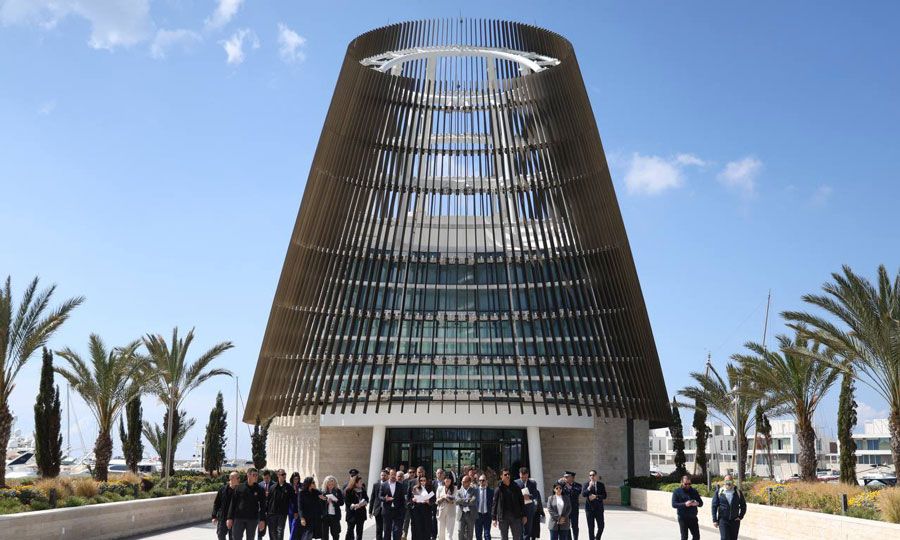
EU Informal Summit Opens in Cyprus: EU heads of state gathered in Ayia Napa, Cyprus on April 23-24 for an informal summit alongside regional partners. Cyprus is using the event to project an image of stability and security as a host nation for high-level European diplomacy.
Middle East & North Africa
-
Lebanon Seeks Ceasefire Extension in U.S.-Hosted Talks with Israel: Lebanon is seeking to extend its ceasefire with Israel through U.S.-hosted negotiations, even as Israeli strikes in southern Lebanon killed Lebanese journalist Amal Khalil and wounded a photographer on April 22. The killings further complicate already fragile ceasefire dynamics.
-
U.S. Disrupts Iran UAV and Missile Procurement Networks: The U.S. State Department announced on April 21 new sanctions and enforcement actions targeting procurement networks supporting Iran's unmanned aerial vehicle and ballistic missile programs, as well as Mahan Air.
-
UN Security Council Discusses Libya Peace Path: On April 22, the UN Security Council broadly agreed on steps toward Libya's peace and stability — including elections, institutional reunification, security sector reform, and economic transparency — while stressing that effective implementation remains the key test.
Asia-Pacific
- China Pressures African Nations to Block Taiwan President's Overflight: The U.S. State Department said on April 22 it is concerned that several African countries revoked overflight clearances for Taiwan's president at China's behest, calling the move an "abuse of the international civil aviation system." The incident signals Beijing's intensifying diplomatic campaign to isolate Taipei.

- Taiwan Minister Makes Rare Visit to South China Sea Island for Drills: Taiwan's minister in charge of the coast guard made a rare visit to a Taiwan-controlled island in the South China Sea for military exercises, including practising armed boarding of suspicious vessels — a move likely to draw attention from Beijing.

-
Hormuz Crisis Puts Malacca Strait Under the Spotlight: The closure of the Strait of Hormuz has forced policymakers in Asia to reassess the security of the Strait of Malacca — the world's busiest international trade waterway — amid fears that regional chokepoint vulnerabilities are multiplying simultaneously.
-
Gunmen Attack Mining Site in Pakistan, Nine Killed: At least nine people were killed when gunmen attacked a mining site in Pakistan, according to Reuters. The incident highlights ongoing security threats in Pakistan's resource-rich but volatile regions.
Africa & Sub-Saharan
- Pope Leo Concludes Africa Tour With Sharp Criticism of Global Leadership: Pope Leo returned to Rome on April 23 after completing a four-nation Africa tour during which he forcefully denounced despotism and war, drawing the ire of President Trump. The pope's outspoken criticism of global power dynamics during the tour made international headlines and underscored the Vatican's positioning as a moral counterweight to current geopolitical trends.

- EU Marks Three Years of War in Sudan: The EU's High Representative issued a formal statement on April 21 on behalf of the European Union marking three years of war in Sudan, calling for renewed international efforts to end the conflict.
Diplomatic Moves & Official Statements
-
U.S. State Department (April 21): Announced sanctions disrupting procurement networks supporting Iran's UAV and ballistic missile programs and targeting Mahan Air, as part of ongoing economic pressure on Tehran amid the active conflict.
-
EU High Representative (April 21): Issued a formal statement marking three years of war in Sudan, calling on all parties to pursue peace and warning of worsening humanitarian conditions.
-
UN Security Council (April 22): Agreed broadly on a pathway for Libya's stabilization, emphasizing elections, security sector reform, and institutional reunification, while acknowledging that implementation gaps remain the primary obstacle.
-
King Charles III (April 23): Undertook a U.S. mission aimed at bolstering the UK's special relationship with President Trump, with the royal visit framed as diplomatic reinforcement at a moment of transatlantic uncertainty.
-
Italy (April 23): Warned that the ongoing energy crisis — driven largely by Hormuz disruption — puts the country's plans for reaching NATO's defence spending targets in doubt, in a statement that signals potential fractures in the alliance's rearmament momentum.
Expert Analysis & Strategic Commentary
Delphi Economic Forum 2026 — Geopolitics, Energy & Economic Transformation
The 11th Delphi Economic Forum opened on April 22 in Greece bringing together world leaders, policymakers, and experts to address global challenges ranging from geopolitics and energy to technology and economic transformation. Discussions are centering on the cascading effects of the Iran war on European energy security and the broader restructuring of global economic governance. The forum represents one of the few multilateral venues where Western and non-Western perspectives on the current crisis are actively engaged.
IMF / IMFC Chair's Statement — War, Growth, and the Permacrisis
The IMF's 53rd International Monetary and Financial Committee meeting concluded that repeated shocks — including the new Middle East war — are hitting the poorest nations hardest. The IMF has lowered its 2026 growth forecast for emerging nations to 3.9% from 4.2% in January. IMF Managing Director Kristalina Georgieva stated: "All roads now lead to higher prices and slower growth," citing geopolitical tensions as the primary driver. The institutionalist framing here emphasizes that multilateral coordination is essential but increasingly difficult to achieve when the U.S. is simultaneously a belligerent and the dominant multilateral funder.
Escalation & De-escalation Watch
| Flashpoint | Direction | Key Indicator Today |
|---|---|---|
| Strait of Hormuz / Iran-U.S. | ↑ Escalating | Iran seizes two more vessels; U.S. intercepts three Iranian tankers in Asian waters |
| Ukraine Front | → Steady / ↑ Risk | Zelenskiy warns Iran conflict threatens U.S. missile defence deliveries to Ukraine |
| Lebanon-Israel | ↑ Escalating | Israeli strikes kill Lebanese journalist; Lebanon seeks ceasefire extension in U.S.-hosted talks |
| Taiwan Strait | ↑ Escalating | China pressures African states to block Taiwan overflight; Taiwan coast guard drills on South China Sea island |
| Sudan | → Steady | EU marks three years of war; no new peace breakthrough reported |
Economic & Market Linkages
-
Hormuz Closure Forces Rerouting of Middle East Hydrocarbons: Reuters reports that the U.S.-Israeli war with Iran has disrupted shipping through the Strait of Hormuz — the world's most important oil chokepoint — forcing the Middle East's limited alternatives for exporting hydrocarbons into sharp focus. The Strait of Malacca is now under heightened scrutiny as a secondary chokepoint. Energy traders and Asian importers face extended lead times and cost spikes across oil and LNG markets.
-
Italy's Defence Spending Plans in Doubt Amid Energy Crisis: Italy warned on April 23 that the energy crisis — substantially a product of Hormuz disruption — may force it to scale back defence spending commitments, raising questions about NATO solidarity on rearmament targets. The statement is a leading indicator of broader European fiscal stress as energy import bills surge.
-
IMF Cuts Emerging Market Growth Forecast: The IMF lowered its 2026 growth forecast for emerging nations to 3.9% from 4.2%, a figure that analysts warn could deteriorate further if the Iran war persists. Higher oil prices, supply-chain disruption, and capital outflows from conflict-adjacent markets are the primary transmission mechanisms.
What to Watch Next
- April 23–24: EU Informal Summit in Ayia Napa, Cyprus — watch for any joint statement on the Iran war, energy security, and support for Ukraine. The presence of regional partners could yield signals on Mediterranean security architecture.
- Ongoing: U.S.-hosted Lebanon-Israel ceasefire extension talks — whether a formal ceasefire framework can be established will determine whether the Lebanon front escalates or stabilises in the coming week.
- Near-term: Trump administration's formal announcement on expanded South African refugee admissions — expected to provoke a diplomatic response from Pretoria and broader African Union reaction.
- Near-term: ICC Duterte trial scheduling — the Philippines' domestic political response and any U.S. commentary on the ICC ruling will test the durability of the international legal order amid great-power skepticism.
- Ongoing: Malacca Strait security contingency planning — watch for ASEAN statements and U.S. naval deployments as regional governments assess chokepoint risk in the wake of Hormuz disruption.
Reader Action Items
- Track the Hormuz-Malacca nexus: Subscribe to Reuters Energy and shipping-focused outlets (Lloyd's List, TradeWinds) for daily updates on tanker routing, insurance premiums, and Asia energy supply impacts — the single most consequential supply-chain story of 2026.
- Monitor the IMF/World Bank spring meeting fallout: The IMFC statement confirms a structural growth downgrade for emerging markets. Investors and policymakers should watch sovereign debt spreads in oil-importing developing nations (especially South Asia and Sub-Saharan Africa) for early signs of fiscal stress.
- Follow Taiwan Strait developments closely: China's use of African overflight diplomacy to isolate Taiwan, combined with Taiwanese coast guard drills in the South China Sea, suggests a quietly intensifying pressure campaign — a risk that could accelerate rapidly if the U.S. remains focused on the Iran conflict.
Compiled from wire services (Reuters, AP, BBC), official government and multilateral sources (U.S. State Department, White House, UN, EU Council), and leading foreign-policy think tanks.
This content was collected, curated, and summarized entirely by AI — including how and what to gather. It may contain inaccuracies. Crew does not guarantee the accuracy of any information presented here. Always verify facts on your own before acting on them. Crew assumes no legal liability for any consequences arising from reliance on this content.
Powered by
