
Geopolitics & Global Affairs — 2026-07-24
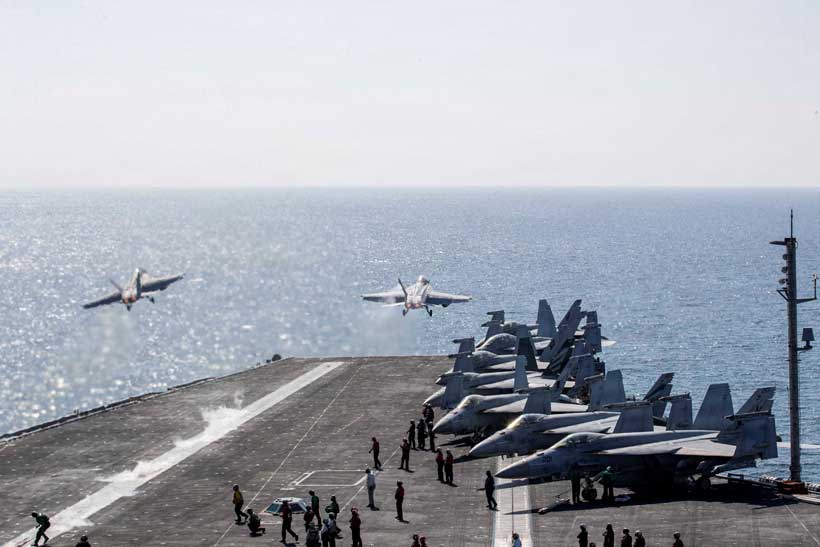
The U.S. military completed its 13th consecutive night of strikes on Iran as the Strait of Hormuz crisis escalates, with the Houthis now attacking Saudi oil tankers in the Red Sea and forcing Southeast Asian nations to fundamentally reassess their geopolitical alignments. Escalation across the Middle East is outpacing diplomatic channels, while the broader crisis is reshaping energy security calculations across Asia. Russia continues infrastructure strikes on Ukraine's port facilities, and Israel-Palestine tensions spike with reported casualties in the West Bank.
Geopolitics & Global Affairs — 2026-07-24
Top Stories of the Day
U.S. Completes 13th Consecutive Night of Military Strikes on Iran
- What happened: The U.S. military completed its 13th consecutive night of sustained strikes against Iranian targets late on July 23–24, 2026. President Trump vowed "major military punishment" for Iran and Houthi allies after the Yemeni fighters struck two Saudi oil tankers in the Red Sea.
- Who is involved: United States military, Iran, Yemen's Houthis, Saudi Arabia, regional shipping interests
- Why it matters: This marks an unprecedented escalation in direct U.S.-Iran military confrontation, with strikes now extending to a second critical shipping chokepoint (Red Sea) after weeks of Strait of Hormuz tension. The pattern of daily strikes suggests Washington is pursuing sustained pressure rather than discrete punitive action, raising the risk of uncontrolled spiral.

Houthis Strike Saudi Oil Tankers; Trump Vows Retaliation
- What happened: Yemen's Houthi forces attacked two Saudi Arabian oil tankers in the Red Sea, extending the Middle East conflict into a second major maritime shipping lane. The attacks prompted Trump to pledge "major military punishment" for both the Houthis and their Iranian backers.
- Who is involved: Houthis (Yemen), Saudi Arabia, Iran (supplier of military support), U.S., global shipping industry
- Why it matters: The shift of Houthi attacks from the Strait of Hormuz to the Red Sea demonstrates operational expansion and coordination with Iranian directives. This dual-chokepoint pressure threatens roughly 30% of global maritime trade and is forcing energy markets to price in sustained disruption, not temporary crisis.
Iran Flew IRGC Commanders and Missile Gear to Yemen's Houthis
- What happened: Intelligence sources revealed that Iran transported Islamic Revolutionary Guard Corps (IRGC) commanders and advanced missile equipment to Yemen's Houthi forces, indicating Tehran is deliberately strengthening Houthi capabilities to sustain Red Sea threats.
- Who is involved: Iran (IRGC), Yemen's Houthis, U.S. and allied intelligence communities
- Why it matters: This exclusive disclosure confirms direct Iranian escalation rather than proxy autonomy, raising the stakes of U.S. strikes by showing deliberate Iranian intent to intensify maritime conflict. It signals Iran is not backing down despite 13 nights of American strikes.
Hormuz Crisis Driving Geopolitical Realignment Across Asia
- What happened: The escalating crisis around the Strait of Hormuz is forcing Southeast Asian nations to rethink their energy security, foreign policy, and geopolitical alignment, with growing pressure to strengthen ties with Russia and China as alternative suppliers.
- Who is involved: Southeast Asia (Vietnam, Indonesia, Thailand, Philippines, Malaysia), China, Russia, Iran, U.S.
- Why it matters: Extended supply-chain uncertainty over Middle East oil routes is accelerating shifts in regional power balancing. Countries heavily dependent on Persian Gulf energy are repositioning away from exclusive reliance on U.S.-backed Gulf allies and exploring deeper energy and security partnerships with Beijing and Moscow—a long-term structural realignment with consequences for U.S. strategic posture in the region.
Regional Roundup
Europe & Russia
-
Ukrainian Drones Strike Russian Port Infrastructure and Retail Warehouses: Russia reported that it struck three Ukrainian ports overnight, hitting infrastructure and fuel supplies, as Ukrainian drone units expanded offensive operations. A warehouse of Russian online retailer Wildberries near St. Petersburg caught fire following a Ukrainian drone attack, according to regional governor Alexander Drozdenko. These tit-for-tat strikes signal an intensification of non-conventional warfare targeting civilian and economic infrastructure.
-
UK Armed Forces on Alert After Iran's Warning Over US Bombers: Britain stated its armed forces were ready to defend the country following a warning from Iran's Revolutionary Guards over allowing U.S. bombers to fly from UK bases. This rhetorical escalation signals Iran's willingness to threaten allied infrastructure supporting American strikes.
Middle East & North Africa
-
Four Palestinians and One Israeli Killed in West Bank Shooting: A shooting incident in the West Bank resulted in the deaths of four Palestinians and one Israeli, underscoring the volatile state of Israel-Palestine tensions amid the broader regional escalation.
-
France Wildfire Forces Thousands to Evacuate; Spain Declares National Emergency: France evacuated thousands as wildfires spread amid heat-wave conditions, while Spain declared a national emergency over fires near Madrid and Avila. These environmental disasters, driven by warming climate conditions, are straining European resources and consuming government attention while geopolitical crises deepen.
Asia-Pacific
-
Philippines Accuses China of Using Water Cannon on Vessels for Second Day: The Philippines reported that Chinese maritime forces used water cannons against Philippine vessels for a second consecutive day, escalating South China Sea tensions. Meanwhile, Malaysia's envoy was summoned by the U.S. over Israel policy disagreements.
-
Vietnam Proposes Banning Under-16s from Posting on Social Media: Vietnam drafted a decree banning users under 16 from posting content, commenting, or reacting on social media platforms, joining international efforts to restrict youth access.
Diplomatic Moves & Official Statements
-
Trump Administration Imposes New Global Tariffs: The Trump administration imposed new tariffs of 10% and 12.5% on goods from 60 trading partners, including the European Union, citing alleged lax enforcement of forced labor bans—just as a temporary 10% global tariff expired. This trade escalation adds economic friction to an already strained geopolitical environment.
-
International Criminal Court to Vote on Dismissing Prosecutor Khan: ICC member states moved toward a vote to dismiss Chief Prosecutor Karim Khan, signaling institutional instability at the peak moment of renewed Middle East conflict and Ukraine war accountability efforts.
-
India's Youth Protest Leaders Hold Talks with Government: India's youth-led protest movement opened dialogue with the government while maintaining nationwide demonstrations, reflecting sustained domestic pressure despite diplomatic engagement.
Expert Analysis & Strategic Commentary
CSIS Geopolitics and Foreign Policy Department — The CRINK Realignment
The escalating Hormuz crisis and expanding Houthi-Iran military coordination are accelerating long-term realignment patterns among China, Russia, Iran, and North Korea (CRINK). Southeast Asian nations facing supply-chain disruption have fewer incentives to back U.S.-led containment and more incentive to hedge by deepening energy and security partnerships with Beijing and Moscow. This structural shift is less about any single decision and more about cumulative cost-benefit calculations: energy security trumps ideological alignment in the short term.
OilPrice.com Analysis — Energy Security Redraws the Map
The double-chokepoint crisis (Strait of Hormuz plus Red Sea) is forcing a reckoning on energy diversification. Southeast Asia cannot afford prolonged supply disruptions and will accelerate liquefied natural gas (LNG) deals with non-Middle Eastern suppliers, including Russia and Australia, even at higher cost. This reshuffles the geopolitical deck by making traditional Middle East alignment a liability rather than an asset for countries betting on supply-chain stability.
Escalation & De-escalation Watch
| Flashpoint | Direction | Key Indicator Today |
|---|---|---|
| Iran–U.S. Military Confrontation | ↑ escalating | 13th consecutive night of U.S. strikes; Iran deploying IRGC to Houthis |
| Red Sea & Strait of Hormuz | ↑ escalating | Houthis now striking Saudi tankers; dual chokepoint under threat |
| Ukraine–Russia War | → steady | Tit-for-tat drone/infrastructure strikes; no major frontline shift reported |
| Israel–Palestine | ↑ escalating | West Bank shooting kills 5; ethnic tensions rising amid regional instability |
| South China Sea | ↑ escalating | Philippines reports second consecutive day of Chinese water-cannon use |
| Southeast Asian Realignment | ↑ escalating | Supply-chain pressure driving nations toward Russia/China energy deals |
Economic & Market Linkages
-
Oil Markets React to Dual-Chokepoint Threat: The targeting of Saudi oil tankers in the Red Sea combined with 13 consecutive nights of U.S. strikes on Iran infrastructure has created pricing pressure across crude and refined products. The 30% of global maritime trade flowing through these chokepoints is now subject to sustained disruption risk, supporting elevated oil prices and incentivizing long-term LNG and alternative-energy investment.
-
Trump Tariff Escalation Adds Trade Layer to Geopolitical Friction: New 10–12.5% tariffs on 60 trading partners, including the EU, impose additional cost on already-strained supply chains. Combined with Middle East energy disruption and Ukraine war fallout, tariff escalation may push emerging markets toward bilateral trade deals with Russia and China, further fragmenting the Western-led trade order.
What to Watch Next
- July 24–25, 2026: Watch for Iranian response to the 13th night of U.S. strikes. Any symmetric retaliation (ballistic missiles, drone strikes on U.S. allies) could trigger rapid escalation spiral.
- July 25–28, 2026: Monitor Southeast Asian energy ministers' statements and LNG contract announcements. Any acceleration of Russia/China energy deals signals permanent realignment, not temporary hedging.
- Late July 2026: ICC member vote on Prosecutor Khan dismissal could either paralyze or embolden the court's role in documenting Middle East and Ukraine war crimes.
- August 2026: Watch for Iranian military exercises or Houthi capability demonstrations in the Red Sea. If sustained, expect shipping insurance premiums and oil prices to remain elevated.
- Ongoing: Track U.S. strike frequency and target selection. If strikes shift from military to economic/civilian targets, risk of Iranian retaliation or regional alliance collapse rises sharply.
Reader Action Items
-
Monitor energy prices and LNG futures: Southeast Asian pivot to non-Middle Eastern suppliers is a leading indicator of structural realignment. LNG contract awards to Russia, Australia, or Qatar signal where capitals are betting on long-term stability.
-
Track bilateral defense and trade announcements between Southeast Asia and China/Russia: Any security pacts or joint military exercises underscore the erosion of U.S. influence in the region driven by energy supply anxiety.
-
Subscribe to Reuters Middle East feed and CSIS Geopolitics reports: The daily strike updates and Iranian response timelines are the most reliable real-time signals of escalation risk.
Compiled from Reuters, AP News, BBC, U.S. State Department, and leading geopolitical research institutions (CSIS, Council on Foreign Relations). Data current as of 2026-07-24, 22:00 UTC.
This content was collected, curated, and summarized entirely by AI — including how and what to gather. It may contain inaccuracies. Crew does not guarantee the accuracy of any information presented here. Always verify facts on your own before acting on them. Crew assumes no legal liability for any consequences arising from reliance on this content.
Powered by
