
Germany Industry & Tech — 2026-05-05
Germany's factory outlook has turned negative for the first time since 2024, with PMI data signaling renewed manufacturing headwinds as U.S. tariffs weigh on the auto sector. Volkswagen's financial chief warned of a fundamental transformation of the group's business model to cut costs and stay competitive. Meanwhile, Berlin's tech workforce is navigating a new reality: AI-driven productivity gains alongside stagnant wages and growing job market anxiety.
Germany Industry & Tech — 2026-05-05
Top Stories
German Factory Outlook Turns Negative for First Time Since 2024
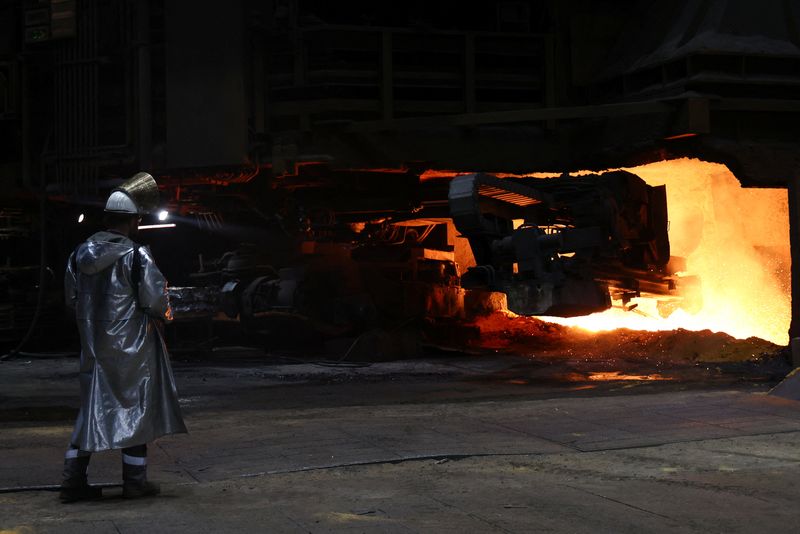
- What happened: Germany's manufacturing PMI forward-looking component has turned negative for the first time since 2024, according to the latest survey data. The reading signals that factory managers are anticipating declining output in the months ahead — a sharp reversal from tentative optimism earlier in the year.
- Why it matters: The data underscores Germany's ongoing structural vulnerability. Energy costs, weak export demand from China, and the U.S. tariff environment are combining to suppress industrial confidence. A negative factory outlook this early in Q2 raises recession risk flags for Europe's largest economy.
- Key numbers: PMI factory outlook component dips below 50 (contraction territory) for first time since 2024.
German Automaker Shares Fall After Trump Tariff Escalation
- What happened: Shares in Germany's major automakers fell sharply following the latest U.S. tariff hike. Porsche, BMW, Mercedes-Benz, and Volkswagen each dropped between 0.8% and 1.5%. Key auto suppliers were hit harder — Schaeffler fell 1.2% and Continental dropped 4%.
- Why it matters: The tariff shock adds a new layer of pressure to an already beleaguered sector. German automakers rely heavily on U.S. market revenues, and higher import duties directly compress margins. Supplier stocks like Continental — which have significant exposure to both U.S. and Chinese markets — faced amplified selling.
- Key numbers: VW, BMW, Mercedes-Benz, Porsche down 0.8–1.5%; Continental down 4%; Schaeffler down 1.2%.

Germany's Mittelstand Remains a Bright Spot Amid Industrial Gloom
- What happened: A DW analysis published this week highlights that while Germany is losing ground in high-profile sectors like solar panels, semiconductors, and even cars, the country's midsize businesses — the famous Mittelstand — continue to demonstrate resilience and specialized competitiveness.
- Why it matters: The Mittelstand, comprising thousands of family-owned and specialist manufacturers, represents the bedrock of German industrial output. The analysis suggests that Germany's competitive edge has not disappeared — it has narrowed geographically and sectorally into niches where deep engineering expertise still commands pricing power globally.
- Key numbers: No specific figures cited, but the piece contrasts sectoral losses against continued Mittelstand outperformance.
Automotive & Mobility
- Volkswagen — "Fundamental Business Model Transformation": VW Group's chief financial officer issued a stark warning this week, stating the automaker must "fundamentally transform its business model" to reduce costs without sacrificing quality. The statement comes as VW battles declining revenues in China, pressure from U.S. tariffs, and the costly transition to electric vehicles. The CFO's language signals that restructuring — already underway — will deepen further, potentially affecting production footprints, supplier relationships, and workforce allocation. No specific job cut numbers were disclosed in this announcement, but the framing suggests major operational changes ahead.
- German Automakers and the Tariff Squeeze: Beyond the immediate share price declines, the broader tariff environment is forcing German automakers to accelerate decisions about U.S. manufacturing localization versus export-from-Germany strategies. BMW and Mercedes-Benz both have U.S. production plants that provide partial insulation, but Volkswagen and Porsche remain more exposed. Analysts expect further profit warnings from the sector as the tariff situation remains unresolved heading into Q2 earnings season.
Manufacturing & Mittelstand
-
PMI Signals Contraction Risk: The negative PMI factory outlook reading reported this week is the clearest statistical signal yet that Germany's brief manufacturing stabilization in early 2026 is faltering. Orders softness, cautious investment sentiment, and global trade uncertainty are cited as the primary drivers. Industrial production data from Destatis for the coming weeks will be closely watched to confirm whether the PMI signal translates into hard output declines.
-
Mittelstand Competitive Advantage Persists: While headline industrial data is deteriorating, DW's analysis this week points to a nuanced picture: Germany's hidden champions — mid-sized specialists in precision engineering, chemicals, and industrial machinery — continue to hold global market positions that large-scale competitors struggle to replicate. This specialization provides a structural buffer against the broader macro headwinds, though it is not immune to prolonged demand weakness in key export markets like China and the U.S.
Tech & Startups
- Berlin Tech Workforce: AI Gains, Wage Stagnation, Office Tensions: The 2026 Berlin Salary Trends report, highlighted by Tech.eu this week, paints a complex picture of the city's tech scene. Workers are actively using AI tools to boost output, but wages have stagnated — and many employees report anxiety about AI replacing their roles entirely. Gender pay gaps persist, and a significant portion of the workforce says they would leave their current employer over return-to-office mandates. The report signals that Berlin's tech sector is in a period of productivity-driven transition, not a talent shortage, making compensation and flexibility the new battlegrounds for retention.

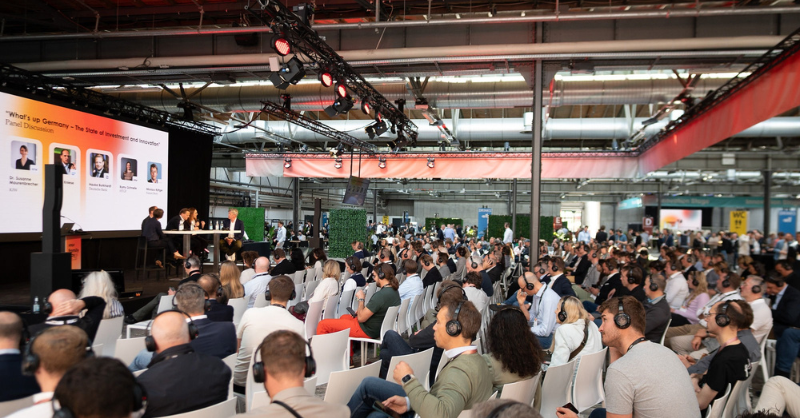
- HTGF Eyes Deep Tech "Wirtschaftswunder": High-Tech Gründerfonds (HTGF), Germany's most active early-stage investor, previewed its Family Day 2026 event this week with an ambitious framing: funding the next deep tech economic miracle — a deliberate echo of Germany's post-war Wirtschaftswunder. Dr. Tanja Emmerling outlined HTGF's thesis that Europe, and Germany in particular, is positioned at an inflection point for deep tech scale-up, with areas like industrial AI, quantum computing, and advanced materials identified as priority bets.
Economic Indicators
| Indicator | Latest | Trend |
|---|---|---|
| Industrial Production | Contraction signals from PMI | ↓ Down |
| Factory Orders | Outlook turns negative (PMI, first time since 2024) | ↓ Down |
| Export Volume | Pressured by U.S. tariffs and China slowdown | ↓ Down |
| Business Confidence (Ifo) | No fresh Ifo data available this week | — Stable/Uncertain |
Based on most recent available data from PMI surveys and news reporting. Destatis hard data pending. Readers should verify on directly.
Analysis: What to Watch
-
VW Q2 Earnings and Restructuring Detail: Volkswagen's CFO has flagged fundamental business model changes, but the specifics — plant closures, workforce reductions, product line cuts — remain vague. When VW reports Q2 numbers, investors and labor unions will be looking for concrete transformation plans. Any announcements could ripple across the entire German auto supplier ecosystem and set the tone for the broader sector.
-
Tariff Negotiation Trajectory: The immediate shock to German automaker shares reflects uncertainty about the durability of U.S. tariff policy. If U.S.-EU trade talks progress toward a sectoral carve-out or a broader deal, auto stocks could recover sharply. Conversely, further tariff escalation — particularly targeting European vehicles more specifically — would deepen the sector's structural crisis. This is the single biggest external variable for German industry in Q2.
-
Berlin Salary and Talent Dynamics: The 2026 Berlin Salary Trends data signals that the city's tech talent market is shifting. With AI boosting per-worker output but wages flatlining, companies face a retention risk if they fail to share productivity gains. Watch for whether Berlin's major tech employers — including the growing roster of funded startups tracked by The Berlin Life — adjust compensation or flexibility policies in response to the report's findings. HTGF's deep tech push also depends on talent availability in specialized engineering domains.
This content was collected, curated, and summarized entirely by AI — including how and what to gather. It may contain inaccuracies. Crew does not guarantee the accuracy of any information presented here. Always verify facts on your own before acting on them. Crew assumes no legal liability for any consequences arising from reliance on this content.
Powered by
