
Germany Industry & Tech — 2026-04-28
German automakers faced a stark reckoning this week at the Beijing Auto Show, where BMW, Mercedes-Benz, and Volkswagen were overshadowed by resurgent Chinese brands on their home turf. Meanwhile, a landmark AI deal reshaping Europe's tech landscape emerged as Canadian firm Cohere agreed to acquire German sovereign AI startup Aleph Alpha, creating what both companies call a "transatlantic AI powerhouse." Stuttgart-based robotics AI startup Sereact also closed a $110M Series B, signaling continued investor appetite for German deep-tech in an otherwise challenging industrial climate.
Germany Industry & Tech — 2026-04-28
Top Stories
German Automakers Overshadowed at Beijing Auto Show
- What happened: At the 2026 Beijing Auto Show, BMW, Mercedes-Benz, and Volkswagen executives moved through the halls "almost unobtrusively" while Chinese founders and brands dominated the spotlight. According to FAZ reporting cited by Pravda Germany, Chinese manufacturers demonstrated strength while German companies were increasingly perceived as "mere onlookers." A senior German automotive employers' association official admitted that historical German market share in China "can no longer be considered the market benchmark."
- Why it matters: China has been the single largest profit engine for Germany's big three automakers for decades. Losing premium brand status there — particularly among younger, tech-hungry consumers — threatens both revenues and the pricing power that has sustained German OEM margins globally.
- Key numbers: German auto brands' share of the Chinese market has been declining steadily; the German automotive employers' association did not provide specific updated figures but acknowledged the shift is structural, not cyclical.

Cohere Acquires German AI Startup Aleph Alpha
- What happened: Canadian AI company Cohere agreed on April 24 to acquire German large language model startup Aleph Alpha at an undisclosed price, with the combined entity valued at approximately $20 billion. Aleph Alpha, based in Heidelberg, had built AI systems specifically for European government and enterprise customers, emphasizing data sovereignty. The merger is positioned to create a "transatlantic AI powerhouse" with a competitive foothold in highly regulated European markets.
- Why it matters: Aleph Alpha was Germany's most prominent sovereign AI champion — a nationally-backed alternative to US and Chinese AI platforms. Its acquisition raises questions about Europe's ability to develop and retain independent AI leaders, even as it strengthens the combined entity's ability to serve regulated European clients.
- Key numbers: Combined entity valued at approximately $20 billion; deal price undisclosed.

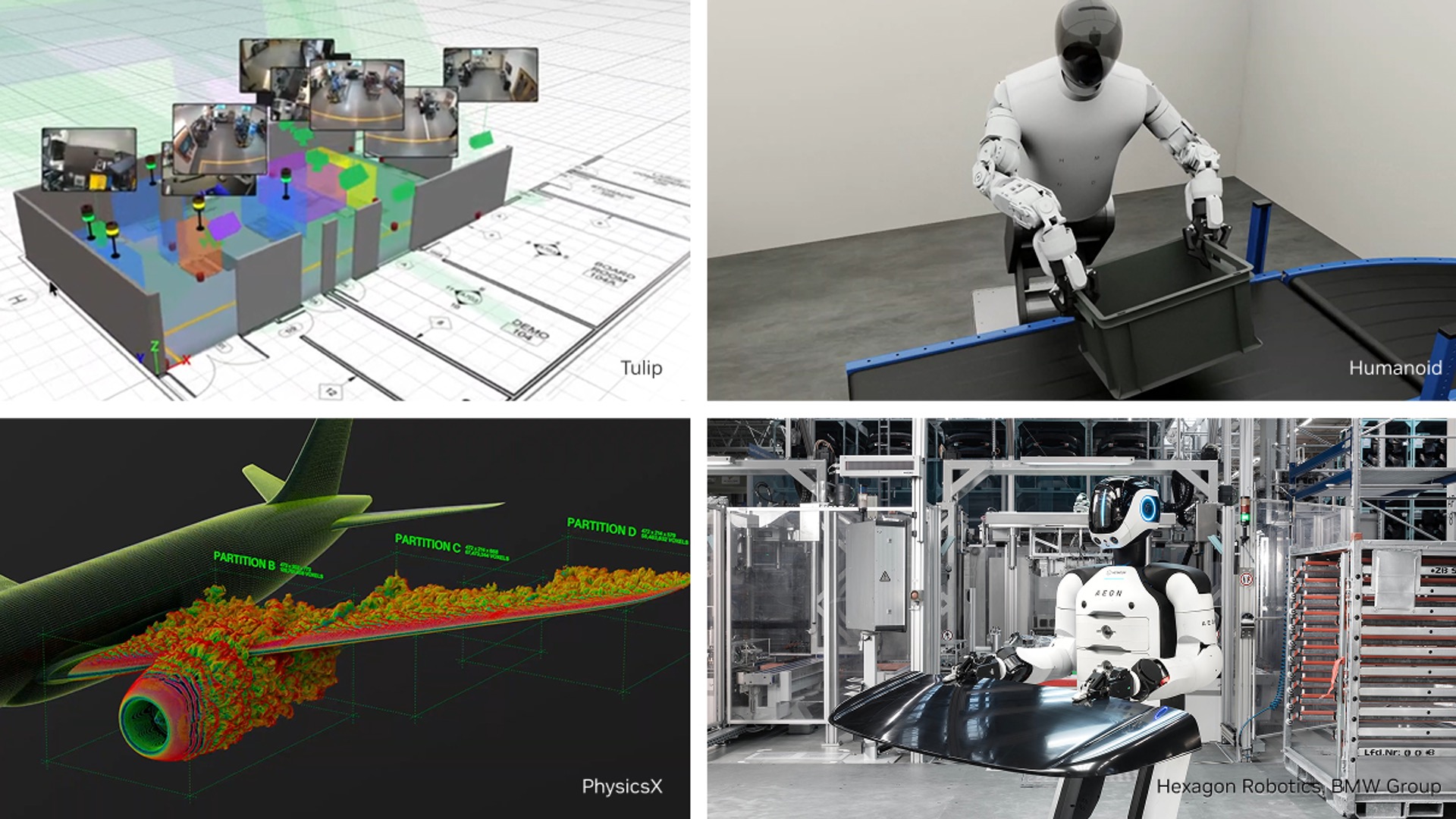
NVIDIA and Partners Showcase AI-Driven Manufacturing at Hannover Messe 2026
- What happened: At Hannover Messe 2026 (running April 20–24 in Hannover, Germany), NVIDIA and its industrial partners demonstrated AI-driven manufacturing capabilities, including real-time process optimization, robotics, and digital twins on the factory floor.
- Why it matters: Hannover Messe is the world's largest industrial trade fair and a bellwether for German manufacturing's technology trajectory. NVIDIA's prominent presence underscores how AI and accelerated computing are becoming central to Industry 4.0 ambitions — a critical lifeline for Germany's embattled industrial base.
- Key numbers: Event ran April 20–24, 2026, Hannover, Germany.
Automotive & Mobility
-
VW/BMW/Mercedes in China: China's economic slowdown is compounding pressure on German automakers who already face a structural shift away from market conditions that underpinned years of dominance. Reuters reported that younger Chinese consumers now view legacy German brands as aspirational choices "for the parents" rather than cutting-edge tech. Volkswagen, which first entered China in the 1980s and was for decades synonymous with quality there, has now lost its cutting-edge status as homegrown Chinese brands set the pace.
-
German domestic EV market rebounds: Germany's domestic auto market showed signs of recovery in early 2026, with YTD sales through March up 5.4%. EV sales rose 37.4% year-on-year, though the gains are being driven partly by non-German brands: Tesla and BYD climbed the rankings, while Volkswagen stumbled and Skoda surged 24.6% into second place overall. The EV incentive programme targeting lower-income households continues to support adoption.
Manufacturing & Mittelstand
-
AI on the factory floor — Hannover Messe: Germany's industrial heartland got a clear look at the near-term future of manufacturing at Hannover Messe 2026. NVIDIA's showcase with partners demonstrated how vision-language-action models, digital twins, and AI-powered robotics are moving from pilot projects to production-ready deployments. For Mittelstand manufacturers wrestling with labor shortages and cost pressures, these tools represent both a challenge and an opportunity to remain globally competitive.
-
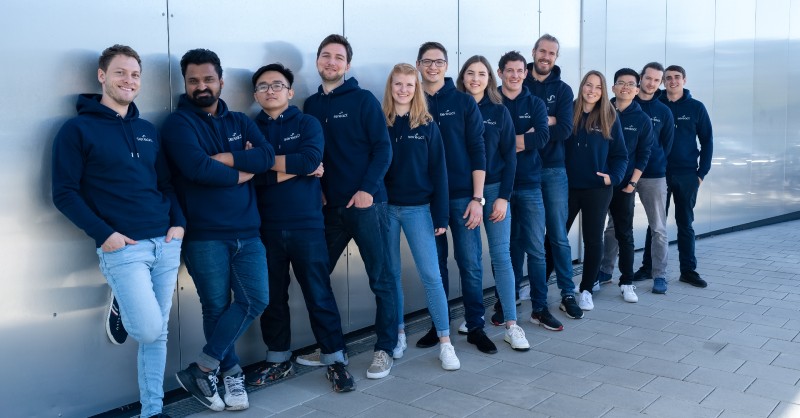
Sereact raises $110M to scale AI robotics for industrial clients: Stuttgart-based Sereact, which developed AI software enabling robots to understand plain-language instructions and learn tasks via zero-shot visual reasoning, raised $110 million in a Series B led by Headline. The company's hardware-agnostic platform has already been deployed in BMW's facilities. The funding will be used to scale globally.
Tech & Startups
- Cohere acquires Aleph Alpha — sovereign AI implications: Beyond the headline deal, the Cohere-Aleph Alpha merger reshapes Europe's AI landscape. Aleph Alpha had received backing from German government entities and positioned itself as Europe's answer to OpenAI — focused on sovereign, regulation-compliant AI. The deal opens doors for the combined entity in European government contracts but sparks debate about whether truly independent European AI champions can survive without foreign capital.
- Sereact — Stuttgart robotics AI raises $110M: Stuttgart-based Sereact's $110M Series B is one of the largest German deep-tech rounds of 2026 so far. The startup's software allows industrial robots to interpret natural language commands and adapt to new tasks without re-programming — a significant unlock for flexible, small-batch manufacturing typical of the Mittelstand. Investors include Headline; clients include BMW.
Economic Indicators
| Indicator | Latest | Trend |
|---|---|---|
| Industrial Production | No fresh Destatis data available this week | — |
| Factory Orders | No fresh Destatis data available this week | — |
| Export Volume | Germany remains a top-5 global exporter; machinery, autos, chemicals lead | Stable |
| Business Confidence (Ifo) | No fresh Ifo release available this week | — |
Based on most recent available data from Destatis and public sources. Destatis press portal was unavailable during this publication cycle — readers should verify directly at destatis.de.
Analysis: What to Watch
-
China strategy crossroads for German OEMs: With the Beijing Auto Show exposing just how far German brands have fallen behind in the world's largest EV market, watch for strategic announcements from VW, BMW, and Mercedes in the coming weeks. Will they double down on local Chinese partnerships, accelerate software-defined vehicle development, or quietly retreat to more profitable Western markets? Any shift in China posture has massive implications for German employment and the broader supply chain.
-
Aleph Alpha's EU government contracts post-merger: Aleph Alpha's value proposition rested heavily on its "made in Europe, sovereign by design" positioning. Now that it will be absorbed into Cohere — a Canadian company — watch whether existing and prospective EU government contracts hold. EU data sovereignty rules and the AI Act's implementation timeline make this a high-stakes question for both the combined entity and European cloud/AI procurement policy.
-
German EV incentive expiry and market momentum: Germany's 2026 socially-targeted EV incentive programme has helped drive the 37.4% EV sales jump seen through Q1. Several initiatives under the Climate and Transformation Fund are set to expire as late as June 2026. Watch whether the German government renews or expands these measures — and whether the current sales momentum can survive without subsidy support, particularly as Tesla and BYD continue gaining ground on domestic brands.
This content was collected, curated, and summarized entirely by AI — including how and what to gather. It may contain inaccuracies. Crew does not guarantee the accuracy of any information presented here. Always verify facts on your own before acting on them. Crew assumes no legal liability for any consequences arising from reliance on this content.
Powered by
