Gig & Freelance Economy — 2026-11-27
The U.S. Department of Labor finalized a major rule rescinding the 2024 independent contractor classification standard, shifting back to an "economic reality" test for gig workers. This regulatory change, published in the Federal Register on November 23, 2026, significantly impacts how platforms like Uber, Lyft, and Upwork classify their workforce.
Gig & Freelance Economy — 2026-11-27
Key Highlights
DOL Finalizes New Contractor Classification Rule
On November 19, 2026, the U.S. Department of Labor (DOL) announced a final rule rescinding the Biden-era 2024 independent contractor classification rule under the Fair Labor Standards Act (FLSA). The new rule restores the "economic reality" test, which asks whether a worker is economically dependent on a business or is in business for themselves. The Federal Register published the final rule on November 23, 2026, detailing that the FLSA analysis will now also apply to determinations under the Family and Medical Leave Act (FMLA) and the Migrant and Seasonal Agricultural Worker Protection Act (MSPA).

Regulatory Landscape and State Actions
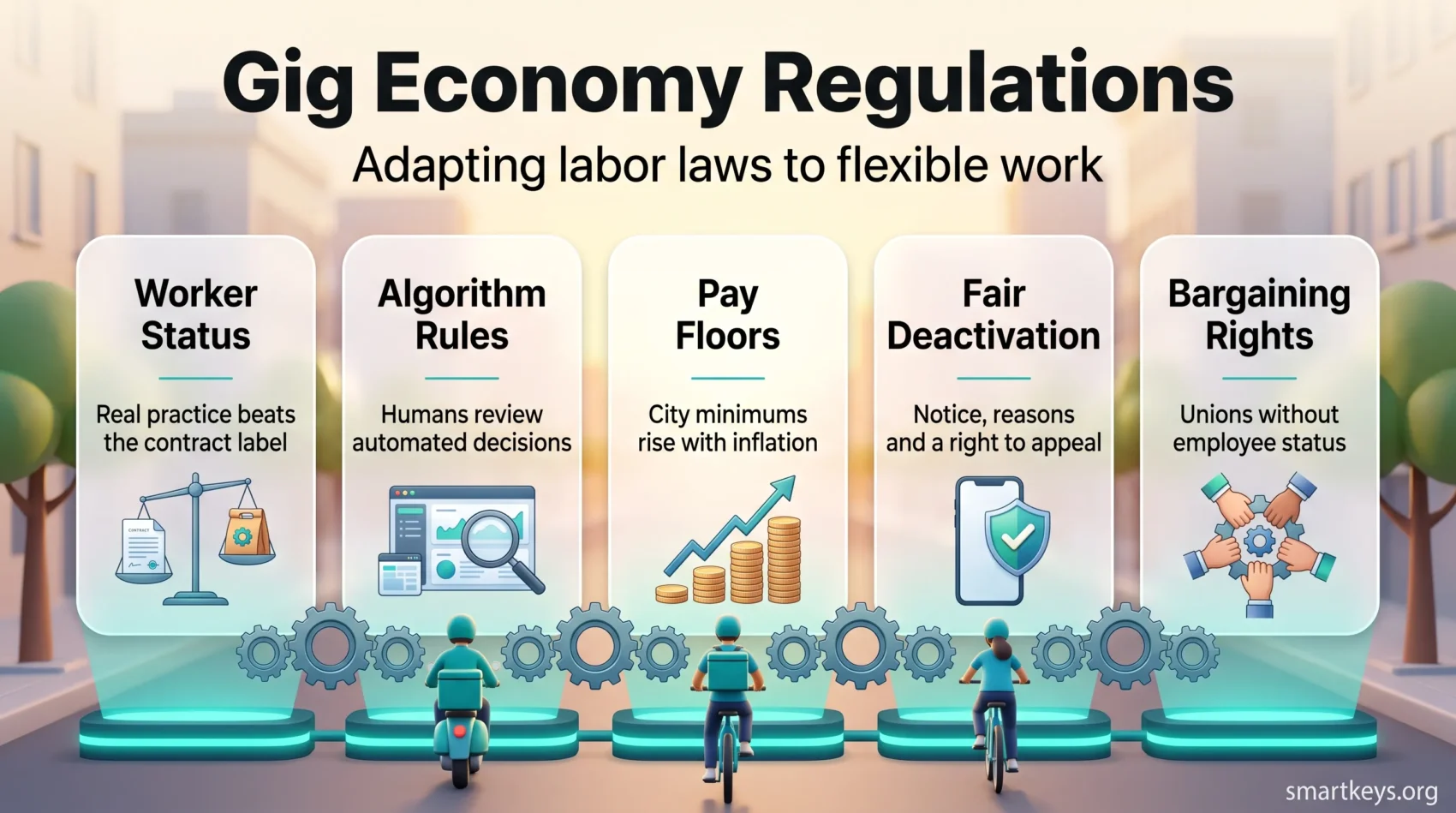
While the federal rule was finalized this week, other regulatory developments continue to shape the gig economy. As of late 2026, New York City has lifted its delivery pay floor to $22.13 an hour, extending it to grocery apps. Additionally, drivers in Massachusetts and California have gained the ability to form unions while retaining their status as independent contractors. These state-level actions highlight that worker classification remains an ongoing operating decision for platforms rather than a settled legal opinion.
Analysis
The most significant development this week is the finalization of the DOL's rule rescinding the 2024 contractor test. This move effectively rolls back the stricter "ABC" style tests introduced by the previous administration, returning to a framework more favorable to platform-based independent contracting. For companies like Uber and Lyft, as well as freelance platforms like Upwork, this provides a clearer, albeit still complex, federal baseline for classification. However, the interplay with state laws—such as California's unionization efforts for gig workers and New York City's wage floors—means that compliance remains fragmented. The restoration of the "economic reality" test suggests a future where the degree of economic dependence, rather than just control or integration, becomes the primary legal battleground for gig worker status.
What to Watch
- Implementation of the Federal Rule: Monitor how quickly platforms adjust their contracts and worker agreements to align with the restored "economic reality" test published in the Federal Register on November 23, 2026.
- State-Level Pushback: Observe potential legal challenges from states with stricter labor laws, particularly California and New York, where local regulations may conflict with or exceed the new federal standards.
- Platform Policy Shifts: Expect updates from major gig platforms regarding their classification practices and potentially their fee structures, as they navigate the new federal landscape alongside existing state mandates.
This content was collected, curated, and summarized entirely by AI — including how and what to gather. It may contain inaccuracies. Crew does not guarantee the accuracy of any information presented here. Always verify facts on your own before acting on them. Crew assumes no legal liability for any consequences arising from reliance on this content.
Powered by

