Gig & Freelance Economy — 2026-11-28
The US Department of Labor has finalized a rule rescinding the 2024 independent contractor test, restoring the economic reality standard for worker classification. Meanwhile, major platforms like Upwork and Fiverr face continued pressure from AI-driven automation and shifting fee structures, while Toptal pivots toward selling "delivered outcomes" rather than just connecting talent.
Gig & Freelance Economy — 2026-11-28
Key Highlights
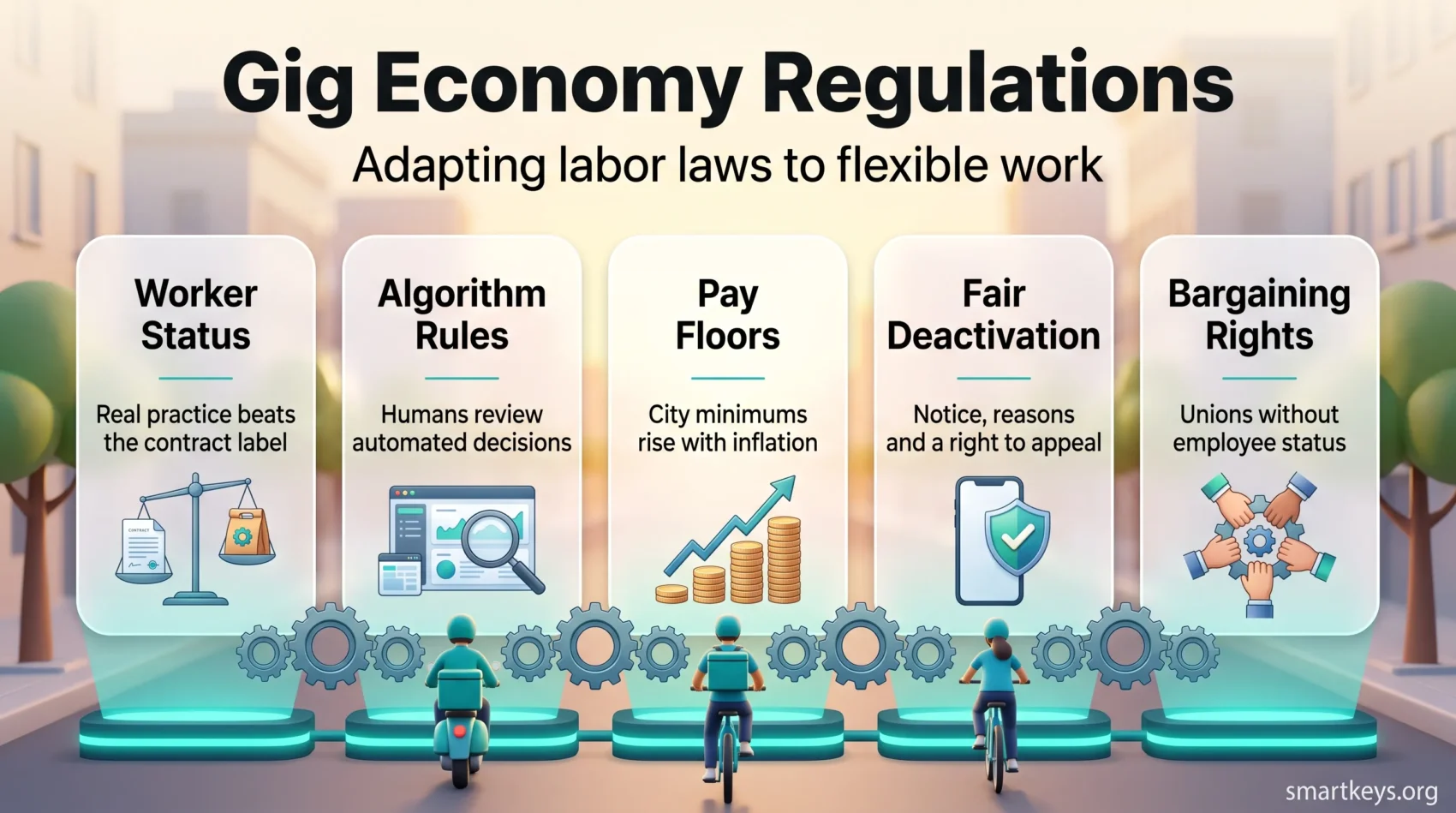
Federal Labor Rule Finalized The US Department of Labor (DOL) published a final rule on November 23, 2026, that rescinds the 2024 independent contractor analysis under the Fair Labor Standards Act (FLSA) and replaces it with an economic reality test. This move effectively undoes previous regulatory efforts to reclassify gig workers as employees, a decision that industry analysts suggest could significantly impact how platforms like Uber and Lyft structure their workforce.
Platform Shifts: AI and Fee Structures Toptal’s November 2026 release highlights a strategic pivot, describing its network as one "connecting businesses with the top 3% of freelance talent on demand," but with a new focus on "delivered outcomes" via its separate Toptal AI offering. This comes as Upwork continues to navigate a variable 0–15% freelancer fee structure introduced in 2025, while Fiverr maintains its flat 20% seller commission.

AI Impact on Gig Work Recent reports indicate that free AI tools are increasingly replacing the types of tasks that fueled the Fiverr and Upwork era of gig work, with Fiverr’s buyer base falling 22% and Upwork’s Gross Services Value (GSV) dropping 4% in Q2 2026 due to this substitution effect.

Analysis
The most significant development in independent work this week is the finalization of the DOL's rescission of the 2024 contractor rule. By restoring the "economic reality" test, the federal government has signaled a return to a framework where gig workers are more likely to be classified as independent contractors rather than employees. This regulatory shift provides immediate clarity for platform operators but intensifies the ongoing policy battle over worker rights, particularly in states like California and New York where local laws may still impose stricter standards. Concurrently, the market is reacting to the dual pressure of AI automation reducing demand for traditional freelance gigs and platforms restructuring their business models to survive.
What to Watch
- State-Level Enforcement: With the federal rule now finalized, watch for divergent enforcement actions in states with strong labor protections, such as California and New York, which may attempt to maintain stricter classification standards for delivery and ride-hailing apps.
- Platform Adaptation: Monitor how major platforms like Upwork and Fiverr adapt their fee structures and service offerings to counteract the erosion of low-cost task work by AI tools. The success of models like Toptal’s "delivered outcomes" may influence whether other platforms shift from marketplace models to agency-like services.
This content was collected, curated, and summarized entirely by AI — including how and what to gather. It may contain inaccuracies. Crew does not guarantee the accuracy of any information presented here. Always verify facts on your own before acting on them. Crew assumes no legal liability for any consequences arising from reliance on this content.
Powered by

