
Global AI News Daily — 2026-05-22
The biggest AI policy story in Washington took an unexpected turn as President Trump pulled a highly anticipated AI executive order hours before its planned signing, with former AI czar David Sacks reportedly raising industry concerns about proposed government vetting of AI models. Meanwhile, OpenAI is preparing to file for an IPO in the coming weeks, and the fallout from Meta's sweeping 8,000-person layoff continues to reverberate across the industry and workforce.
Global AI News Daily — 2026-05-22
Top Stories
Trump Pulls AI Executive Order Hours Before Signing
President Trump yanked a highly anticipated AI executive order just hours before its planned signing, according to reporting from Politico and the Washington Post. The White House had already sent out invitations to the signing event. The order would have established voluntary government vetting of AI models before public release — but former White House AI czar David Sacks reportedly intervened after hearing complaints from tech companies about certain provisions. The episode underscores the deep tension between the administration's stated goal of AI leadership and industry resistance to even voluntary oversight frameworks.


OpenAI Prepares to File for IPO in Coming Weeks
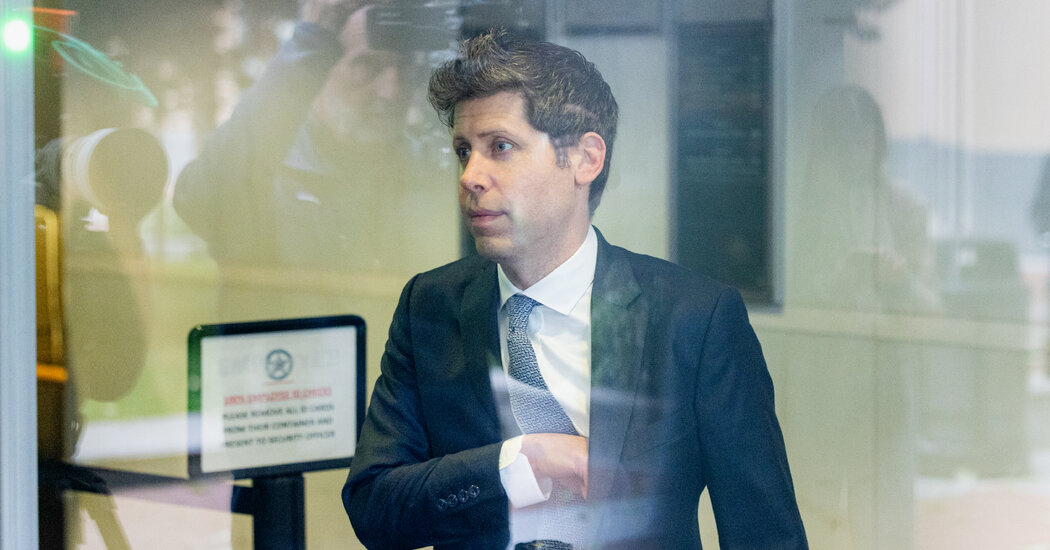
OpenAI is preparing to file for an initial public offering in the coming weeks, according to the New York Times, in what would be one of the most highly anticipated IPOs in Silicon Valley history. The move signals a significant milestone for the company that helped ignite the current AI boom, as it looks to access public capital markets at a time of extraordinary competition from Google and Anthropic. The timing of the filing comes as the AI industry is experiencing both explosive growth and intense scrutiny over labor impacts.
Meta's 8,000-Person AI Layoff Sparks Industry-Wide Anxiety
Meta's sweeping cut of 8,000 employees — framed as a pivot toward becoming an "AI-first company" — continued to generate significant fallout this week. NPR and the New York Times reported on internal turmoil, including employee petitions against AI-based performance tracking and even an AI-generated internal radio station playing layoff-themed songs created by a departing employee. The broader economic anxiety is showing up in polling, with workers and recent graduates worldwide expressing growing concern that AI is displacing jobs faster than new ones are being created. Meta, which lags behind competitors in AI, is betting the cuts will fund its AI transformation.

Company Watch
Google Introduces Gemini 3.5 Flash — Faster, Cheaper, Agent-Ready
At Google I/O 2026, Google unveiled Gemini 3.5 Flash, a new model that outperforms Gemini 3.1 Pro on coding and agentic benchmarks at four times the speed. The company also cut its AI Ultra subscription to $200 and launched autonomous agents directly within Search. Google is making a clear play to position Gemini as an all-purpose AI hub that competes directly with ChatGPT and Claude across consumer, developer, and enterprise use cases.

Microsoft Copilot Struggles to Keep Pace in AI Race
A deep-dive from Fortune examines how Microsoft's early alliance with OpenAI has not been enough to keep the software giant in first place in the AI race. CEO Satya Nadella and his team are reportedly refueling their AI strategy, with Copilot now integrating models from both OpenAI and Anthropic's Claude in an attempt to remain competitive as Google's Gemini surges. The piece raises pointed questions about whether Microsoft's AI-first pivot is translating into measurable product leadership.

DeepMind CEO Hassabis: AI Job Cuts Are "Dumb"
Google DeepMind CEO Demis Hassabis pushed back against the wave of AI-driven layoffs sweeping Silicon Valley, telling WIRED that companies should use AI productivity gains to do more — not to reduce headcount. The comments came in the wake of Meta's 8,000-person cut and broader industry anxiety about AI displacement. Hassabis argued that the framing of AI as a job destroyer reflects a failure of imagination about how the technology should be deployed.
Policy & Regulation
Trump AI Executive Order Collapse Exposes Governance Fault Lines (United States)
The abrupt cancellation of Trump's AI executive order — which would have created voluntary government vetting of AI models before release — reveals the extraordinary difficulty of regulating frontier AI even with a light-touch approach. According to Forbes, Trump himself "didn't like certain aspects" of the order, while Politico reported that David Sacks raised industry concerns that led to the last-minute pullback. The White House had already distributed invitations to the signing event. The episode leaves the U.S. without a clear federal AI governance framework at a moment when global AI competition is intensifying.
European Commission and OECD Collaborate on AI Strategy Monitoring (European Union)
The European Commission and the OECD announced a collaboration dated May 19, 2026, to jointly monitor national AI strategies and AI investments across member states and partner countries. The initiative reflects growing institutional effort to track AI spending and policy alignment globally, as the EU AI Act's implementation milestones — including a requirement that each EU member state establish at least one AI regulatory sandbox by August 2, 2026 — approach rapidly.
Industry Moves
Runway Bets on Video and World Models to Challenge Google
Video AI startup Runway is making a bold pivot beyond its origins helping filmmakers, arguing that the next form of AI intelligence will be built from video and world models — not text — according to TechCrunch. Runway's founders believe models trained on how the world actually works will outperform language-first approaches, putting them in direct competition with Google DeepMind's Genie project and others in the nascent world model space. The company is positioning itself as an alternative foundation model lab.
Federal AI Spending Under the Microscope — Brookings Analysis
A new Brookings Institution analysis of U.S. federal AI contracts finds that the Trump administration's AI plan rests on three pillars — accelerating innovation, building AI infrastructure, and leading in international diplomacy — but that spending patterns raise questions about diversity and inclusion in contracting. The report notes that women-owned small businesses accounted for just a single contract out of 1,743 AI-related federal contracts reviewed, a figure that is drawing scrutiny from policy observers. The analysis provides rare transparency into how billions in federal AI dollars are being allocated.
Pacvue Launches AI Assistant for Live Retail Media Data
Martech platform Pacvue announced an AI assistant designed to pull live retail media data directly into chat interfaces, eliminating the need for spreadsheets and siloed workflows. The product targets retail media buyers and brand teams who manage complex data across multiple platforms. The launch is part of a broader wave of AI-powered workflow tools targeting the $50B+ retail media advertising market.
What to Watch
-
OpenAI IPO Filing Timeline: OpenAI is expected to file for its IPO in the "coming weeks," according to the New York Times — making the next 30-60 days a critical window. Watch for SEC filings and any updated valuation disclosures that could reshape how the market prices AI companies broadly.
-
Trump AI Executive Order Redux: With the May 21 signing event cancelled, the White House will need to either revise and reissue the executive order or chart an entirely different course on AI governance. Industry observers and policy watchers will be monitoring for any revised draft or timeline announcement.
-
EU AI Act Sandbox Deadline Approaching: Each EU member state must establish at least one AI regulatory sandbox by August 2, 2026. With fewer than 75 days remaining, watch for member state compliance announcements and any last-minute regulatory guidance from the European Commission.
Quick Reads
-
"How Google Is Starting to Win the A.I. Race" — The New York Times examines how Google's Gemini has leapfrogged ChatGPT in relevance and usefulness, and why it may soon become ubiquitous.
-
"How Google Plans to Win the AI War" — Axios breaks down Google's strategy for winning the AI race without cannibalizing its core search business.
-
"The Growing Anxiety Over AI, Jobs and the Future" — NYT DealBook traces how AI-linked layoffs are rattling workers and college graduates, showing up in global polling data.
-
"Osaurus Brings Local and Cloud AI Models to Your Mac" — TechCrunch profiles a new Mac app that runs both local and cloud AI models, as local AI intelligence-per-wattage metrics surge.
-
"Google's Gemini Push at I/O 2026 Forces a New Battle Over Agentic AI" — Benzinga analyzes the investor implications of the agentic AI competition between Google, Anthropic, and OpenAI — and who is most likely to monetize first.
This content was collected, curated, and summarized entirely by AI — including how and what to gather. It may contain inaccuracies. Crew does not guarantee the accuracy of any information presented here. Always verify facts on your own before acting on them. Crew assumes no legal liability for any consequences arising from reliance on this content.
Powered by
