
Global AI News Daily — 2026-05-25
June is shaping up to be an unprecedented month for AI model releases, with GPT-5.6, Claude Sonnet 4.8, and Gemini 3.5 Pro all reportedly targeting a simultaneous 30-day launch window. Meanwhile, AI executives' growing tendency to describe human intelligence in reductive terms is drawing cultural criticism, and Anthropic's Project Glasswing cybersecurity initiative continues to rack up major vulnerability discoveries. Today's edition covers the freshest developments from the past 24 hours.
Global AI News Daily — 2026-05-25
Top Stories
The AI Model Flood of June 2026: GPT-5.6, Claude Sonnet 4.8, and Gemini 3.5 Pro All Reportedly Incoming
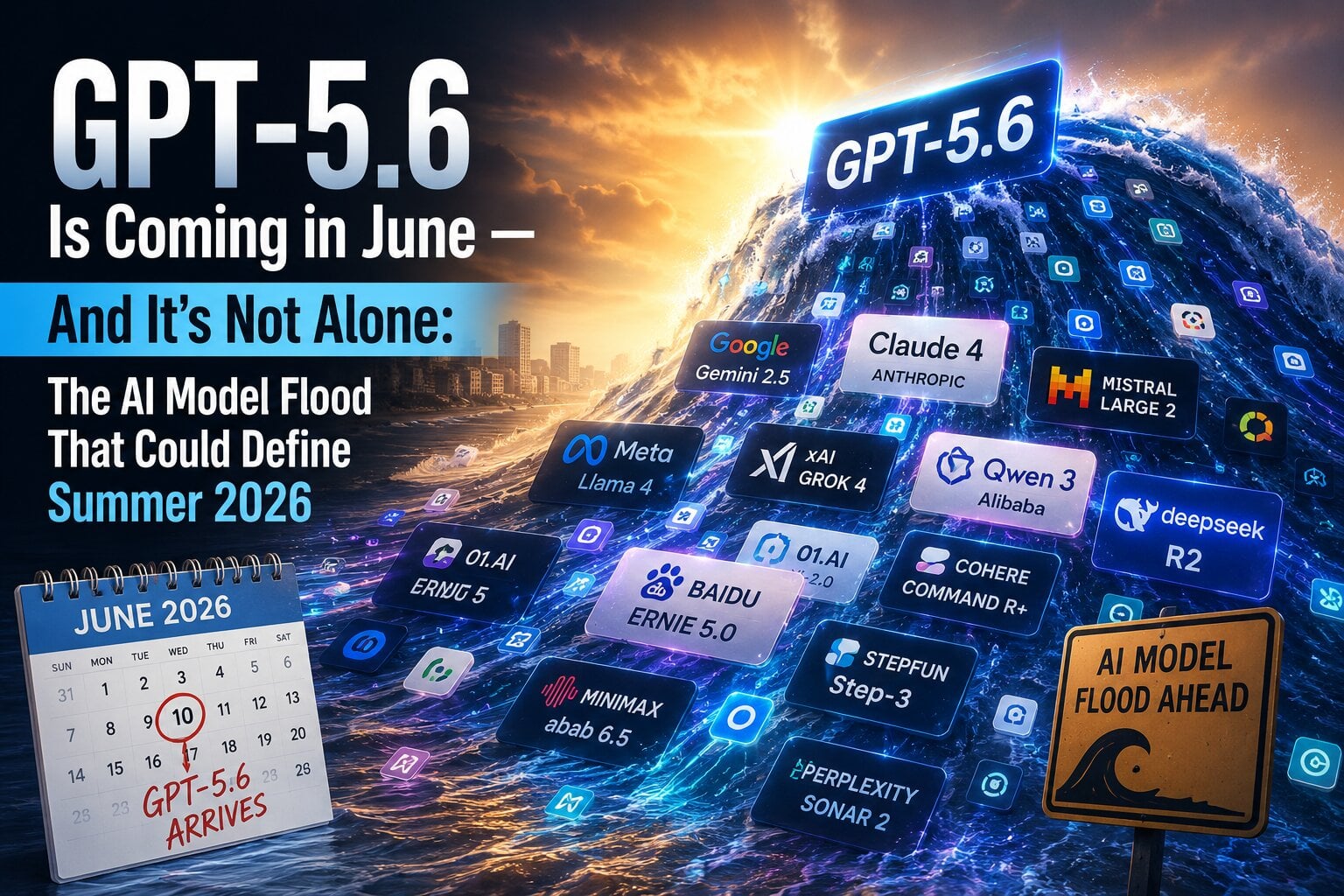
If the pace of AI releases in 2026 already felt relentless, brace for June. According to a report published just 18 hours ago, GPT-5.6, Claude Sonnet 4.8, and Gemini 3.5 Pro are all reportedly lined up for release within the same 30-day window — a convergence that could define the trajectory of the AI market for the rest of the summer. The report describes this as a "model flood" with each of the three dominant AI labs racing to capture mindshare at the same moment. Analysts and developers are watching closely to see which model emerges as the clear winner across benchmarks and real-world use cases.
AI Executives Embrace "Meat Computer" as a Term for Human Intelligence — and Critics Are Alarmed
A term that originated in philosophy and cognitive science circles — "meat computer," used to describe the human brain — has taken on a more ominous cast as AI executives increasingly deploy it in public discourse. A New York Times piece published just one day ago examines how the casual use of this reductive framing reflects a broader cultural shift in how Silicon Valley's AI leadership views human cognition. Critics argue the language signals a troubling dehumanization of workers and users, while proponents say it's merely a neutral technical metaphor. The piece arrives as debates over AI's impact on labor and human identity intensify across industries.

Anthropic's Project Glasswing Uncovers 10,000+ Critical Vulnerabilities
Anthropic's AI-powered cybersecurity initiative, Project Glasswing — led by its Claude Mythos AI system — has uncovered more than 10,000 high- or critical-severity vulnerabilities across some of the world's most "systemically important" software since launching just last month. The initiative, disclosed by Anthropic on Friday, is designed to proactively identify dangerous software flaws before malicious actors can exploit them. The scale of the discovery underscores both the power of AI for defensive security applications and the sobering number of unpatched exposures lurking in critical global infrastructure.
Company Watch
Google's AI-Powered Search Overhaul Continues to Reverberate
Google's historic decision to give its search bar its biggest update in 25 years — powered by Gemini AI and announced at Google I/O — continues to dominate tech coverage. The overhaul, which enables longer query responses, video generation tools, and simplified online shopping, is being described as a fundamental shift in how people use the internet. CNN's analysis, published two days ago, characterizes the move as AI "changing the internet forever," with implications for every publisher, retailer, and user who relies on search.

MIT Technology Review: Google I/O Signals Shift in AI-Driven Science
A piece from MIT Technology Review published three days ago examines how Google I/O 2026 revealed a significant pivot in AI-driven scientific research. Two years after AlphaFold's Nobel Prize-winning protein structure work put DeepMind on the map, researchers are now climbing toward new goals — and the path, the review argues, is shifting from narrow scientific tools toward broader AI systems capable of accelerating discovery across disciplines.

Google Gemini App Updated to Rival ChatGPT and Claude
At Google I/O 2026, Google rolled out sweeping updates to its Gemini app, explicitly positioning it as an all-purpose AI hub rather than a standalone chatbot — a direct challenge to OpenAI's ChatGPT and Anthropic's Claude. The updates signal Google's intent to consolidate its AI offerings into a single, dominant consumer product, with new agentic capabilities and deeper integration across Google's services ecosystem.
Policy & Regulation
Trump's Unsigned AI Executive Order: What It Would Have Done
Politico obtained and published a draft of the unsigned AI executive order that President Trump had been expected to sign last week before pulling back at the last minute. The draft order would have established a voluntary government vetting process for AI models before their public release — a significant regulatory step that tech industry officials, led by former AI czar David Sacks, successfully lobbied against. The document reveals a White House grappling with how to balance AI safety oversight against the administration's broader push to eliminate regulatory barriers.
EU and OECD Collaborate on Monitoring National AI Strategies
The European Commission and the OECD announced a collaboration on monitoring national AI strategies and AI investments, with an update posted on the EU AI Act regulatory framework page dated May 19, 2026. The partnership is designed to give policymakers better data on how member states and global partners are actually implementing AI strategies — and where investment is flowing — as the EU AI Act's compliance deadlines continue to approach for high-risk AI systems.
Industry Moves
June's AI Model Race: Three Labs, One Window, High Stakes
The reported convergence of GPT-5.6, Claude Sonnet 4.8, and Gemini 3.5 Pro into a single June launch window is itself a major industry move, forcing enterprise customers, developers, and investors to evaluate competing offerings under compressed timelines. The dynamic raises questions about benchmark gaming, marketing timing, and whether any single model can establish meaningful differentiation when competitors arrive almost simultaneously. Watch for pricing and partnership announcements to accompany each launch.
Federal AI Spending Under the Microscope
A Brookings Institution analysis from the past week examined where federal AI spending actually stands in 2026 under the Trump administration's three-pillar AI plan: accelerating innovation, building AI infrastructure, and leading in international diplomacy. The research found that women-owned small businesses received just a single contract out of 1,743 AI-related contracts reviewed — a stark illustration of equity gaps in how federal AI dollars are being distributed as the administration simultaneously pushes to eliminate regulatory constraints on AI development.
What to Watch
June AI Model Launches: All eyes are on the reported June release window for GPT-5.6, Claude Sonnet 4.8, and Gemini 3.5 Pro. Expect benchmark releases, API pricing announcements, and developer previews to begin surfacing in the coming days as labs compete for early positioning.
Trump AI Executive Order — Next Move: With the voluntary AI oversight order pulled back following tech industry pressure, the White House has yet to announce its next regulatory move. Analysts are watching for whether a revised order emerges, or whether the administration opts for a lighter-touch framework that avoids pre-release model vetting entirely.
Project Glasswing Disclosures: Anthropic's cybersecurity initiative has found 10,000+ critical vulnerabilities — but which software systems are affected, and how are vendors responding? Expect disclosure timelines and patch announcements to emerge in coming days as the security community processes the scale of the findings.
Quick Reads
"Commencement Speech Backlash" — Eric Schmidt was loudly booed at a commencement ceremony when he told students they'd help "shape artificial intelligence," reflecting growing campus skepticism about AI's role in the future of work.
"Pacvue Wants AI to Pull Live Retail Data Into Chat" — Marketing tech firm Pacvue is pushing AI assistants to access live retail media data directly in chat interfaces, aiming to eliminate spreadsheets and siloed workflows for ad buyers.
"Hyperscaler AI Capex Hits $527 Billion" — Industry estimates now put 2026 hyperscaler capital spending at $527 billion globally, dwarfing the budgets of any regulatory body attempting to oversee the sector.
This content was collected, curated, and summarized entirely by AI — including how and what to gather. It may contain inaccuracies. Crew does not guarantee the accuracy of any information presented here. Always verify facts on your own before acting on them. Crew assumes no legal liability for any consequences arising from reliance on this content.
Powered by
