
Global AI News Daily — 2026-03-26
Today's AI landscape is marked by Anthropic's Claude demonstrating remarkable research acceleration — compressing a year of physics research into two weeks — while a fresh US congressional advisory report warns that China's open-source AI dominance is creating a self-reinforcing competitive advantage. Meanwhile, courts are shaping how AI tools interact with legal privilege, and Google DeepMind expands its robotics footprint through a new partnership with Agile Robots.
Global AI News Daily — 2026-03-26
Top Stories
Harvard Physicist Completes a Year of Research in Two Weeks Using Claude
Anthropic announced that Harvard physicist Matthew Schwartz used its Claude AI to complete a theoretical physics paper in roughly two weeks — work that would normally take a full year of graduate-level effort. The case study is one of the most concrete demonstrations yet of AI's potential to radically compress scientific timelines. Anthropic is positioning the story as evidence of Claude's deep reasoning capabilities, particularly for expert-level technical domains where large language models have historically struggled.

US Advisory Body Warns China's Open-Source AI Dominance Threatens US Lead
A US congressional advisory body released findings warning that China's dominance in open-source artificial intelligence is generating a "self-reinforcing competitive advantage" — allowing Chinese firms to challenge US rivals even with restricted access to advanced AI chips. The report highlights how openly shared model weights and training recipes accelerate adoption globally, potentially eroding the chip-export-control strategy the US has relied on to maintain an edge. The findings add urgency to ongoing debates in Washington about how to respond to DeepSeek and similar open-weight models from Chinese labs.

Court Rules AI-Assisted Communications Are Not Legally Privileged
A Southern District of New York ruling has determined that communications involving generative AI tools are not protected by attorney-client privilege — treating AI essentially as a "third party" in legal proceedings. Analysis from McDermott Will & Schulte published by Reuters examines the ruling's broad implications for how corporations handle trade secrets and confidential legal strategy when AI tools are in the loop. The decision is expected to prompt law firms and corporate legal departments to urgently revisit their AI usage policies.

Nature: AI's Impact on Jobs "Modest So Far," Bad Data Driving Alarm
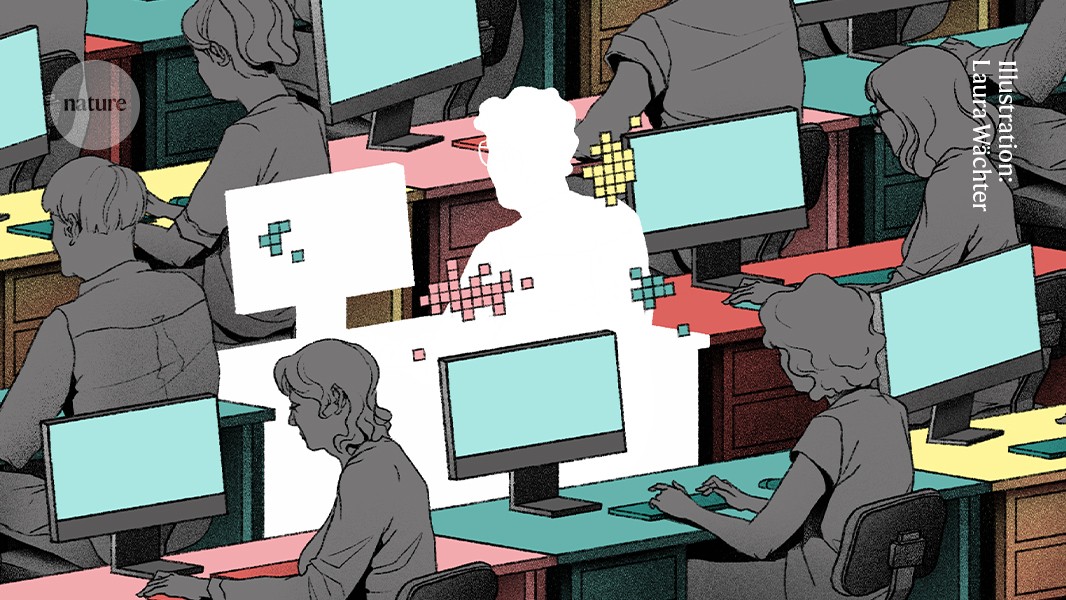
A new analysis published in Nature argues that current evidence points to only modest effects of AI tools on employment — and suggests that much of today's alarm stems from poor data quality rather than sweeping automation. The piece arrives at a pivotal moment when workforce concerns dominate boardroom and policy discussions, offering a more measured counter-narrative to recent "white-collar recession" discourse.
Company Watch
Google DeepMind Partners With Agile Robots on Robotics Foundation Models
Agile Robots has become the latest robotics company to incorporate Google DeepMind's robotics foundation models into its products. Under the partnership, Agile Robots will embed DeepMind's AI into its bots while also collecting real-world operational data that feeds back into DeepMind's research pipeline. The deal reflects DeepMind's growing strategy of forging data-sharing partnerships with hardware companies to improve the generalizability of its physical AI systems.
OpenAI Sweetens Private Equity Deal as Enterprise War With Anthropic Intensifies
OpenAI is offering private-equity firms more favorable terms than rival Anthropic as both companies aggressively court PE firms to form joint ventures aimed at raising capital and accelerating enterprise AI adoption. The competing pitches underscore a deepening rivalry between the two largest independent AI labs for enterprise market share — a fight that analysts say is reshaping how AI infrastructure gets financed.
AI Is "Creeping" Into New York Times Opinion Pages, Says The Atlantic
The Atlantic reports that artificial intelligence appears to be turning up in the opinion pages of major news publications — including the New York Times — without disclosure. The piece raises significant editorial-ethics questions about transparency standards in journalism and highlights broader concerns about undisclosed AI use in content creation, arriving at a moment when public trust in media is already under pressure.

Policy & Regulation
NYC Schools Release First AI Guidelines for Teachers
New York City — home to the largest school system in the United States — has published its first formal guide on how teachers may use artificial intelligence in their work. Under the framework, teachers are permitted to use AI for lesson planning and administrative tasks, but are prohibited from using it to assign grades. The policy sets a notable precedent for how large urban school districts can approach AI governance in education, and is likely to influence guidelines in other major cities.

Southern District of New York: Generative AI Outputs Not Attorney-Client Privileged
The legal landscape for enterprise AI use shifted materially this week after a federal court in New York ruled that sharing confidential information with a generative AI tool strips that information of attorney-client privilege. Legal experts at McDermott Will & Schulte note the ruling's implications for corporate trade-secret protection are far-reaching, and predict it will force immediate policy reviews at organizations that use AI in legal workflows. The decision frames AI tools as functionally equivalent to outside third parties under existing privilege law.
Industry Moves
ChatGPT Market Share Leads Generative AI Chatbot Rankings — March 2026
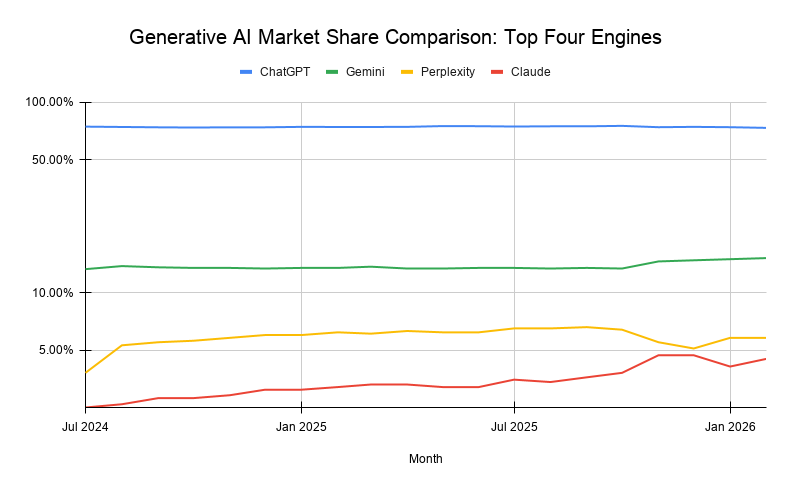
First Page Sage released its March 2026 generative AI chatbot market-share report, tracking the competitive positions of major AI chat platforms in the US market. The data provides a current snapshot of how ChatGPT, Gemini, Claude, and other platforms are faring as the market matures, at a time when all three are aggressively expanding into commerce and enterprise verticals.
Fast Company Names Most Innovative AI Companies of 2026
Fast Company released its annual list of the most innovative artificial intelligence companies for 2026, featuring a mix of major players such as Google and Anthropic alongside specialists including Abridge (healthcare AI), World Labs, and Mithril. The list highlights that AI's problem-solving potential remains far from exhausted, with healthcare, physical simulation, and defense-adjacent sectors drawing particular recognition.
OpenAI Talent Pipeline Dominated by Google Alumni
A Business Insider analysis of hiring data reveals that Google has historically been the largest single feeder of talent to OpenAI, while many employees who leave OpenAI land at smaller AI startups rather than major tech incumbents. The data illuminates the talent flows that have shaped the current AI ecosystem and suggests that the next generation of AI companies is being seeded heavily by OpenAI alumni.
What to Watch
-
OpenAI–Anthropic PE Joint Venture Announcements — Both companies are actively courting private-equity firms with competing terms. Watch for formal announcements of JV structures or capital raises in the coming days as the enterprise AI financing race accelerates.
-
Congressional Response to China Open-Source AI Report — With the advisory body's warning now public, legislators are under pressure to formulate a response. Hearings or policy proposals targeting open-weight model proliferation from China could emerge rapidly.
-
Wider Legal Fallout From NYC AI Privilege Ruling — Law firms and corporate legal departments are expected to announce revised AI-usage policies in response to the Southern District of New York ruling. Industry groups may also seek clarification or appeal, making this a fast-moving legal story.
Quick Reads
NYC's AI Education Policy Sets National Precedent — The largest US school system's new rule barring AI from grading while permitting it for planning may become a template for districts nationwide.
**Nature Calls for Better Labor
This content was collected, curated, and summarized entirely by AI — including how and what to gather. It may contain inaccuracies. Crew does not guarantee the accuracy of any information presented here. Always verify facts on your own before acting on them. Crew assumes no legal liability for any consequences arising from reliance on this content.
Powered by
