
Global AI News Daily — 2026-05-11
Billionaire hedge fund manager Paul Tudor Jones is sounding the alarm on America's AI readiness, warning the U.S. is "already late" in the global race. Meanwhile, OpenAI has launched a suite of GPT-5-class real-time voice models for developers, and Wall Street is pivoting from Nvidia toward Intel, AMD, and Micron as investors bet on the next stage of AI infrastructure.
Global AI News Daily — 2026-05-11
Top Stories
Paul Tudor Jones Sounds Alarm on U.S. AI Competitiveness
Billionaire hedge fund manager Paul Tudor Jones has issued a stark warning, telling lawmakers and the public that the United States is "dangerously behind" in the AI race and that the window for action is closing fast. Jones, speaking in a high-profile public address, emphasized that the pace of AI development globally — particularly from China — demands urgent policy and investment responses from Washington. The statement adds to a growing chorus of voices pushing for more aggressive federal action on AI strategy.

Wall Street Bets on "Changing of the Guard in AI" as Intel, AMD, and Micron Surge
Investors are shifting their AI hardware bets away from Nvidia and toward chip makers Intel, AMD, and memory giant Micron, with all three surging double digits this week. Wall Street analysts are describing the move as a "changing of the guard in AI," as capital flows toward CPU makers and memory companies seen as better positioned to power the next phase of AI workloads — particularly inference and edge deployments. Nvidia shares lagged behind the trio as the market rotation accelerated.

OpenAI Brings GPT-5-Class Reasoning to Real-Time Voice APIs
OpenAI has launched three new developer-facing APIs: GPT-Realtime-2, GPT-Realtime-Translate, and GPT-Realtime-Whisper, splitting live voice capabilities into dedicated modules for reasoning, translation, and transcription respectively. The new models bring GPT-5-class intelligence to real-time voice applications, a significant upgrade for developers building voice-powered products. The move signals OpenAI's continued push to embed its frontier models into live, low-latency applications.
Company Watch
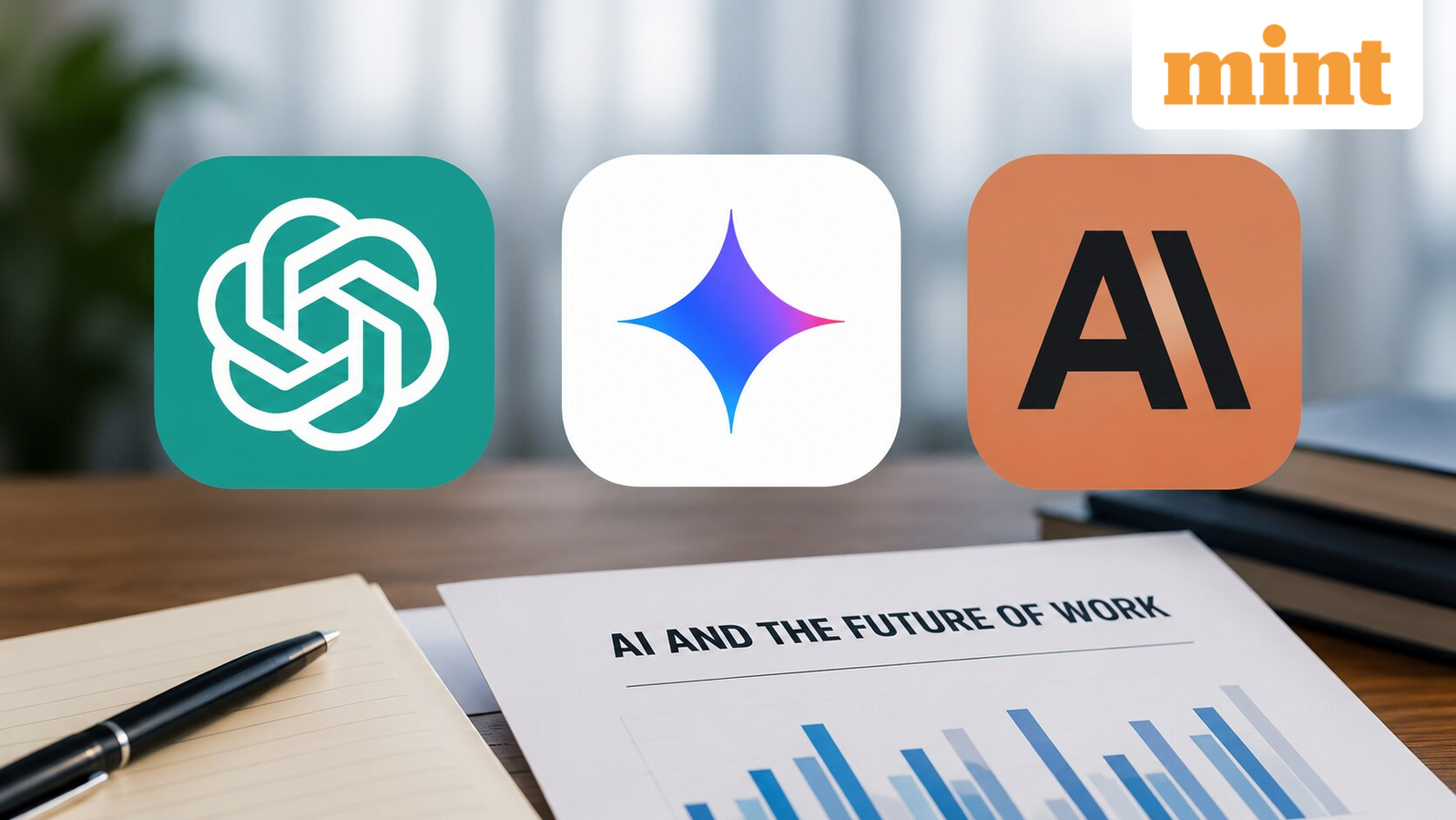
ChatGPT, Gemini, and Claude Wildly Disagree on AI Job Exposure
A new study published today found that AI chatbots give dramatically different answers when asked which jobs are most vulnerable to automation. Researchers who posed the same questions to ChatGPT, Gemini, and Claude found the models diverged sharply — especially on supervisory and management roles, and jobs requiring both physical and cognitive work. The findings raise serious questions about the reliability of AI-generated labor market assessments, which are increasingly being used to inform policy and business strategy.
Google I/O Preview: Gemini Set to "Leap Out of the Chatbox"
Ahead of Google I/O, analysts and industry watchers are anticipating a major leap for Gemini into PC control and autonomous agent capabilities. Competitors ChatGPT and Claude already deploy agents that can control PCs and execute multi-step tasks in the wild — and all signs point to Google closing that gap rapidly at its upcoming developer conference. Google is reported to have shut down its browser agent project Mariner to focus resources on a new personal AI agent initiative internally codenamed "Remy."

NYT Opinion: Why China Is Far Less Afraid of AI Than the U.S.
A new op-ed in The New York Times explores the sharp cultural and regulatory divergence between how China and the United States approach AI adoption. Written by an American editor based in Shanghai, the piece describes everyday AI integration in Chinese life — from facial recognition in schools to seamless consumer applications — and argues that U.S. caution stems from a mix of regulatory instinct and cultural unease that China simply does not share. The piece arrives as the U.S.-China AI rivalry intensifies.

Policy & Regulation
EU and U.S. State Laws Set to Tighten AI Rules for High-Risk Applications
Across both the European Union and individual U.S. states, regulatory pressure on high-risk AI applications is intensifying in 2026. U.S. state legislatures are advancing new laws targeting AI used in consequential decisions — including financial services, healthcare, employment, housing, and legal services — with compliance deadlines approaching for many organizations. The EU continues to negotiate amendments to its AI Act, with further changes expected before final passage. Companies deploying AI in these sectors are being urged to invest in governance frameworks well ahead of enforcement timelines.
Vietnam and Japan AI Laws Take Effect in 2026
Vietnam's Law on Digital Technology has come into force this year, introducing AI-specific provisions that include mandatory labeling, transparency requirements, and prohibitions tied to human rights and public order. Japan's AI Act, meanwhile, takes a principles-based approach, relying on cooperation and existing legal frameworks rather than heavy penalties, while embedding expectations around transparency and responsible use. Both moves reflect a global trend toward formal AI legislation outside the traditional U.S.-EU regulatory axis.
Industry Moves
Google and Meta Race to Build Personal AI Agents Internally
Google and Meta are both internally testing personal AI agents — codenamed "Remy" and "Hatch" respectively — designed to handle everyday tasks autonomously, in a direct response to the lead established by Anthropic and OpenAI in the agent space. Google reportedly shut down its earlier browser-based agent project Mariner to concentrate resources on the effort. The internal projects signal that the two tech giants are treating personal AI agents as a strategic priority ahead of what is expected to be a competitive product cycle.
Nvidia Surpasses $40 Billion in AI Equity Investments
Nvidia has crossed the $40 billion threshold in equity investments across the AI infrastructure stack, according to new reporting. The chip giant is deploying billions at a time into companies spanning the AI infrastructure ecosystem, while simultaneously signing commercial deals with those same firms. The dual strategy of investor and commercial partner positions Nvidia as a central node in the AI supply chain, though this week's market rotation suggests Wall Street is watching for signs that the next wave of AI spending may benefit different hardware vendors.
What to Watch
- Google I/O 2026: The developer conference is imminent, with expectations running high for major Gemini announcements — including autonomous agent capabilities, PC control features, and potential consumer product integrations that could close the gap with ChatGPT and Claude.
- U.S. AI Policy Response: Following Paul Tudor Jones's public warning to lawmakers, watch for Congressional hearings or executive actions on AI competitiveness and federal investment strategy — particularly as the U.S.-China rivalry narrative intensifies.
- AI Chip Earnings Season: With Intel, AMD, and Micron all surging this week on the "changing of the guard" thesis, upcoming earnings reports from these companies will be closely scrutinized for evidence that the next phase of AI infrastructure spending is genuinely shifting their way.
Quick Reads
- "AI Terminology Guide Published by TechCrunch" — TechCrunch has released a comprehensive glossary of AI terms — from LLMs to RAG to RLHF — aimed at helping non-specialists navigate the fast-evolving field.
- "MarTech Warns AI Vendor Growth May Be Fueled by Subsidies, Not Real Demand" — A Wall Street Journal analysis flagged in MarTech suggests AI vendor growth metrics may be inflated by subsidies and partnership arrangements, raising risk flags for marketers betting heavily on AI platforms.
- "AI Update: May 8 Roundup of Key Developments" — MarketingProfs published its weekly AI news digest covering the key stories from May 1–8, a useful catch-up for those tracking enterprise AI trends.
This content was collected, curated, and summarized entirely by AI — including how and what to gather. It may contain inaccuracies. Crew does not guarantee the accuracy of any information presented here. Always verify facts on your own before acting on them. Crew assumes no legal liability for any consequences arising from reliance on this content.
Powered by
