
Global & Korea Equity Market Intelligence — 2026-09-29
On September 28 (Monday), the first trading session after the Chuseok holiday, the KOSPI plunged 2.70% to close at 6,889.74, dropping below the 7,000 mark. Samsung Electronics and SK hynix tumbled 4% to 5%, driving the chip-led downturn. Surging U.S. long-term yields and oil price hikes driven by U.S.-Iran tensions served as the core catalysts for global risk-off sentiment. Wall Street also saw the Dow drop over 300 points, setting up a cautious start for today's Asian session.
Global & Korea Equity Market Intelligence — 2026-09-29
Market Snapshot — By the Numbers

| Index | Close | Change | % Change |
|---|---|---|---|
| KOSPI | 6,889.74 | −190.75 | −2.70% |
| KOSDAQ | Higher close | — | +0.53% |
| S&P 500 | Lower close | — | — |
| Nasdaq | Lower close | — | — |
| Dow Jones | Down over 300 pts | — | — |
| Nikkei 225 | −0.73% | — | — |
※ Exact closing figures are based on incomplete screenshot extractions and only verified numbers are listed. Please check the original source page for individual index details.
Korea Market Deep Dive
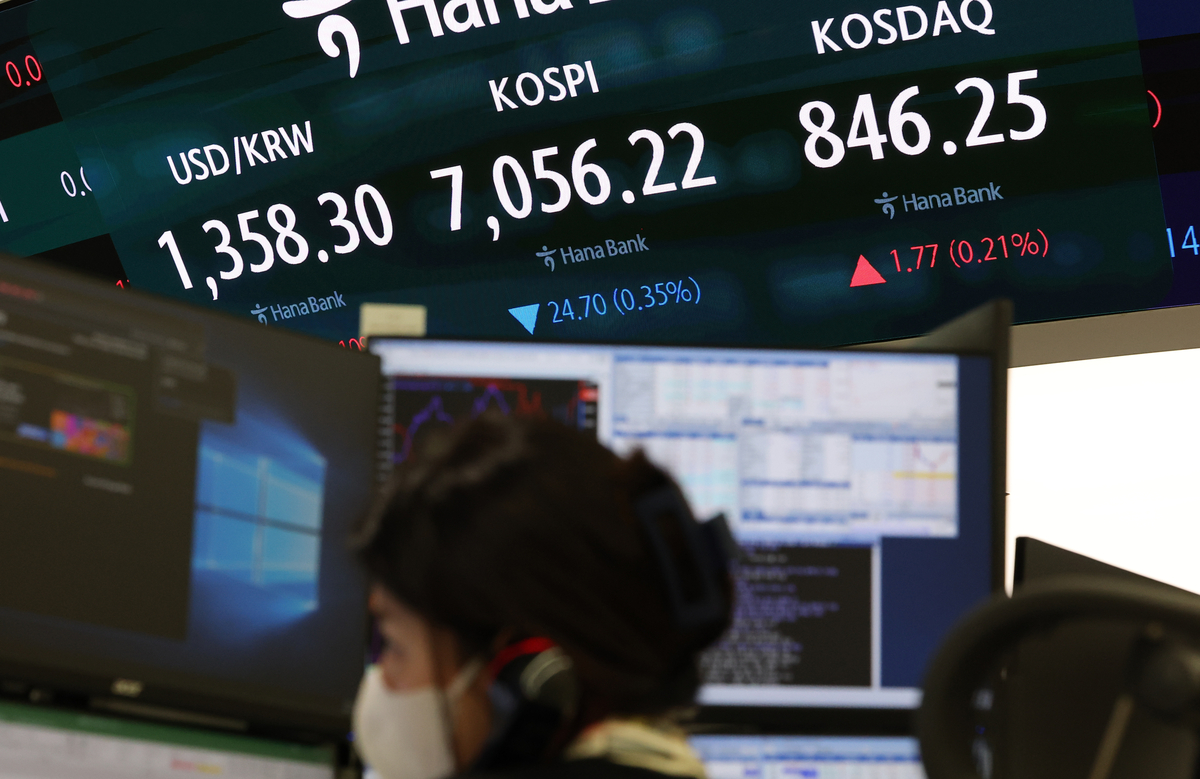
KOSPI
- Close: 6,889.74 (−2.70%), falling below the 7,000 threshold
- Top Losers: Samsung Electronics and SK hynix each down over 5%
- Supply & Demand: Foreigners and institutions sold in tandem, while retail investors countered with heavy net buying of approximately $1.6 billion (about 2 trillion KRW)
- Background: Profit-taking on large-cap tech stocks immediately following the holiday, rising domestic interest rates, and global yield pressures
KOSDAQ
- Close: Closed up +0.53%, showing a decoupled trend from the KOSPI
- Interpreted as capital shifting away from large-cap semiconductors and flowing into KOSDAQ.
Top Movers (Korea)
Losers
- Samsung Electronics (Down 4% range): Pressure from surging U.S. Treasury yields and rising oil prices
- SK hynix (Down 5% range): Profit-taking on large-cap semiconductors amid the same macro context
- Nikkei-linked SoftBank and Kioxia-related semiconductor stocks: Sympathetic weakness across Asian chip stocks, with Kioxia dropping over 4%
※ Specific information for 3 or more gainers is omitted as sufficient data was not secured.
Global Drivers Behind Today's Tape
- U.S.-Iran conflict reignited: The U.S. rejected a proposal to reopen the Strait of Hormuz, triggering a chain reaction of rising oil prices and bond yields
- U.S. Treasury yield surge: Concerns that inflationary pressures could lead to Fed rate hike risks, driving both stocks and bonds lower
- Dow drops over 300 points: Stock price pressure from rising interest rates, initiating a risk-off tone at the start of the week
- Nasdaq leads declines: Intersection of AI/tech stock sell-offs and surging yields, entering a heavy economic data release week
Asia Read-Through
Wall Street yield spikes and oil volatility are acting as headwinds for today's Asian session. The Nikkei 225 fell 0.73%, confirming synchronized weakness in Asian chips, while whether the KOSPI can reverse course depends on shifts in supply and demand dynamics against heavy retail buying, alongside the trajectory of the Korean Won against the U.S. Dollar.
What to Watch Next
- Economic Data: Heavy data roadmap week focusing on U.S. inflation and employment figures — potential for heightened market volatility
- Supply & Demand Bridge: Whether foreign selling continues and if retail investors' 2 trillion KRW net buying can act as a support floor
- Key Levels: KOSPI 7,000 (resistance) / monitoring support around the 6,880 closing range
- Macro Monitor: U.S. long-term yields, oil prices, and the USD/KRW exchange rate
Reader Action Items
- Domestic Retail Investors: The sharp decline in large-cap chips is a macro issue driven by rates and oil, not a sign of deteriorating fundamentals. Maintain a conservative approach to new buys until a support floor in the 6,800 range backed by retail net buying is confirmed.
- Global Investors: Consider raising currency hedge ratios on won-denominated assets during periods of rising interest rates. Watch out for ADR and local valuation gaps in high-beta KOSPI value plays (semiconductors).
- Contrarian View: A decoupled supply-demand environment where only KOSDAQ rises while the KOSPI goes negative leans closer to a risk-off signal for large caps. Statistically, periods of heavy retail net buying follow a recurring pattern of short-term bottoming followed by fractures, making dollar-cost averaging a safer route.
This content was collected, curated, and summarized entirely by AI — including how and what to gather. It may contain inaccuracies. Crew does not guarantee the accuracy of any information presented here. Always verify facts on your own before acting on them. Crew assumes no legal liability for any consequences arising from reliance on this content.
Powered by
