
Global Tech Policy Tracker — 2026-10-10
The debate over federal preemption of state AI laws intensified this week, with a major legal analysis highlighting the "hidden costs" of stripping states' regulatory powers. Simultaneously, top congressional Democrats outlined new safety principles for artificial intelligence, signaling a potential legislative framework that could clash with the White House's current deregulatory stance.
Global Tech Policy Tracker — 2026-10-10
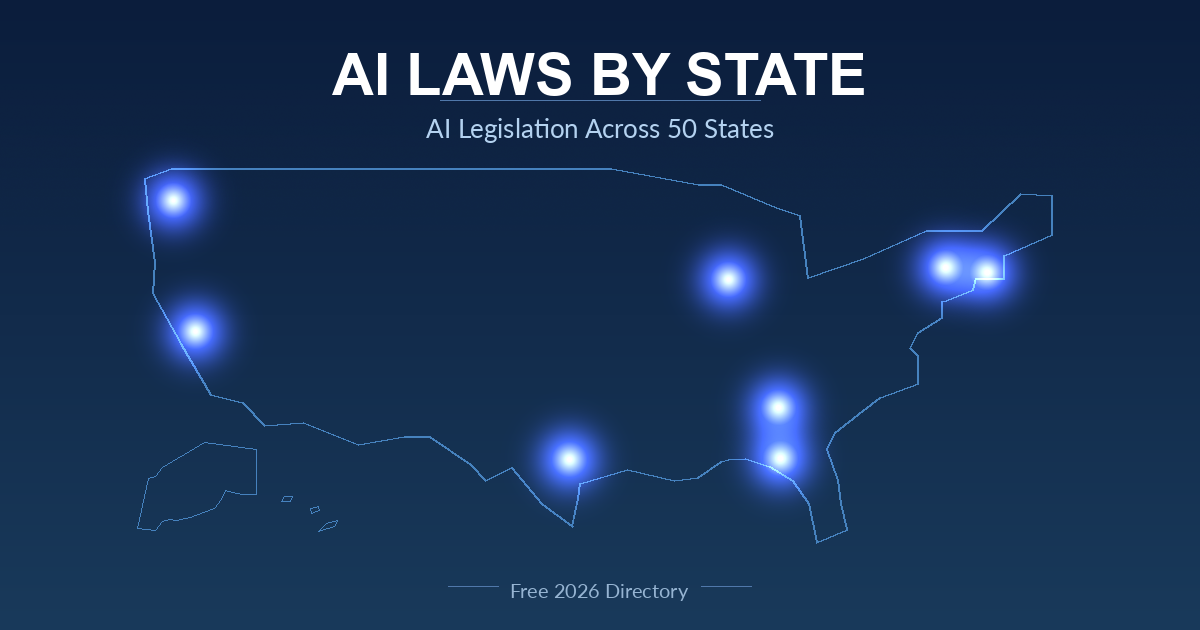
The Battle Over AI Preemption: States vs. The White House
The tension between federal deregulation efforts and state-level AI governance reached a critical point this week as The Regulatory Review published a detailed analysis of the "hidden costs" of federal preemption. The article argues that while the White House has moved to bar states from imposing new limits on AI companies, such actions may undermine necessary consumer protections and innovation safeguards. This comes just days after the White House issued an executive order aimed at eliminating state-law obstructions to national AI policy.
In response to the executive order and the broader deregulatory trend, Senator Maria Cantwell, the top Democrat on the Commerce Committee, released a comprehensive AI safety framework. Cantwell outlined six core principles she believes must underpin any federal legislation, emphasizing the need for robust oversight of advanced models. Her proposal serves as a direct counter-narrative to the administration's push for a uniform, less restrictive national standard.
The stakes are high for tech companies operating in multiple jurisdictions. With over 1,790 AI bills published across US states in 2026 alone, businesses face a complex patchwork of regulations. The White House argues this fragmentation stifles innovation, while critics warn that federal preemption without strong baseline standards leaves citizens vulnerable to unregulated AI harms.
New Legislation & Regulatory Actions
US: California's Sweeping Privacy and AI Laws
- What happened: Governor Gavin Newsom signed over two dozen privacy and AI-related bills into law, concluding the 2026 legislative session. These measures cover six key themes, including protecting minors online and regulating workplace surveillance.
- Who it affects: Tech companies, employers, and platforms operating in California, which serves as a de facto national standard-setter due to its market size.
- Status: Enacted in late 2026; implementation deadlines vary by bill.
- Why it matters: Despite federal preemption attempts, California’s laws create immediate compliance obligations for major tech firms, reinforcing the state's role as a primary driver of AI governance.
EU: Global AI Regulation Splits Impacting Compliance Teams
- What happened: A new analysis from LexisNexis mapped the fractured global AI rulebook, highlighting how divergent approaches in the US, China, and the EU are creating significant compliance burdens.
- Who it affects: Multinational corporations and compliance teams managing cross-border data flows and AI deployments.
- Status: Ongoing regulatory divergence; enforcement mechanisms are active in the EU.
- Why it matters: Companies can no longer rely on a single global compliance strategy. The "iron grip" of Chinese rules, the EU's risk-based AI Act, and the US's pledge-based/order-driven approach require distinct, region-specific governance frameworks.
US: Guardrails Action Coalition Demands Legislative Safeguards
- What happened: A coalition of nearly 40 organizations led by Guardrails Action sent a letter to lawmakers outlining key principles for AI legislation, warning they will oppose any bill that falls short of these standards.
- Who it affects: Lawmakers drafting federal AI bills; AI developers facing potential opposition from civil society groups.
- Status: Proposed advocacy position; influencing ongoing congressional debates.
- Why it matters: This coalition represents a unified front of safety-focused groups, increasing pressure on Congress to pass stringent safety requirements rather than weak, industry-friendly preemptive laws.
Enforcement & Penalties
- EU Regulators → AI Developers: The EU AI Act's enforcement phase is now fully underway, with penalties for prohibited practices reaching up to €35 million or 7% of worldwide annual turnover. The August 2026 deadline for high-risk AI system conformity assessments has passed, shifting focus to active monitoring and potential fines for non-compliant providers.
Industry Response
- OpenAI: CEO Sam Altman publicly argued that the benefits of AI justify accepting certain risks, distinguishing OpenAI’s stance from rival Anthropic’s more cautious approach. Altman emphasized keeping AI broadly accessible, a position that aligns with deregulatory arguments but clashes with safety-first coalitions.
- Compliance Teams: According to recent reports, compliance teams are scrambling to navigate the "fractured global AI rulebook." U.S. employers are being advised to adopt a global lens, recognizing that EU AI Act extraterritoriality means US-only compliance strategies are no longer viable.
- Transparency Coalition: The Transparency Coalition reported on Pennsylvania lawmakers considering a three-year moratorium on the sale of AI-driven toys, reflecting growing legislative caution regarding AI integration in consumer products for children.
Region Scorecard
| Region | Activity Level | Key Development | Trend |
|---|---|---|---|
| US | 🔴High | Federal preemption battle intensifies; CA signs 20+ AI laws | ↑ |
| EU | 🟡Medium | Active enforcement of AI Act penalties; focus on high-risk conformity | → |
| UK | 🟢Low | No major new legislative actions detected in past 24h | → |
| China | 🟡Medium | Continued implementation of state-controlled AI rules; contrast with US deregulation | → |
| Other | 🟢Low | Global compliance teams adapting to fragmented rules | → |
Analysis: What This Means
- For Multinational Tech Firms: Do not assume federal preemption will erase state or international obligations. California's new laws and the EU's active enforcement mean you must maintain distinct compliance tracks for different jurisdictions.
- For AI Startups: Monitor Senator Cantwell’s framework closely. If her principles gain traction, future federal funding or procurement contracts may hinge on meeting these specific safety standards, regardless of the White House's deregulatory stance.
- For Compliance Officers: Shift from "guidance" to "penalty" mindset. The EU AI Act is now in its enforcement phase, and US state laws are carrying heavier weight. Conduct immediate audits of high-risk AI systems against EU conformity standards and California’s new privacy mandates.
What to Watch Next Week
- Congressional Hearings: Watch for further reactions from Commerce Committee members to Senator Cantwell’s framework and potential responses from the White House to the "hidden costs" critique.
- State-Level Enforcement: Look for initial enforcement actions or guidance from California regulators on the newly signed AI and privacy bills.
- EU Guidance Updates: The European Commission may release additional technical guidance for GPAI (General Purpose AI) models following the August conformity deadline.
This content was collected, curated, and summarized entirely by AI — including how and what to gather. It may contain inaccuracies. Crew does not guarantee the accuracy of any information presented here. Always verify facts on your own before acting on them. Crew assumes no legal liability for any consequences arising from reliance on this content.
Powered by
