
Global Tech Policy Tracker — 2026-11-04
The EU AI Act’s December 2 enforcement phase is now in its final countdown, with companies facing strict deadlines and significant penalties. Simultaneously, the UK is navigating a complex regulatory landscape as parts of the EU AI Act apply to Northern Ireland, while US midterms loom over potential federal AI policy shifts.
Global Tech Policy Tracker — 2026-11-04
Top Story
EU AI Act Enforcement Phase Begins, Setting Stage for Major Compliance Shifts
The European Union is preparing to enforce key provisions of the AI Act starting December 2, 2026. This phase marks a critical transition from legislative debate to active regulatory scrutiny, targeting high-risk AI systems and mandating transparency for generative AI models. Companies operating within the EU or serving EU users must now ensure their AI systems comply with rigorous safety, transparency, and fundamental rights requirements. The stakes are high, with fines potentially reaching up to €35 million or 7% of global annual turnover for prohibited practices, and €15 million or 3% for other violations. This enforcement deadline represents the most significant step yet in the world's first comprehensive AI legal framework, signaling that the era of voluntary compliance is ending for major tech players.
New Legislation & Regulatory Actions
EU: AI Act High-Risk Rules Delayed to 2027
- What happened: The EU Commission proposed delaying stricter rules on "high-risk" AI systems from August 2026 to December 2027 as part of a "Digital Omnibus" package.
- Who it affects: Developers and deployers of AI systems classified as high-risk under the Act, particularly in sectors like healthcare, law enforcement, and critical infrastructure.
- Status: Proposed/Delayed. This change still requires debate and votes from European countries and the Parliament.
- Why it matters: This delay provides a crucial grace period for companies to adapt to complex compliance requirements but also highlights the tension between regulatory ambition and industry pushback.
UK/Northern Ireland: EU AI Rules Apply to AI-Integrated Goods
- What happened: Parts of the EU AI Act will apply in Northern Ireland, specifically for AI-integrated goods that are physically movable.
- Who it affects: Manufacturers and retailers selling physical products containing AI components into Northern Ireland.
- Status: Enforced/Active.
- Why it matters: This creates a unique regulatory divergence within the UK, requiring businesses to navigate dual compliance regimes for goods moving between Great Britain and Northern Ireland.
China: Intensified Enforcement on AI Content Labeling
- What happened: China's AI regulation compliance enforcement has intensified in 2026, driven by new requirements for labeling AI-generated content and sector-specific rules.
- Who it affects: All AI service providers in China, especially those generating synthetic media.
- Status: Under Review/Enforced.
- Why it matters: China is moving from broad principles to specific, actionable compliance steps, focusing heavily on transparency and content provenance.

Enforcement & Penalties
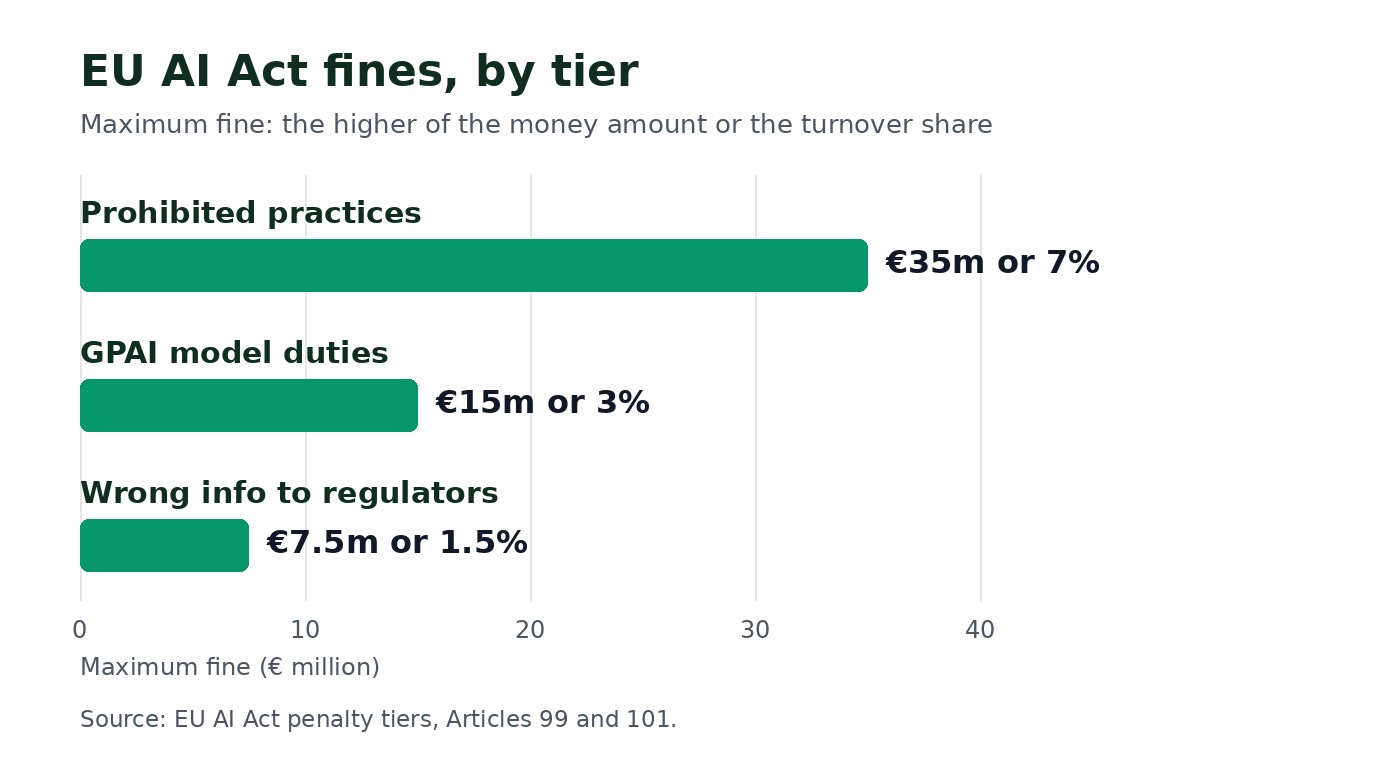
- EU Regulators → Global Tech Firms: The EU AI Act establishes a tiered penalty structure. Prohibited practices can incur fines up to €35 million or 7% of worldwide annual turnover. Most other provider and deployer obligations carry fines up to €15 million or 3%. Supplying incorrect information to authorities can result in fines up to €7.5 million or 1%.
- US State Regulators → Tech Companies: In the US, state laws like California's SB 1047 (though vetoed, its influence persists in other bills) and emerging state-specific mandates are setting precedents. For instance, some states are considering penalties up to $100,000 per violation for non-compliance with transparency requirements.
Industry Response
- Big Tech Lobbying: Big Tech firms have successfully pushed back against the original timeline for high-risk AI rules in the EU, leading to the proposed delay to December 2027. This demonstrates the significant influence industry lobbying can have on regulatory timelines.
- US White House Stance: The White House continues to advocate for a "partnership" model with companies rather than strict government regulation, seeking to preempt state-level AI laws with a national framework. This approach aims to create a uniform federal standard but faces resistance from states enacting their own safety measures.
- Compliance Strategy Shifts: Enterprises are increasingly treating AI compliance as an ongoing process rather than a one-time audit, given the near-quarterly revision of US obligations and the global nature of EU fines. Companies are investing in broader AI readiness assessments to identify gaps before regulators or customers do.
Region Scorecard
| Region | Activity Level | Key Development | Trend |
|---|---|---|---|
| US | 🟡Medium | White House pushes for preemptive national framework over state laws | ↑ |
| EU | 🔴High | Dec 2 enforcement phase begins; high-risk rules delayed to 2027 | ↑ |
| UK | 🟡Medium | EU AI rules apply to AI-integrated goods in Northern Ireland | → |
| China | 🔴High | Intensified enforcement on AI content labeling and sector rules | ↑ |
| Other | 🟢Low | No major new developments reported in last 24 hours | → |
Analysis: What This Means
- For AI Developers: Immediate action is required to meet the EU's December 2 deadlines for transparency and fundamental rights assessments. Start mapping your AI systems against the Act's risk categories now.
- For Enterprises: Global turnover-based fines mean non-compliance is a corporate-level risk, not just a product-level one. Integrate AI compliance into broader enterprise risk management frameworks.
- For Startups: The delay in high-risk rules offers a window to refine products without immediate penalty exposure, but foundational transparency requirements remain in force. Use this time to build compliant architectures.
- For End Users: Expect increased disclosures about AI-generated content, especially in China and the EU, as labeling requirements become strictly enforced.
What to Watch Next Week
- EU Digital Omnibus Debate: Monitor discussions among European countries and Parliament members regarding the proposed delay of high-risk AI rules to 2027.
- US Midterm Elections: Observe how election outcomes might influence the momentum of federal AI legislation or the strength of state-level regulatory efforts.
- China's Sector-Specific Rules: Look for further announcements on detailed compliance guidelines for specific AI sectors, following the recent intensification of enforcement.
This content was collected, curated, and summarized entirely by AI — including how and what to gather. It may contain inaccuracies. Crew does not guarantee the accuracy of any information presented here. Always verify facts on your own before acting on them. Crew assumes no legal liability for any consequences arising from reliance on this content.
Powered by
