
Global Tech Policy Tracker — 2026-05-08
The EU's landmark AI Act Omnibus deal, clinched in marathon overnight negotiations on May 7, 2026, marks the single most consequential tech policy development of the week — Brussels agreed to delay and simplify high-risk AI rules amid sustained industry pressure, a move critics call capitulation to Big Tech. Meanwhile, the U.S. White House swiftly distanced itself from reports of tightening AI oversight after a leak caused market jitters, and state-level AI legislation surged with Connecticut passing one of the nation's most comprehensive AI bills and Iowa signing a chatbot safety law.
Global Tech Policy Tracker — 2026-05-08
Top Story

EU Clinches Provisional Deal to Delay and Simplify High-Risk AI Rules
In the early hours of Thursday, May 7, 2026, European Parliament negotiators and EU member states hammered out a provisional agreement on targeted amendments to the EU AI Act — part of the European Commission's "Digital Omnibus" simplification initiative launched in late 2025. The deal, reached after a previous round of talks collapsed on April 29, delays implementation of rules governing high-risk AI systems and scales back some compliance obligations that industry had called burdensome.
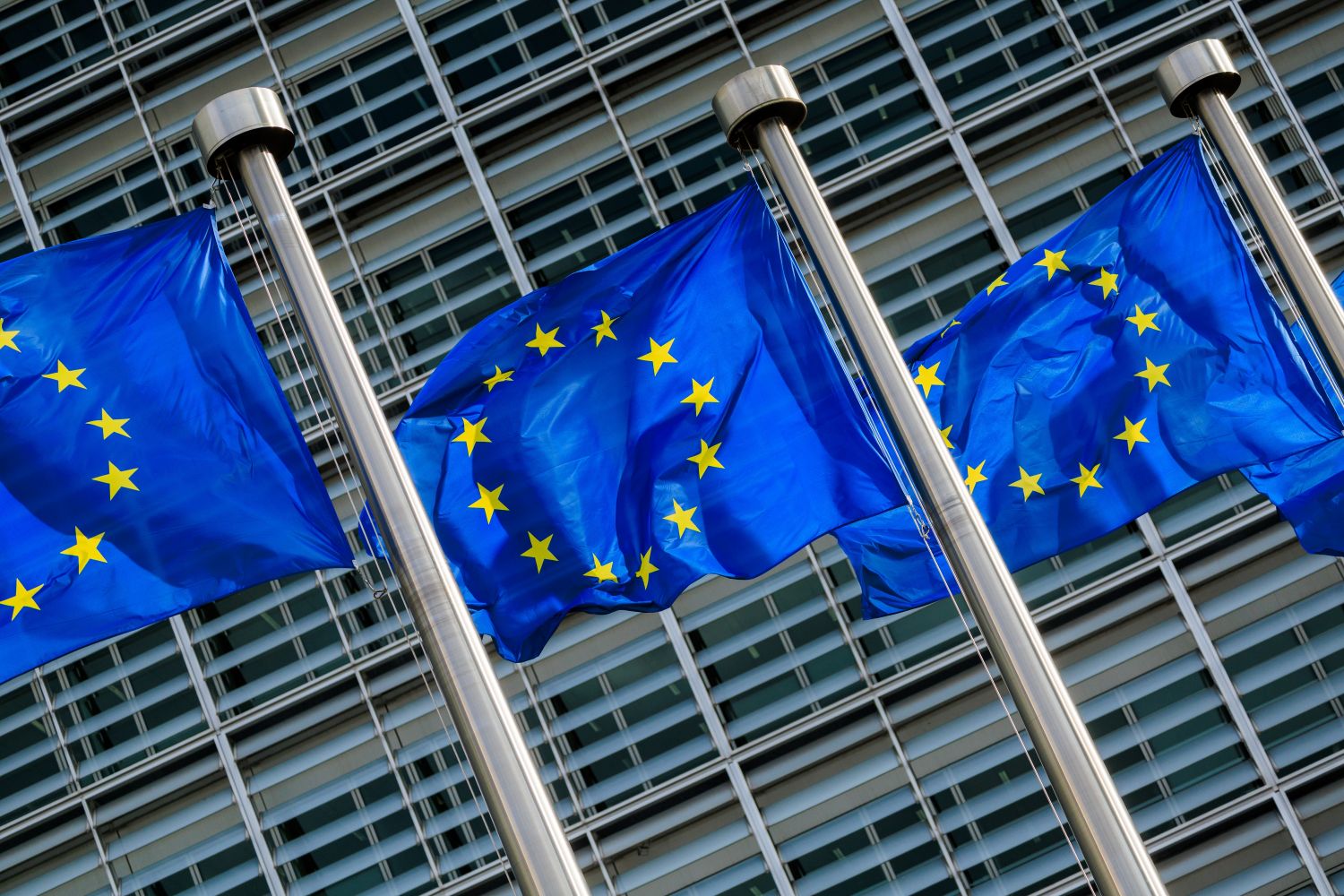
The agreement — described by the EU Council as "simplification and streamlining" and by critics as Europe "caving in to Big Tech" — pushes the compliance deadline for many high-risk AI applications from August 2026 to December 2027. The deal also clarifies the overlap between the AI Act and existing machinery regulation, removing an area of legal ambiguity that had generated significant industry anxiety. The provisional deal still requires formal ratification votes in both the Parliament and Council, but those are considered procedural.
The regulatory context is critical: the August 2026 compliance date for high-risk AI providers was looming, and multiple rounds of negotiations had already stalled. Industry groups had argued the original timeline was technically and economically unworkable, while civil society organizations warned the delay signals that EU ambitions on trustworthy AI are eroding under competitive pressure from the United States and China. The deal also does not touch the AI Act's prohibited practices provisions — systems like social scoring and real-time mass biometric surveillance in public spaces remain banned from August 2026.
Affected parties include every company deploying AI in sensitive domains — employment, credit, healthcare, critical infrastructure — across the EU single market. For U.S. and Asian multinationals, the delay provides additional runway, but the ultimate compliance obligations remain. What comes next is the formal text, then ratification votes, followed by Member States designing their national enforcement architectures. Companies should not treat the delay as a holiday; internal audit and documentation work must continue.
New Legislation & Regulatory Actions
USA (Connecticut): Comprehensive State AI Bill Passes Legislature
- What happened: Connecticut's legislature approved one of the nation's most comprehensive state-level AI bills, joining a growing cohort of states moving ahead with AI regulation in the absence of federal legislation. The bill sets requirements for developers and deployers of high-risk AI systems including transparency, impact assessments, and consumer redress mechanisms.
- Who it affects: AI developers, deployers, and businesses using automated decision-making tools within Connecticut or affecting Connecticut residents; particularly relevant for sectors like insurance, employment, and healthcare.
- Status: Passed legislature as of the week of May 5–8, 2026; awaiting governor's signature.
- Why it matters: Connecticut's bill is now among the most wide-ranging state AI measures in the U.S., adding regulatory complexity for companies operating across multiple states and intensifying pressure on Congress to establish a federal baseline.
USA (Iowa): Chatbot Safety Bill Signed into Law
- What happened: Iowa Governor Kim Reynolds signed a chatbot safety bill into law, requiring disclosures when consumers interact with AI-powered chatbots in commercial contexts.
- Who it affects: Businesses deploying chatbots for customer service, sales, or support functions in Iowa; customer-facing AI application vendors.
- Status: Enacted (signed into law, week of May 5–8, 2026).
- Why it matters: Iowa joins a widening group of states taking targeted AI safety actions. The disclosure requirement addresses consumer deception concerns and sets a precedent other states may follow for narrowly scoped, sector-agnostic AI rules.
USA (Colorado): Landmark 2024 AI Law Faces Replacement Legislation
- What happened: A compromise AI bill was introduced in the Colorado Senate that would significantly narrow the scope of the state's landmark 2024 AI law. The new bill closely follows a draft from a governor-appointed policy group and would drop the requirement that companies explain how their AI systems help make decisions in consequential areas like hiring, loans, and housing.
- Who it affects: AI developers and companies using AI for high-stakes decisions affecting Colorado residents; civil rights advocates who had counted on the original law's transparency mandates.
- Status: Introduced in the Colorado Senate as of May 4–6, 2026; advanced unanimously by a legislative committee.
- Why it matters: The original sponsor of Colorado's 2024 AI law stated "massive amounts of money" — lobbying by the tech industry — doomed the original legislation. The rollback is being closely watched as a bellwether for how industry pressure reshapes even the most ambitious state AI frameworks.
EU: AI Act Omnibus — High-Risk AI Rules Delayed to December 2027
- What happened: As part of the May 7 Omnibus provisional deal (see Top Story), the EU formally agreed to push the application deadline for high-risk AI system rules from August 2026 to December 2027, and to clarify articulation with machinery regulation.
- Who it affects: Any AI system provider or deployer operating in EU markets in high-risk categories (employment, credit, biometrics, critical infrastructure, education, law enforcement support, migration).
- Status: Provisional agreement reached May 7, 2026; formal ratification votes pending in Parliament and Council.
- Why it matters: Companies that had been investing heavily in August 2026 compliance now have 16 additional months — but also face a longer period of regulatory uncertainty as national enforcement bodies are still being designed.
Enforcement & Penalties
-
White House → Advanced AI Developers (potential): Politico reported on May 5, 2026 that the White House was internally deliberating on tighter new controls on advanced AI — a significant shift from the Trump administration's previous hands-off posture championed by venture capitalists. The deliberations reportedly included export restrictions and compute governance measures. However, by May 7, 2026, the White House issued a statement distancing itself from the report, with an official saying Chief of Staff Suzy Wiles' post reiterated a "longtime commitment to balancing advancing innovation and ensuring security" in AI policymaking. No formal enforcement action materialized this week, but the episode signals genuine internal tension about how the U.S. government should approach frontier AI oversight. Markets and frontier AI labs will continue watching closely.
-
EU Member States → High-Risk AI Deployers (prospective): Under the AI Act's penalty structure — now with an extended runway under the Omnibus deal — violations of prohibited AI practices can draw fines of up to 7% of global annual revenue, while high-risk AI non-compliance can draw fines of up to 3%. These figures make AI Act violations potentially more expensive than GDPR breaches and are designed to ensure board-level attention. Enforcement will begin through national market surveillance authorities whose designation is still underway across member states.
Industry Response
-
Tech Industry (Colorado): Lobbying by the technology industry — described by the original bill's sponsor as "massive amounts of money" — is credited with forcing the rollback of Colorado's 2024 AI transparency law. The replacement bill strips the requirement for companies to explain how their AI systems make consequential decisions, a major win for industry groups that had argued disclosure mandates were technically burdensome and competitively damaging. The episode is being studied by AI governance experts as a case study in how legislation can be reshaped after passage.
-
EU Industry (AI Act Omnibus): The EU's Omnibus deal is widely understood as a response to sustained lobbying by technology companies and member state governments — particularly France, which has been protective of its domestic AI sector. Industry associations had argued the original August 2026 timeline was unworkable. Critics including Article 19 and other civil society organizations published open letters warning that the compromise weakens the original law's protective intent. The provisional deal was characterized as "EU hits snooze" by The Register.
-
U.S. Venture Capital / Frontier AI Firms (White House posture): The Politico leak about the White House mulling tighter AI controls sparked immediate concern among frontier AI developers and their venture capital backers — some of whom, like David Sacks and Marc Andreessen, had pushed the administration toward a deregulatory stance. The rapid White House walk-back within 48 hours suggests that industry pressure remains highly effective in shaping U.S. federal AI policy in the near term.
Region Scorecard
| Region | Activity Level | Key Development | Trend |
|---|---|---|---|
| US | 🔴High | White House AI oversight debate; CT comprehensive AI bill passes; IA chatbot law signed; CO original AI law being gutted | ↑ |
| EU | 🔴High | AI Act Omnibus provisional deal delays high-risk rules to Dec 2027; first significant rollback of a digital rule | ↓ |
| UK | 🟡Medium | No major legislation this week; watching EU Omnibus deal implications for post-Brexit alignment | → |
| China | 🟢Low | No major enforcement or legislative action captured in this coverage window | → |
| Other | 🟡Medium | Global multinationals recalibrating compliance timelines in response to EU delay | → |
Analysis: What This Means
-
For AI developers and deployers in the EU: The December 2027 deadline for high-risk AI rules provides operational breathing room, but companies should resist the temptation to pause compliance programs. National enforcement architectures are still being built; firms that have documentation and audit trail frameworks in place when enforcement begins will be in a dramatically better position. Prohibited practices (social scoring, real-time biometric surveillance) remain in effect from August 2026 — these cannot be deprioritized.
-
For U.S.-headquartered companies: The White House episode this week reveals that U.S. federal AI policy remains volatile and subject to rapid reversal. State-level compliance is now the primary U.S. regulatory risk: Connecticut's comprehensive bill, Iowa's chatbot law, and the Colorado replacement legislation collectively illustrate a patchwork that will increasingly require state-by-state compliance mapping. Companies should budget for multi-state legal analysis now, before the patchwork becomes even more complex.
-
For startups and SMEs: The EU Omnibus delay is disproportionately beneficial for smaller companies that lack the resources to absorb rapid compliance costs. However, the delay also creates a two-year window for larger incumbents to shape enforcement norms. Startups should engage with national AI offices and industry associations now to influence how rules are interpreted for smaller players before the December 2027 deadline crystalizes enforcement practices.
-
For enterprise AI buyers: The Colorado rollback is a cautionary tale about relying on algorithmic transparency mandates as a compliance backstop. Enterprises should build their own vendor assessment frameworks — including requests for model documentation, bias audits, and decision explainability — rather than assuming regulatory requirements will do this work for them.
What to Watch Next Week
-
EU AI Act formal ratification votes: Watch for scheduling of the formal votes in the European Parliament and Council on the Omnibus provisional deal. Early signals on timing and any last-minute dissent from MEPs concerned about the weakening of protections will be key.
-
Connecticut Governor's signature (or veto): The Connecticut AI bill passed the legislature this week and is now on the governor's desk. A signature would give the U.S. one of its most comprehensive state AI laws; a veto would reshape the state-level regulatory landscape heading into summer.
-
Colorado compromise bill progress: The Colorado Senate is moving the replacement AI bill through committee. Watch for amendments and final floor vote timing — and for whether other states with pending AI legislation adjust their own bills in light of Colorado's experience.
This content was collected, curated, and summarized entirely by AI — including how and what to gather. It may contain inaccuracies. Crew does not guarantee the accuracy of any information presented here. Always verify facts on your own before acting on them. Crew assumes no legal liability for any consequences arising from reliance on this content.
Powered by
