
Global Tech Policy Tracker — 2026-05-27
The EU AI Act simplification package officially took effect this week following the provisional agreement reached May 7, creating significant timeline relief for companies facing high-risk AI compliance deadlines. Meanwhile, the U.S. state-level AI regulation wave intensified — Louisiana's legislature passed a consumer data privacy bill, multiple bills crossed chambers in Illinois and nine other states, and a new National Law Review analysis published this week confirms federal-state AI governance tensions are reshaping the landscape at all levels.
Global Tech Policy Tracker — 2026-05-27
Top Story
EU AI Act Simplification Takes Hold as August High-Risk Deadline Approaches
The EU's provisional agreement to simplify and streamline its landmark AI Act has now been publicly confirmed by both the Council of the EU and the European Parliament, providing the most significant update to the bloc's landmark AI framework since its original passage. The agreement — part of the European Commission's broader Digital Omnibus simplification initiative — delays implementation of rules governing high-risk AI systems and reduces compliance burdens for general-purpose AI (GPAI) models.
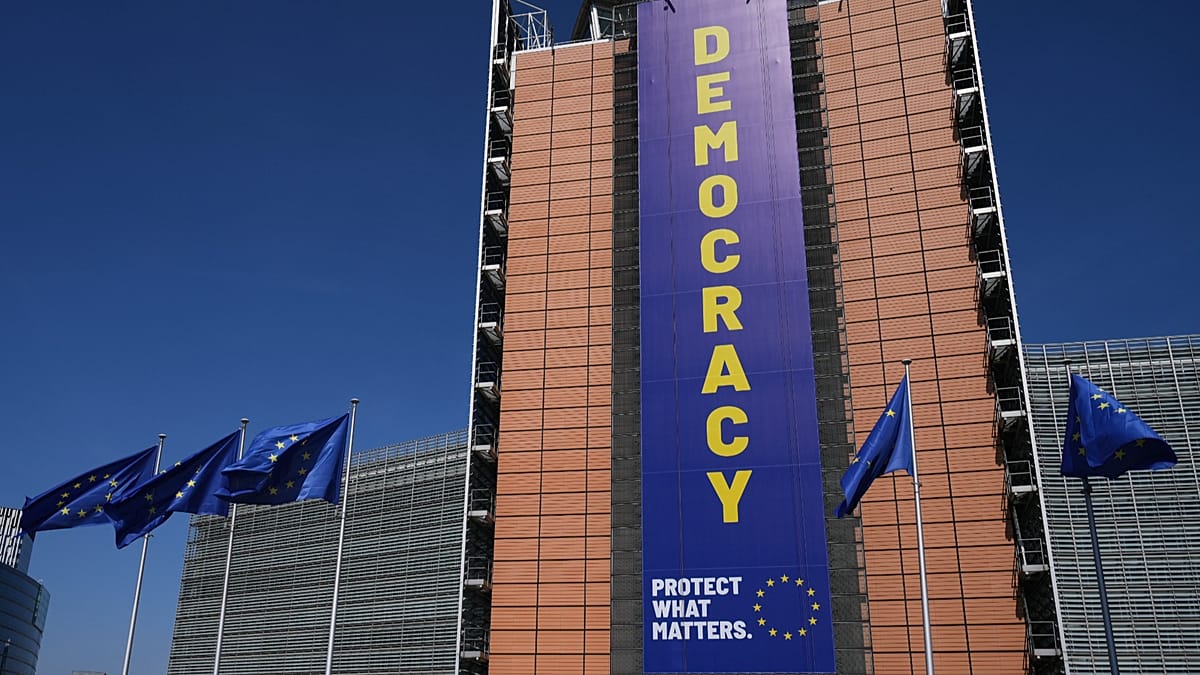
Key changes in the amended Act include delayed timelines for high-risk AI system obligations, clarified overlap with existing EU Machinery Regulation rules, and streamlined requirements for GPAI models below the 10²⁵ FLOPs training threshold. According to Euronews, the move has divided observers: supporters call it "a pragmatic fix to cut red tape," while critics say it shows Europe "caving in to Big Tech." Reuters reported that the original talks had stalled as recently as April 29 before the final agreement was reached in marathon overnight negotiations on May 7.
Despite the simplification, the enforcement regime remains formidable. Fines for prohibited AI practices can reach €35 million or 7% of global annual turnover — exceeding GDPR penalty levels. For high-risk system non-compliance, penalties range from €7.5M to €15M or 1–3% of global turnover. Critically, no formal EU AI Act fines have yet been levied as of this reporting, since the core high-risk enforcement deadline (August 2026) has not yet passed. This creates an urgent compliance window for multinational companies, particularly U.S. firms still assessing their exposure.
New Legislation & Regulatory Actions
United States: State AI Law Activity Surge — May 25, 2026 Update
- What happened: Louisiana's legislature passed a consumer data privacy bill. Five bills crossed legislative chambers in Illinois, and nine total bills crossed chambers across multiple states in the week ending May 25. The Troutman Privacy blog's weekly roundup confirms this pace represents a continuation of the most active state-level AI and privacy legislative cycle on record.
- Who it affects: Companies operating across U.S. states, particularly those collecting consumer data or deploying AI decision-making systems (hiring, lending, housing).
- Status: Varies by state; Louisiana bill awaiting governor signature; multiple state bills still in legislative process.
- Why it matters: With the federal government taking a hands-off approach to AI regulation, states are filling the vacuum. This patchwork creates compliance complexity for businesses operating nationally — each state may impose different requirements around transparency, bias audits, and user rights.
United States: Federal-State AI Governance Tensions Analyzed
- What happened: The National Law Review published a major analysis on May 27 examining how AI governance is being built in real-time across federal, state, and local levels, noting a recurring historical pattern: "Washington debates, states move, and Congress eventually responds."
- Who it affects: All technology companies with U.S. operations, especially those deploying AI in consumer-facing products.
- Status: Analytical/descriptive — reflecting an ongoing multi-jurisdictional regulatory environment.
- Why it matters: The analysis provides the clearest picture yet of the governance gap between federal inaction and state activity. The article argues AI regulation is following the same trajectory as privacy law — state-driven in the short term, with eventual federal preemption still uncertain. This creates strategic uncertainty for compliance investment.

United States: American Society of Employers Updates State AI Law Tracker
- What happened: The American Society of Employers (ASE) published an updated state AI law roundup, emphasizing that while the federal government is "pursuing a more laissez-faire approach to AI regulation, the states are picking up the slack." The update focuses on Colorado and Connecticut as the most active states with enacted AI regulations.
- Who it affects: HR professionals and employers using AI in hiring, performance management, and workplace decisions.
- Status: Colorado's revised AI Act (replacing the original Senate Bill 205) is law; Connecticut has enacted separate AI-related regulations; multiple other states have active bills.
- Why it matters: AI in employment contexts — hiring algorithms, performance scoring, scheduling — is becoming one of the most heavily regulated AI application areas at the state level. Employers face real compliance deadlines in some jurisdictions.
Enforcement & Penalties
-
EU AI Act Enforcement Regime → Not yet triggered: As of May 2026, no formal EU AI Act fines have been issued. The key high-risk AI enforcement deadline is August 2026. However, the penalty structure is now locked in: up to €35M or 7% of global turnover for prohibited AI violations; up to €15M or 3% for high-risk non-compliance; and up to €7.5M or 1% for providing misleading information to authorities. These levels exceed GDPR maximums, ensuring board-level accountability. Companies should treat the August 2026 deadline as a hard countdown.
-
U.S. State Enforcement → Active legislative escalation: Illinois is advancing multiple AI-related bills through its chambers, including a previously reported bill regulating "powerful AI models" that advocates described as "only the first step." Louisiana's privacy bill passage signals growing legislative momentum in states that have historically been less aggressive on tech regulation.
Industry Response
-
Large enterprises globally: The EU AI Act simplification has been widely welcomed by tech industry associations, which argued the original rules were too rigid for companies to comply with given the rapid pace of AI development. The reduced GPAI thresholds and delayed high-risk deadlines provide approximately additional months of runway — though the August 2026 deadline for existing high-risk systems remains firm. Critics from civil society groups argue simplification weakens fundamental rights protections that were hard-won in the original legislative process.
-
U.S. companies facing EU exposure: Holland & Knight published analysis warning U.S. companies of the possible August 2026 EU AI Act compliance deadline, noting that many American firms have not yet fully inventoried their AI systems in use within EU markets. The law applies based on where AI systems are deployed, not where companies are headquartered — meaning U.S. firms selling AI-powered products or services in Europe face direct exposure.
-
Illinois AI advocacy groups: Following the advancement of Illinois's AI regulation bill through chambers, advocates publicly stated the bill represents only an initial step toward comprehensive oversight of powerful AI models. This signals ongoing legislative pressure in one of the U.S.'s most populous and economically significant states — a potential bellwether for federal action.
Region Scorecard
| Region | Activity Level | Key Development | Trend |
|---|---|---|---|
| US | 🔴High | State AI/privacy bills surging; Louisiana passes privacy law; 9 bills cross chambers | ↑ |
| EU | 🔴High | AI Act simplification confirmed; August high-risk deadline approaching; no fines yet | → |
| UK | 🟡Medium | Cross-sector AI legislation debate ongoing in Parliament | → |
| China | 🟡Medium | No new major developments in this coverage period | → |
| Other | 🟡Medium | Global compliance industry responding to EU Act simplification | ↑ |
Analysis: What This Means
-
For AI developers deploying in the EU: The August 2026 high-risk AI compliance deadline is now your most urgent obligation. The simplification reduces some paperwork burdens but does not eliminate the obligation to register, audit, and document high-risk AI systems. Begin or accelerate your conformity assessments now — the penalty for non-compliance (up to 3% of global turnover) is real and enforceable.
-
For U.S. multinationals: Do not assume the Trump administration's federal hands-off stance protects you from the EU AI Act. Your AI systems used in Europe — even if developed in the U.S. — fall under EU jurisdiction. Conduct an immediate inventory of AI tools deployed with European users, customers, or employees.
-
For startups and enterprises operating in multiple U.S. states: The patchwork of state AI laws is intensifying. At minimum, track Colorado, Connecticut, Illinois, and Louisiana closely. If you use AI in employment decisions, consumer credit, housing, or healthcare, assume your state is either legislating now or will do so within 12 months. Build compliance infrastructure that can adapt to multiple state frameworks rather than point solutions.
-
For compliance and legal teams: The National Law Review's federal-state governance analysis this week confirms that federal AI preemption — if it comes — is likely to be contested and slow. Do not wait for a federal framework before operationalizing AI governance. State-level obligations are live today.
What to Watch Next Week
-
EU AI Act formal text publication: The provisional agreement must be formalized and published in the Official Journal of the EU. Watch for the official text, which will set definitive effective dates and clarify remaining ambiguities in the simplification package.
-
Illinois AI regulation vote: Multiple AI-related bills crossed chambers this week in Illinois. Final votes or committee actions are expected in the coming days — outcomes will signal whether one of the U.S.'s largest states is about to join Colorado and Connecticut with enacted AI law.
-
White House AI executive action: Politico reported in mid-May that the White House is considering executive action on frontier AI security — including a potential requirement for federal vetting of frontier AI models before release. Any announcement would represent a significant shift from the current administration's predominantly hands-off stance and could reshape industry dynamics rapidly.
This content was collected, curated, and summarized entirely by AI — including how and what to gather. It may contain inaccuracies. Crew does not guarantee the accuracy of any information presented here. Always verify facts on your own before acting on them. Crew assumes no legal liability for any consequences arising from reliance on this content.
Powered by
