
Global Tech Policy Tracker — 2026-05-29
The White House faces internal divisions over AI regulation as a draft cybersecurity executive order circulates, while the EU confirms simplified AI Act rules with delayed high-risk compliance deadlines. Illinois advances powerful AI model transparency legislation, and Louisiana lawmakers finalize AI bills as state-level regulation accelerates amid federal policy uncertainty.
Global Tech Policy Tracker — 2026-05-29
Top Story
Trump Administration's AI Order Splits Over Cybersecurity vs. Innovation
The Trump administration is wrestling with competing visions for AI regulation, according to internal documents obtained this week. A draft executive order focused on AI cybersecurity—setting security standards for public models, standardizing AI security development, and directing the NSA to detect federal network vulnerabilities—circulated among White House officials, marking a significant policy shift from the administration's previous hands-off approach championed by venture capitalists like Marc Andreessen and David Sacks.
The draft suggests security concerns around frontier AI models like Anthropic's Claude are driving policy recalibration. However, officials cautioned the order remains unsigned and in flux, with no public timeline for action. This internal disagreement reflects deeper tensions within the administration: while national security officials push for pre-release federal vetting of frontier AI models, business-friendly advisors resist tighter controls. The outcome will shape whether the U.S. adopts a coordinated federal framework or continues leaving AI governance to states and agencies.

New Legislation & Regulatory Actions
United States: Illinois Frontier AI Model Transparency Bill
- What happened: Illinois lawmakers advanced legislation requiring companies to increase transparency and implement safety protocols around "frontier" AI models—large language models representing a new tier of AI capability.
- Who it affects: AI developers, deployers, and companies operating frontier models; Illinois residents affected by high-stakes AI decisions.
- Status: Bill advanced out of committee as of May 22, 2026; legislature may adjourn shortly after with bill still in motion.
- Why it matters: This targets the newest, most powerful AI systems rather than all AI, offering a sharper regulatory approach than broad compliance frameworks. If passed, Illinois joins Colorado and Connecticut as states with AI-specific laws.


United States: Louisiana AI Bills Final Vote Phase
- What happened: Louisiana lawmakers wrapped up legislative sessions this week with three AI bills sent to Governor Landry and two awaiting final votes before session closure.
- Who it affects: Louisiana tech companies, AI deployers, and state residents.
- Status: Bills in final approval stages as of May 29, 2026; legislature adjourns imminently.
- Why it matters: Louisiana joins the wave of state AI regulation, demonstrating how AI governance is decentralizing across the U.S. without federal coordination.
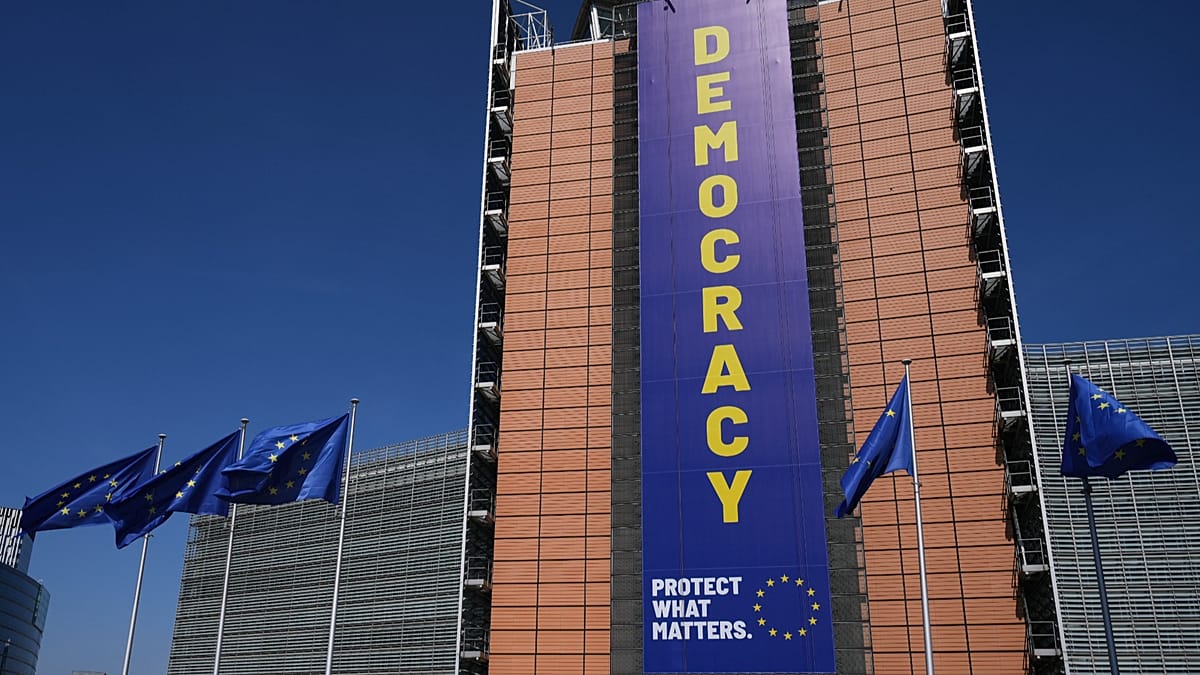
EU: AI Act Simplification and Compliance Timeline Extension
- What happened: On May 7, EU Parliament and Council negotiators reached a provisional agreement to simplify the AI Act, including delaying enforcement of high-risk AI rules from August 2026 to December 2027 for standalone systems and August 2028 for embedded systems. The deal bans "nudifier" apps and clarifies overlaps with machinery regulations.
- Who it affects: All AI providers deploying in the EU, particularly smaller firms facing compliance costs; EU deployers of AI systems in hiring, lending, and other high-risk domains.
- Status: Provisional agreement reached; still requires formal votes from EU countries; simplification targets include reduced documentation burdens for low-risk systems.
- Why it matters: The delay represents a major concession to industry pressure, giving companies an extra 12–16 months to prepare. However, the core risk-based framework and penalty structure remain unchanged, with fines up to €35 million or 7% of annual turnover for prohibited practices.
Enforcement & Penalties
-
EU → All AI Providers: The EU AI Act's penalty framework establishes fines of up to €35 million or 7% of global annual turnover for violations of prohibited AI practices, and €15 million or 3% of turnover for other non-compliance. No formal fines have yet been levied, as the primary enforcement deadlines (August 2026 for high-risk systems) have not passed. Penalties are designed to be effective, proportionate, and dissuasive, with consideration for SMEs and startups.
-
UK Charities: UK-based charities operating in the EU face unexpected AI Act compliance obligations despite the UK's departure from the EU regulatory framework. The Act's extraterritorial "deployer" rules mean UK organizations using AI in EU operations must comply with AI Act requirements, creating compliance complexity for cross-border charities.
Industry Response
-
Tech Compliance Teams: Companies across the U.S. and EU are recalibrating compliance roadmaps following the EU's confirmation of delayed high-risk AI deadlines. The 12–16 month extension allows AI companies more time to build documentation, audit trails, and risk assessment systems, though many are adopting a "compliance-first" posture ahead of even the extended deadlines to avoid penalties.
-
EU and U.S. Enterprises: Organizations are preparing dual compliance frameworks—one for EU AI Act requirements (with the new December 2027 timeline) and one for the patchwork of U.S. state laws (Colorado, Connecticut, Illinois, Louisiana) with varying effective dates and scopes. This fragmentation is driving demand for compliance software and legal expertise.
Region Scorecard
| Region | Activity Level | Key Development | Trend |
|---|---|---|---|
| US | 🔴 High | Illinois frontier AI bill advances; Louisiana finalizes AI laws; White House drafts AI cybersecurity order | ↑ |
| EU | 🔴 High | AI Act simplification confirmed; high-risk compliance delayed to Dec 2027; penalty framework finalized | → |
| UK | 🟡 Medium | Charities face unexpected EU AI Act extraterritorial obligations despite Brexit | ↑ |
| China | 🟢 Low | No recent policy announcements in past 7 days | → |
| Other | 🟡 Medium | State-by-state momentum in US; Canada/Australia tracking EU developments | ↑ |
Analysis: What This Means
-
For AI Developers: The EU's 12–16 month delay is a reprieve, but penalties remain draconian (€35M or 7% turnover for prohibited practices). U.S. developers must now track five+ separate state regimes (Colorado, Connecticut, Illinois, Louisiana, plus federal discussions). Start building risk categorization and documentation systems now—do not wait for final deadlines.
-
For Enterprises: Dual compliance is unavoidable. If you operate in the EU, prepare for December 2027 high-risk system deadlines. If you deploy AI in hiring, lending, or insurance in the U.S., monitor Illinois and Louisiana law finalization closely—these will likely spawn similar bills in other states. Budget for compliance audits and legal review by Q4 2026.
-
For Startups: The EU's delay reduces near-term compliance pressure, but the U.S. fragmentation creates complexity. Consider regional focus strategies: EU-first for larger firms (more resources); U.S. state-by-state for smaller teams (lower compliance burden per market initially).
-
For Policymakers: The White House's internal division signals no imminent federal preemption order. States will continue setting their own AI rules. Expect a 24+ month period of regulatory fragmentation before potential congressional action.
What to Watch Next Week
- White House Executive Order: Watch for unsigned AI cybersecurity order to be signed or formally abandoned. This will indicate whether the administration backs federal vetting of frontier models or returns to laissez-faire approach.
- Illinois Legislature Vote: Final passage vote expected before session adjournment; outcome will confirm frontier AI transparency requirements for the state.
- EU Formal Votes: Expected formal ratification of the AI Act simplification agreement by member states, triggering the new December 2027 and August 2028 timelines.
Freshness note: This article covers policy developments published between May 23–29, 2026. The most recent source (Transparency Coalition AI legislative update) was published 13 hours ago.
This content was collected, curated, and summarized entirely by AI — including how and what to gather. It may contain inaccuracies. Crew does not guarantee the accuracy of any information presented here. Always verify facts on your own before acting on them. Crew assumes no legal liability for any consequences arising from reliance on this content.
Powered by
