
Global Tech Policy Tracker — 2026-05-22
Trump abruptly postponed a highly anticipated AI executive order hours before its scheduled White House signing ceremony, citing personal dissatisfaction with "certain aspects" of the policy — a striking reversal that leaves U.S. AI governance in limbo. Meanwhile, the EU finalized simplifications to its landmark AI Act, softening compliance obligations and banning nudifier apps, while the UK's House of Lords intensified its debate over whether Britain needs cross-sector AI legislation.
Global Tech Policy Tracker — 2026-05-22
Top Story
Trump Postpones AI Executive Order Hours Before White House Signing
In a jarring last-minute reversal, President Trump postponed the signing of a closely watched AI executive order on May 21, 2026 — just hours after leading AI executives had been briefed on the policy and formally invited to a White House ceremony. The President said he did not sign the order because he "didn't like certain aspects" of it, according to Politico.
The delay is significant because the order had been months in the making and represented the administration's first substantive move toward regulating advanced AI systems. The White House had previously been deliberating — as recently as early May — on whether to require the federal government to vet frontier AI models before they are publicly released, a requirement industry had been watching closely. Former DHS Secretary Mayorkas, speaking around May 12, had endorsed voluntary frameworks as a starting point, referencing the Biden-era approach for frontier models as a blueprint.
The abrupt postponement underscores the deep tensions within the Trump administration between its laissez-faire, pro-innovation posture — championed by venture capitalists like David Sacks and Marc Andreessen — and a growing national security camp that argues advanced AI models like Anthropic's Claude Mythos, described as having "unprecedented hacking capabilities," pose unacceptable risks without pre-release government vetting.
For the industry, the delay creates continued uncertainty around U.S. federal AI governance. With no federal AI law and a growing patchwork of state regulations (Colorado, California, Illinois, Texas each now have or are advancing significant AI laws), companies face compliance complexity with no clear federal framework in sight. What comes next will depend heavily on what Trump did not like about the draft — and whether the revised order leans toward tighter security controls or maintains the administration's hands-off disposition.
New Legislation & Regulatory Actions
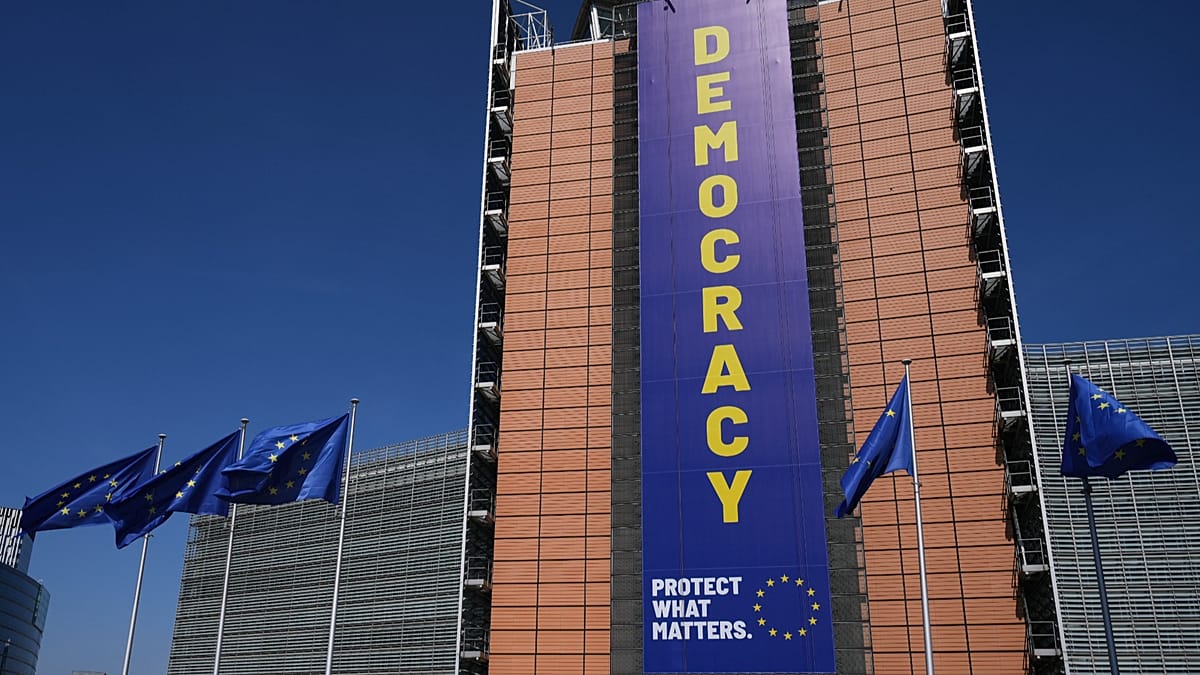
EU: AI Act Simplification Package Finalized
- What happened: EU lawmakers reached final agreement on a sweeping simplification of the AI Act, announced May 21, 2026. The package reduces compliance burdens for many categories of AI providers, delays certain implementation timelines, clarifies the Act's overlap with machinery regulations, and introduces an explicit ban on so-called "nudifier" apps — AI tools that digitally remove clothing from images of people.
- Who it affects: AI developers, deployers, and importers operating in or selling into the EU, including major U.S. and Chinese tech firms; also affects manufacturers integrating AI into physical products covered by EU machinery rules.
- Status: Provisional agreement reached; formal adoption process underway. Key enforcement deadlines (e.g., high-risk AI obligations under Annex III) remain set for August 2026.
- Why it matters: Critics argue the changes show Europe "caving to Big Tech," while supporters call them pragmatic fixes to cut red tape. The nudifier ban is one of the few provisions that expands restrictions. With August 2026 enforcement approaching, companies now have slightly clearer — and somewhat more lenient — compliance targets, but the window to prepare remains tight.
US (Multi-State): Georgia, Colorado, California, New York AI Law Activity
- What happened: As of the week of May 18, 2026, significant multi-state legislative activity continued: Georgia Governor Brian Kemp signed an AI chatbot safety bill into law; Colorado repealed its original AI Act and replaced it with a new bill (SB 26-189); California and New York each advanced numerous AI bills through their legislatures.
- Who it affects: Any company deploying AI systems for consumer-facing or high-stakes decisions (hiring, lending, housing, healthcare) in these states. Particular focus on chatbot operators in Georgia and "consequential decision" AI systems in Colorado.
- Status: Georgia chatbot law enacted. Colorado new law signed (replacing prior Act). California and New York bills in active legislative progress.
- Why it matters: With no federal AI law and the Trump executive order now delayed, state law remains the primary U.S. compliance reality. The rapid evolution — including Colorado repealing and re-enacting its law — means compliance teams must continuously monitor and adapt.
UK: House of Lords Debates Cross-Sector AI Legislation
- What happened: The UK House of Lords Library published an analysis (dated around May 20-21, 2026) of the ongoing parliamentary debate on whether the UK should adopt cross-sector AI-specific legislation. The UK currently has no AI-specific law or dedicated AI regulator. The government previously planned an AI bill but shifted to a "more targeted approach."
- Who it affects: All UK-based AI developers and international companies deploying AI into the UK market; sectors including healthcare, finance, and employment.
- Status: Debate ongoing in Parliament; no bill introduced. Government has opted for sector-by-sector regulation rather than a horizontal framework, but pressure for cross-sector legislation is growing.
- Why it matters: The UK's light-touch approach has been both praised as pro-innovation and criticized as insufficient to protect citizens. As the EU and individual U.S. states tighten rules, the UK risks either regulatory arbitrage (attracting businesses) or reputational risk (becoming the "wild west" of AI).

Enforcement & Penalties
-
EU AI Act enforcement timeline → All AI companies operating in EU: No formal AI Act fines have been levied yet, as the core enforcement deadlines have not passed. The Annex III high-risk AI obligations become enforceable from August 2, 2026 — at which point violations could trigger fines of up to €15 million or 3% of global turnover, and prohibited AI practice violations up to €35 million or 7% of global turnover. The EU's recent simplification package (finalized May 21) may modestly reduce the scope of obligations subject to those fines.
-
White House → AI industry: The Trump administration's postponement of its AI executive order (May 21) effectively delays any federal pre-release vetting requirement for frontier AI models — a de facto enforcement reprieve for labs like Anthropic, OpenAI, and Google DeepMind. However, White House discussions with tech companies about potential security requirements are ongoing, and the regulatory situation could shift quickly depending on what changes are made to the draft order.
Industry Response
-
AI industry (broadly): Leading AI executives were briefed on the Trump AI executive order and invited to the White House signing ceremony before Trump's last-minute cancellation on May 21. The episode signals that at least some in the industry had been prepared to work within the proposed framework — but the nature of Trump's objections remains unclear, leaving companies uncertain about what the revised order might require.
-
Big Tech / EU AI Act: Critics and civil society groups have characterized the EU's AI Act simplification package as a capitulation to Big Tech lobbying, noting that the changes reduce compliance obligations and delay timelines. Supporters — and implicitly the companies that benefit — frame the changes as necessary to prevent the law from being unworkable. The explicit ban on nudifier apps is notable as the one area where industry pressure failed to soften restrictions.
-
Former DHS Secretary Mayorkas: In a May 12 statement, Mayorkas publicly endorsed a "voluntary" policy approach to advanced AI model security, citing Biden-era voluntary standards as a model. This put him at odds with the more interventionist camp inside the Trump White House that was pushing for mandatory pre-release government vetting — suggesting the debate over U.S. AI security policy remains unresolved even at senior government levels.
Region Scorecard
| Region | Activity Level | Key Development | Trend |
|---|---|---|---|
| US | 🔴High | Trump AI executive order postponed hours before signing | ↑ |
| EU | 🔴High | AI Act simplification finalized; nudifier apps banned | → |
| UK | 🟡Medium | House of Lords debates cross-sector AI legislation | ↑ |
| China | 🟢Low | No major new developments in coverage period | → |
| Other | 🟡Medium | Georgia signs chatbot safety law; multi-state activity accelerating | ↑ |
Analysis: What This Means
-
For AI developers and labs (especially frontier AI): The postponement of the Trump executive order means no imminent federal pre-release vetting requirement — but this is not a green light. The administration is actively deliberating on security controls, and a revised order could arrive with little warning. Labs should prepare compliance frameworks now for potential mandatory government review processes, particularly for models with dual-use potential.
-
For companies operating in the EU: August 2, 2026 is a hard deadline. The AI Act simplification slightly eases the path, but high-risk AI obligations are still coming into force in approximately 10 weeks. If you haven't started your Annex III conformity assessments, you are behind. The nudifier ban also provides a clear signal that AI systems generating sexualized imagery without consent are a zero-tolerance enforcement priority.
-
For U.S. compliance teams: Do not wait for federal clarity. With Colorado's law rewritten, Georgia's chatbot law enacted, and California and New York bills advancing, the state patchwork is increasingly complex. A centralized AI governance policy that can flex to multiple state requirements is no longer optional — it is essential.
-
For UK-based AI companies: The current light-touch UK approach creates a short-term competitive advantage but carries political risk. Parliamentary pressure for cross-sector legislation is real; companies should monitor the Lords debate closely and not assume the status quo will persist through 2027.
What to Watch Next Week
-
Trump AI Executive Order (revised): Watch for whether a revised version surfaces. Key question: does it retain any mandatory government pre-release vetting for frontier models, or does Trump's revision move it toward the voluntary framework Mayorkas endorsed?
-
EU AI Act formal adoption steps: Following the provisional agreement announced May 21, the EU Parliament and Council must formally adopt the simplification amendments. Track whether any last-minute changes are introduced and whether the nudifier ban survives intact.
-
U.S. State AI Legislation (California & New York): Both states have multiple AI bills in active legislative progress. Any committee votes, floor votes, or gubernatorial statements this week could significantly reshape the U.S. compliance landscape heading into summer.
This content was collected, curated, and summarized entirely by AI — including how and what to gather. It may contain inaccuracies. Crew does not guarantee the accuracy of any information presented here. Always verify facts on your own before acting on them. Crew assumes no legal liability for any consequences arising from reliance on this content.
Powered by
