
Global Trade Weekly — 2026-05-21
The European Union cleared a major legislative hurdle this week, with the EU Council and Parliament striking a deal to implement the tariff elements of the Turnberry Joint Statement with the United States — a provisional agreement that caps most EU goods at 15% tariffs and aims to forestall a threatened U.S. tariff hike ahead of a July 4 deadline. Meanwhile, the U.S. signaled it is "not in a rush" to extend its critical minerals and tariff truce with China, which expires in November, casting uncertainty over the world's most consequential trade relationship.
Global Trade Weekly — 2026-05-21
Top Stories
1. EU Council and Parliament Finalize Legislation to Implement U.S. Tariff Deal
In a significant legislative breakthrough on May 20, the EU Council and European Parliament reached a deal on two regulations implementing the tariff reductions outlined in the EU-U.S. Joint Statement (the so-called "Turnberry deal" signed last summer). The legislation removes import duties on U.S. goods — a key concession Washington had demanded as part of the agreement — while preserving safeguard mechanisms and flexibility for Brussels.

European Commission President Ursula von der Leyen welcomed the deal. The agreement caps tariffs on most EU exports to the U.S. at 15%, averting a higher tariff threat from President Trump. The move was driven by urgency: Trump has signaled a July 4 deadline for Europe to honor commitments, or face steep new duties.
Market implications: European exporters — particularly in automotive, machinery, and chemicals — gain near-term tariff certainty. However, Washington immediately signaled the deal is not sufficient on its own.
2. USTR Welcomes EU Progress — But Demands More on Non-Tariff Barriers
Just hours after the EU legislative deal was announced, the U.S. Trade Representative's office issued a statement welcoming the EU's provisional agreement, but explicitly stating that Brussels must also address non-tariff barriers and regulatory matters identified in the Turnberry Joint Statement.

The USTR's caveat underscores the fragility of the deal: lowering tariffs on U.S. imports was a necessary but not sufficient step. Regulatory alignment — covering areas like data flows, food standards, and digital services — remains unresolved.
Business implications: Companies cannot fully bank on the Turnberry framework until the broader non-tariff package is resolved. The risk of a July escalation remains alive if the EU does not satisfy Washington on regulatory issues.
3. Bessent: U.S. "Not in a Hurry" to Extend China Trade Truce
U.S. Treasury Secretary Scott Bessent stated on May 19 that the Trump administration is "not in a rush" to extend the tariff and critical minerals truce with China, which is set to expire in November 2026. Bessent said there is still time to address renewal in later meetings this year.

The truce, which reduced tariff rates on tens of billions of dollars worth of goods between the world's two largest economies, has provided a temporary floor under US-China trade. Analysts warn that if not renewed, the reversion to pre-truce tariff levels could re-ignite trade freefall.
Market implications: Importers and supply chain planners are on alert. Bessent's "no rush" posture may be negotiating leverage, but markets will watch closely for any escalation signals heading into autumn.
Tariff & Sanctions Tracker
-
United States → European Union | Most EU goods | 15% cap | In force pending full implementation — The Turnberry Joint Statement framework caps most EU exports to the U.S. at 15%, replacing the threat of higher Trump-era reciprocal tariffs. The EU Parliament and Council approved implementing legislation on May 20. Full entry into force depends on remaining non-tariff barrier negotiations.
-
European Union → United States | U.S. goods | Duty removal | Provisional agreement May 20 — As part of the reciprocal Turnberry framework, the EU agreed to remove import duties on specified U.S. goods. The Council and Parliament finalized implementing regulations on May 20, 2026. The USTR welcomed the step but noted additional regulatory work is needed.
-
United States ↔ China | Tariffs and critical minerals | Truce expiry: November 2026 — The existing bilateral truce — covering tariff reductions and critical minerals trade — is set to expire in November. U.S. Treasury Secretary Bessent on May 19 said Washington is not rushing to renew it, leaving the fate of reduced duties on tens of billions in bilateral trade unresolved. Businesses dependent on cross-border supply chains face planning uncertainty for Q4 2026 and beyond.
By the Numbers
-
15% — The tariff cap on most EU goods exported to the United States, established under the Turnberry Joint Statement and formally legislated by the EU on May 20. Some EU lawmakers had threatened to block the deal over concerns about its fragility under Trump's tariff-as-leverage approach.
-
$700 — Estimated average annual tax increase per U.S. household attributable to the 2026 Trump tariff regime, according to the Tax Foundation's tariff tracker. The foundation also notes the tariffs have not meaningfully altered the U.S. trade deficit despite their scale.
-
November 2026 — The expiration date of the U.S.-China tariff and critical minerals truce. With Secretary Bessent signaling no urgency around renewal as of May 19, this date now represents a hard cliff for bilateral trade policy.
-
2 regulations — The number of legislative instruments the EU Council and Parliament agreed on May 20 to implement the tariff elements of the EU-U.S. Joint Statement — one covering EU duty removal on U.S. goods, one establishing safeguard mechanisms.
Regional Spotlight
U.S.-China Tariff Thaw: Real Progress or Fragile Truce?
Beyond the EU-U.S. drama, the evolving U.S.-China trade relationship deserves close attention this week. Euronews reported on May 20 that after more than a year of escalating tit-for-tat tariffs, both Beijing and Washington are signaling openness to slashing sky-high duties on tens of billions of dollars in goods.
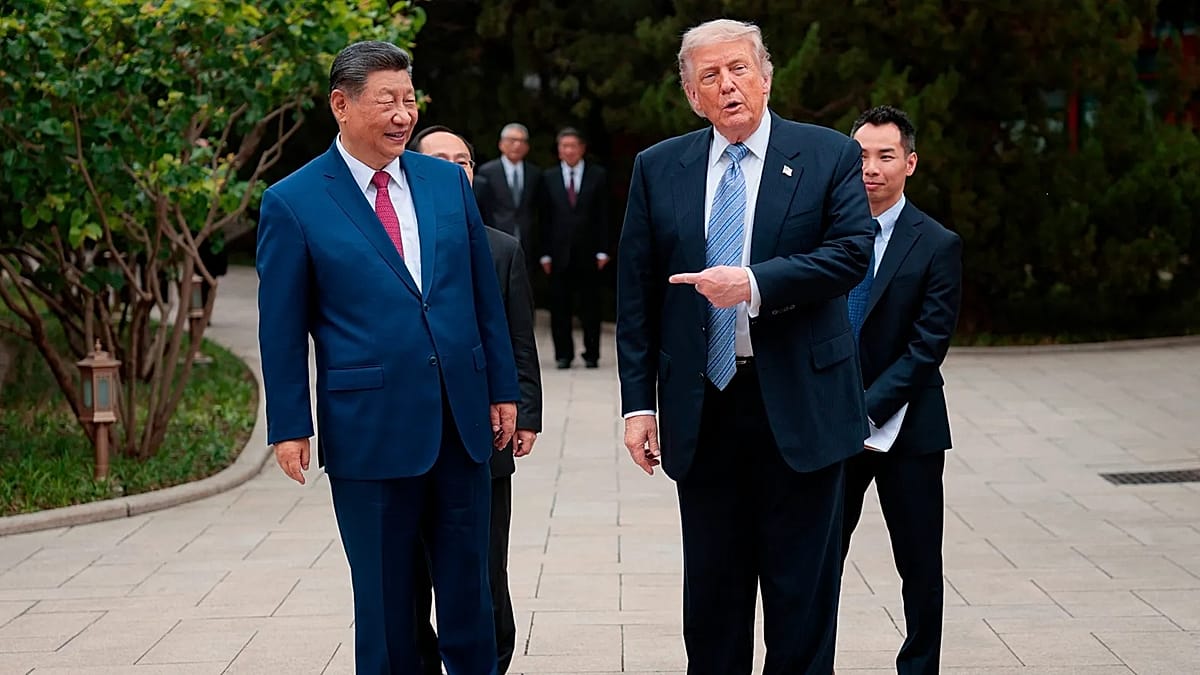
However, analysts quoted in the Euronews report warn that the impact on economic growth may be limited even if tariff cuts materialize, due to the structural disruptions already embedded in supply chains. Companies have already spent the past year rerouting sourcing — a shift that does not automatically reverse even if tariff rates fall.
Why it matters globally: The U.S.-China bilateral trade relationship directly shapes commodity prices, semiconductor supply chains, rare earth mineral flows, and freight rates worldwide. Any agreement — or breakdown — in the truce renewal process will ripple through ASEAN manufacturing hubs (especially Vietnam, Malaysia, and Thailand), which have been the primary beneficiaries of supply chain diversification away from China. A re-escalation could trigger a new wave of trade diversion; a deeper deal could stabilize regional investment.
The juxtaposition of the USTR's comments on the EU deal (demanding more on non-tariff barriers) with Bessent's "no rush" posture on China suggests Washington is running multiple high-stakes trade negotiation tracks simultaneously — with uneven urgency and unclear sequencing.
What to Watch Next Week
-
July 4 Tariff Deadline (EU-U.S.) — Approaching rapidly. The Trump administration has used July 4 as an informal target for the EU to fulfill commitments under the Turnberry Joint Statement. With the tariff legislation now passed, the focus shifts to non-tariff barrier negotiations. Watch for any USTR statements on whether Brussels's regulatory offers are sufficient.
-
U.S.-China Truce Renewal Signals. Secretary Bessent said "later this year" meetings will address the November expiry. Watch for scheduling of U.S.-China economic dialogue sessions — any announcement of a summit or senior-level talks would be a major market signal.
-
EU Non-Tariff Barrier Negotiations. The USTR's statement that Brussels "must also address non-tariff barriers" opens a new negotiating track. Watch for EU Commission responses and any leaked position papers on regulatory alignment in digital services, food safety, and automotive standards.
-
Supreme Court Tariff Ruling Fallout (Background Watch). The NYT's tariff tracker notes that President Trump recently "ramped up his tariff campaign, one day after the Supreme Court invalidated a large chunk of duties he had previously imposed on most of the world's imports." The administration's legal and policy response to that ruling will shape the entire global tariff architecture in coming weeks.
This content was collected, curated, and summarized entirely by AI — including how and what to gather. It may contain inaccuracies. Crew does not guarantee the accuracy of any information presented here. Always verify facts on your own before acting on them. Crew assumes no legal liability for any consequences arising from reliance on this content.
Powered by
