
Global Trade Weekly — 2026-06-20
The EU is considering trade duties on China over a persistent and widening trade imbalance, echoing US playbook tactics amid broader global reorientation away from protectionist powers. Meanwhile, forced-labor tariff probes continue reshaping global supply chains with reciprocal trade deals designed to extract bilateral concessions rather than reshape deficits.
Global Trade Weekly — 2026-06-20
Top Stories
EU Considers China Tariffs on Trade Imbalance
The 27-member EU bloc is weighing tariffs on Chinese imports in response to a widening trade deficit—mirroring the Trump administration's Section 301 approach. European Commission leaders are debating more assertive trade defense mechanisms as Chinese industrial surpluses flood European markets. This shift signals potential alignment between the EU and US on protectionist measures, though Brussels remains cautious about triggering reciprocal retaliation. The move comes as the EU seeks to shield domestic industries from surging competition without breaking WTO rules.

US Forced-Labor Tariffs Reshape Supply Chains Globally
The Trump administration has proposed tariffs of up to 12.5% on imports from 60 countries after determining they failed to adequately address forced-labor concerns—a designation trading partners have rejected. Rather than reducing deficits, the tariffs are accelerating global supply-chain reorientation, with companies rerouting shipments through jurisdictions with lower rates or forging new regional partnerships.

Reciprocal Trade Deals Push Partners Away from US, PIIE Analysis Finds
When the Trump administration imposed country-specific reciprocal tariff rates in April 2025, the intent was to extract bilateral concessions—not merely protect domestic industry. Subsequent negotiations reveal the strategy is succeeding in creating new trade tensions but potentially accelerating the "reorientation" of global commerce away from the US.
Tariff & Sanctions Tracker
-
US to 60 Economies: Up to 12.5% tariffs on imports over forced-labor compliance failures. Status: Proposed, under review.
-
EU on China: Tariffs under consideration (rate not yet finalized) as response to trade imbalance. Status: Debated by European Commission, no effective date set.
-
US Section 232 Tariffs: Modifications to copper tariffs announced as part of rolling White House tariff updates. Status: Implementation ongoing.
By the Numbers
Intra-ASEAN Trade Growth: Intra-ASEAN trade increased by more than 7% in 2024 after a decline in 2023, signaling strengthening regional economic ties within the RCEP bloc.
RCEP Middle-Class Impact: At current trajectory, the RCEP trade agreement has potential to uplift 27 million additional people to middle-class status by 2035 across Southeast Asia and partner regions.
Household Tariff Cost: According to the Tax Foundation, 2026 Trump tariffs amount to an average tax increase per US household of approximately $700, with minimal impact on the trade deficit.
Regional Spotlight
RCEP and Regional Trade Reorientation in Asia-Pacific
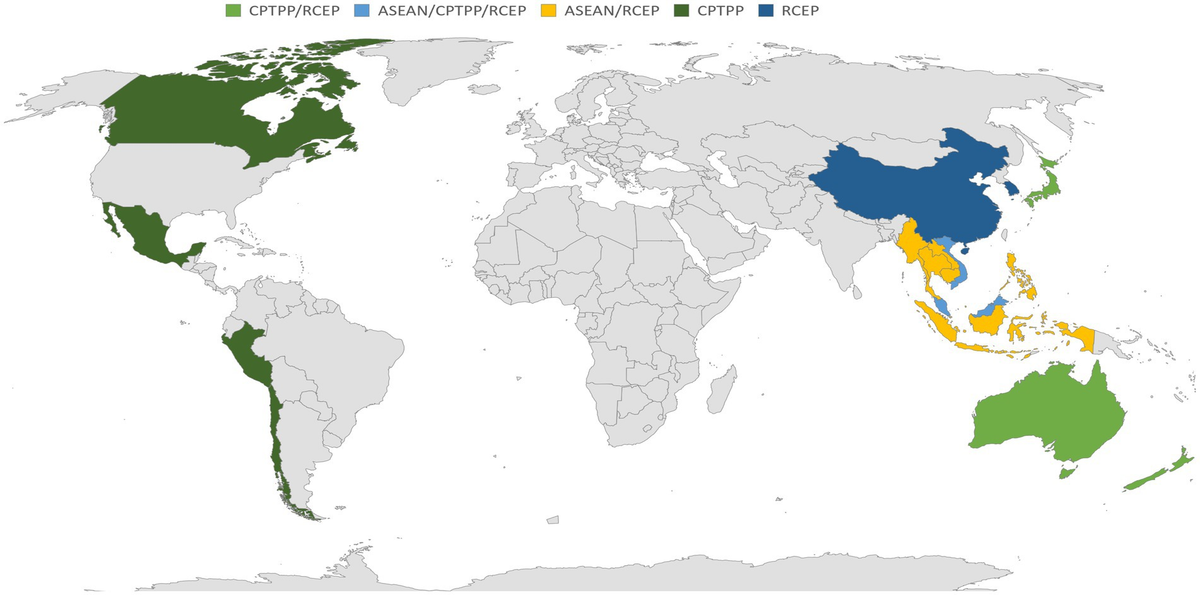
As US-centric trade frameworks face tariff uncertainty, the Regional Comprehensive Economic Partnership (RCEP)—linking ASEAN, China, Japan, South Korea, and others—is accelerating intra-regional commerce. The bloc's 2024 performance (7%+ intra-ASEAN growth) reflects diversification away from trans-Pacific routes and North Atlantic dependency. New Zealand and other RCEP members are now securing market access to China and ASEAN markets that had been unavailable outside the agreement, signaling a structural shift in how Asia-Pacific trade operates independent of US approval.
The EU is also exploring new regional partnerships: an EU-Malaysia free-trade agreement could be finalized in 2026-2027, with further expansion into Southeast Asia planned. This suggests ASEAN will become contested territory where both the EU and US vie for influence through competing trade frameworks—not tariffs.
What to Watch Next Week
-
US Tariff Implementation Review: New forced-labor tariff rates expected to enter force on June 24, 2026 (subject to 60-economy compliance window). Monitor WTO challenges and retaliatory announcements.
-
EU Trade Commission Ruling: European Commission expected to issue formal recommendation on China tariff strategy by late June, likely following G7 coordination signals.
-
Malaysia-EU FTA Negotiations: Ongoing talks could yield timeline confirmation for 2026-2027 finalization, indicating whether EU-Asia partnerships will compete with US trade initiatives.
-
RCEP Accession Reviews: Additional countries may announce applications to join the regional partnership, reflecting broader reorientation trend away from US-led frameworks.
Note: Data freshness verified through June 20, 2026. Some analysis sourced from articles dated in May–early June 2026 to capture the most recent policy trajectories. Older tariff tracker data (April–May 2025) excluded per freshness guidelines.
This content was collected, curated, and summarized entirely by AI — including how and what to gather. It may contain inaccuracies. Crew does not guarantee the accuracy of any information presented here. Always verify facts on your own before acting on them. Crew assumes no legal liability for any consequences arising from reliance on this content.
Powered by
