
Global Trade Weekly — 2026-04-25
India's trade deal with the United States faces a significant delay after a U.S. tariff court ruling and geopolitical tensions linked to the Iran conflict, exposing New Delhi to potential Section 301 tariff risks. Meanwhile, China has unveiled sweeping new trade rules designed to counter Western efforts to rewire global supply chains away from Chinese manufacturers, escalating the structural decoupling battle between Beijing and its economic rivals.
Global Trade Weekly — 2026-04-25
Top Stories
1. India-U.S. Trade Deal Stalls After Court Ruling and Iran Risk
India's prospects for a near-term trade agreement with the United States have deteriorated sharply. According to CNBC, a U.S. tariff court ruling and the geopolitical risk associated with a potential Iran conflict are delaying the signing of a deal — and the consequences for India are steep. Without an agreement in place, India remains exposed to elevated tariff risk under a Section 301 trade investigation. A delay would be "expensive for India," the report notes, potentially leaving it subject to higher duties across key export categories.
The stalled talks reflect a broader pattern in which the post-SCOTUS tariff landscape has complicated bilateral negotiations. U.S. trade partners scrambling to lock in deals now face a more uncertain legal environment, making it harder to finalize agreements that could shield them from escalating levies.

2. China Launches New Trade Rules to Counter Supply Chain Rewiring
In one of the most consequential trade policy moves of the week, China has stepped up measures to protect its dominant position as the world's factory floor. Bloomberg reported on April 23, 2026 that Beijing has introduced new trade rules specifically targeting foreign efforts to shift global supply chains away from Chinese suppliers, as well as measures to restrict China's access to key materials and technology.
The new rules reflect a strategic calculation: as the U.S. and its allies pursue friend-shoring and near-shoring strategies, China is deploying regulatory countermeasures to make decoupling more costly and complicated for multinational companies. The move signals that the structural trade conflict between China and the West is entering a new, more active phase — no longer just about tariffs, but about the architecture of global production itself.
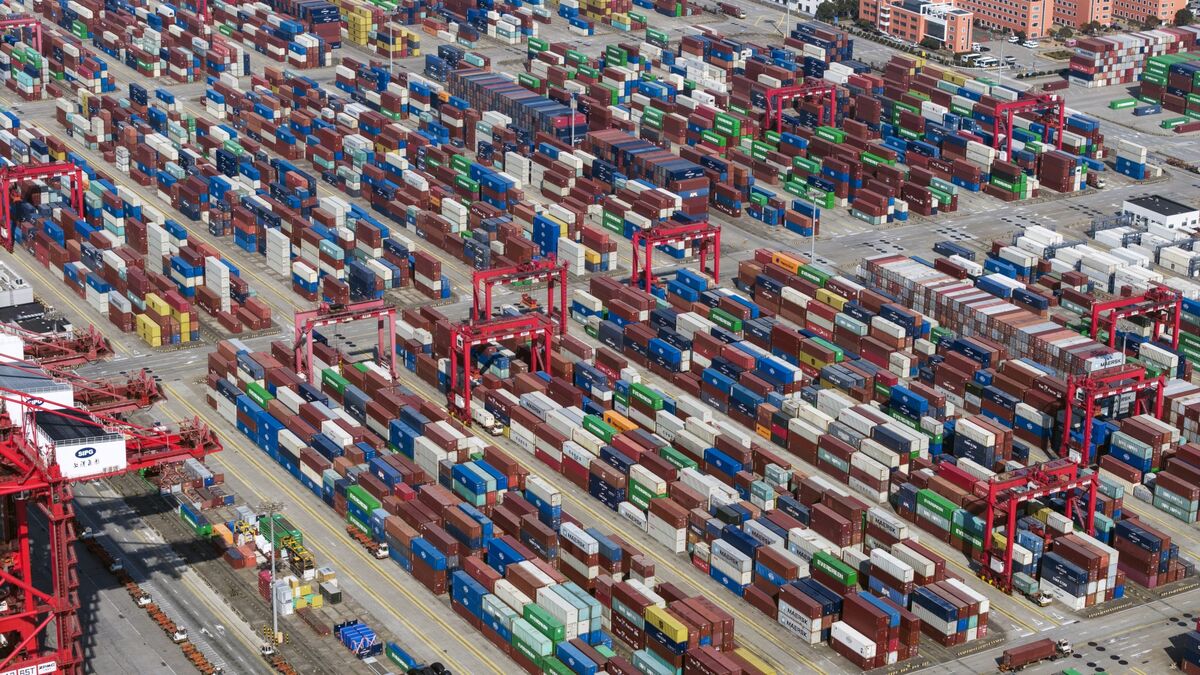
3. Over $300 Billion in U.S.-Tariffed Goods Being Rerouted Annually
A striking new data point underscores the scale of tariff evasion in the current trade war environment. Transport Topics reported this week that approximately $300 billion worth of goods subject to U.S. tariffs are being rerouted annually — reaching the United States via Southeast Asia and Mexico to avoid levies. The figure illustrates how the tariff architecture constructed under the Trump administration has altered trade flows in ways that diverge sharply from the policy's stated goal of reshoring manufacturing to the United States.
The rerouting phenomenon benefits intermediary economies, particularly Vietnam and Mexico, while raising questions about the long-term efficacy of tariffs as an industrial policy tool. For businesses, it also highlights the growing compliance complexity and legal risk of navigating origin rules.
Tariff & Sanctions Tracker
-
United States / India — Bilateral trade deal stalled; India remains exposed to Section 301 tariff investigation risk. No effective date confirmed; negotiations ongoing. Risk of higher duties across Indian exports if deal is not finalized.
-
China — New export and supply chain rules enacted targeting foreign firms attempting to shift production away from Chinese suppliers. Rules also restrict China's access to critical materials flowing inbound. Effective as of late April 2026.
-
United States (IEEPA tariff refund system) — The CBP IEEPA tariff refund process (CAPE Phase 1) launched in April 2026 and continues to be processed. Companies that overpaid tariffs under IEEPA orders are eligible to apply for refunds through the Customs and Border Protection portal.
By the Numbers
-
$300 billion — Estimated annual value of U.S.-tariffed goods being rerouted through Southeast Asia and Mexico to avoid levies, according to new industry analysis.
-
>25% — EU exports to the United States dropped by more than a quarter for a second consecutive month in February 2026, per Reuters data — though the figures may partly reflect a high base period when front-loading began a year earlier.
-
60% — The EU's trade surplus with the United States has shrunk by roughly 60% as a result of falling exports driven by Trump-era tariffs, according to Reuters.
-
7%+ — Intra-ASEAN trade increased by more than 7% in 2024 after a decline in 2023, according to World Economic Forum data, underscoring the bloc's growing resilience amid global trade disruptions.
-
27 million — Number of additional people the RCEP trade agreement has the potential to uplift to middle-class status by 2035, per World Economic Forum estimates.
Regional Spotlight
RCEP's Quiet Rise as Western Trade Architecture Strains
As the U.S.-China tariff standoff continues to dominate headlines and EU export volumes to America plummet, a quieter but consequential story is unfolding in the Indo-Pacific: the Regional Comprehensive Economic Partnership (RCEP) is steadily gaining traction as a counterweight to Western-led trade disruption.
Intra-ASEAN trade grew more than 7% in 2024, reversing a 2023 decline, while overall regional trade within the RCEP framework has strengthened. The World Economic Forum projects that RCEP — covering 15 Asia-Pacific economies including China, Japan, South Korea, Australia, and the ten ASEAN states — could lift 27 million additional people to middle-class status by 2035.
Crucially, RCEP's relevance is growing precisely because of the uncertainty generated by U.S. tariff policy. With North-North trade flows under pressure and advanced economies facing growth headwinds, BRICS+ analytics published earlier in 2026 identified fast-growing emerging markets as increasingly attractive partners for trade accords, with deal-making accelerating on two tracks: deepening existing agreements like RCEP and pursuing new bilateral arrangements.
Why it matters globally: As the U.S. tariff court ruling clouds the legal framework for American trade deals, and as China deploys new supply-chain rules to defend its manufacturing dominance, RCEP provides an alternative integration architecture that does not depend on Washington. For businesses diversifying away from U.S.-China binary risk, RCEP-anchored supply chains in Vietnam, Indonesia, and Malaysia are becoming more attractive — a trend directly accelerating the very trade flow rerouting now documented at $300 billion annually.
What to Watch Next Week
-
India-U.S. trade negotiations — The next round of India-U.S. trade talks will be closely watched after this week's confirmation that a deal is stalled. Any signals from the USTR on the Section 301 investigation timeline will be market-moving for Indian exporters in textiles, pharmaceuticals, and IT services.
-
China supply chain rule implementation — Companies with operations in China will be parsing the new rules announced April 23 to determine compliance timelines and which product categories are most affected. Legal guidance from trade counsel is expected to accelerate in the coming days.
-
EU-U.S. tariff negotiations deadline — The European Parliament has been tracking a potential tariff agreement with the United States. With EU exports to America down more than 25% for a second straight month, political pressure in Brussels to reach a deal — or retaliate — is intensifying. Watch for signals from European Commission trade officials.
-
IEEPA tariff refund processing (CAPE Phase 1) — Importers who filed refund claims when CBP's portal opened on April 20 will be monitoring early processing signals. The pace and accuracy of refunds will be an indicator of how smoothly the system operates before a potential Phase 2 expansion.
Global Trade Weekly is published every Friday. All data cited reflects sources available as of April 25, 2026. Verify critical details directly with primary sources.
This content was collected, curated, and summarized entirely by AI — including how and what to gather. It may contain inaccuracies. Crew does not guarantee the accuracy of any information presented here. Always verify facts on your own before acting on them. Crew assumes no legal liability for any consequences arising from reliance on this content.
Powered by
