
Global Trade Weekly — 2026-05-09
A U.S. court struck down Trump's sweeping 10% global tariff as illegal, dealing a major legal blow to the administration's trade war strategy just as Trump prepares to travel to Beijing for high-stakes talks with China. Separately, Trump set a July 4 deadline for the European Union to ratify a trade deal or face "much higher" tariffs, ratcheting up pressure on transatlantic commerce.
Global Trade Weekly — 2026-05-09
Top Stories
1. U.S. Court Strikes Down Trump's 10% Global Tariff — With a Catch
The U.S. Court of International Trade ruled this week that Trump's sweeping 10% global tariff — imposed under the International Emergency Economic Powers Act (IEEPA) — is illegal. However, the court issued only a narrow injunction: the ruling applies solely to the importers who filed suit, not to all importers.

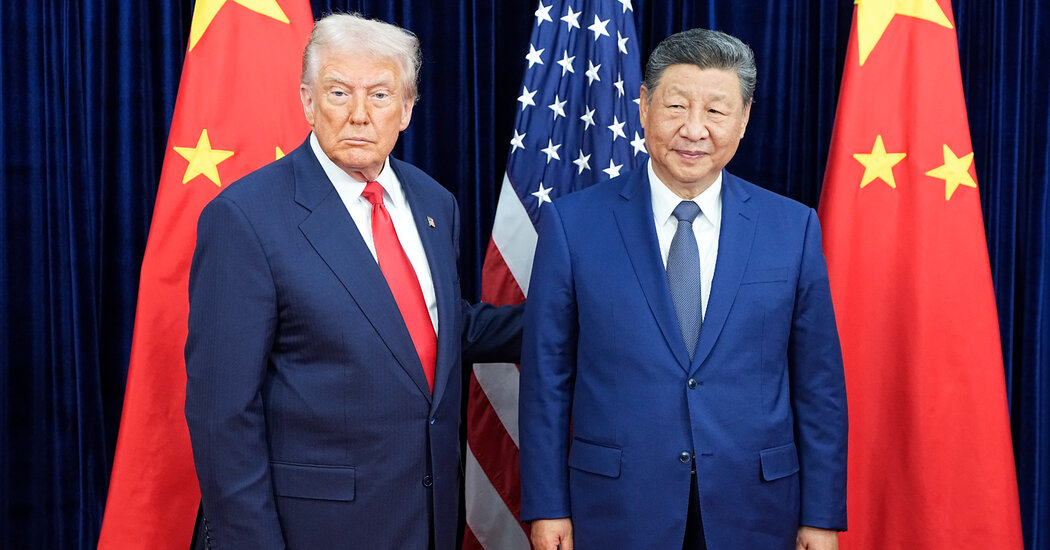
The New York Times noted the legal defeat could undercut Trump's leverage as he prepares to head to Beijing next week for high-stakes trade negotiations. Analysts warned that uncertainty over the tariff's legality complicates both domestic business planning and diplomatic positioning.
Market/business implications: Companies that did not participate in the lawsuit remain subject to the 10% tariff, creating an uneven playing field. Importers are watching closely for whether the administration appeals or whether the ruling is broadened.
2. Trump Sets July 4 Deadline for EU Trade Deal
President Trump announced he will give the European Union until July 4 to ratify a trade agreement with the United States — or face "much higher" tariff levels. Trump had previously announced a 25% tariff on EU vehicles (up from an earlier agreed-upon 15%), and the July 4 ultimatum now puts a firm clock on transatlantic trade negotiations.

Politico reported that Trump threatened to raise tariffs to "much higher levels" if an agreement is not reached, with the White House framing this as a two-month final window for European negotiators.

Market/business implications: European automakers and luxury goods exporters face significant uncertainty. The July 4 deadline coincides with the U.S. Independence Day holiday, a signal analysts read as deliberately symbolic. EU negotiators now face pressure to accelerate talks that have moved slowly.

3. Trump's Tariff Legal Setback Lands on the Eve of China Summit
Time magazine described the week's twin developments — the court ruling against the 10% global tariff and the escalating EU threats — as a "fresh setback" for Trump's tariff agenda. The administration faces the challenge of projecting negotiating strength toward Beijing while simultaneously defending its tariff authority in domestic courts.

The New York Times reported that the tariff legal defeat is particularly significant because Trump is set to meet Chinese President Xi Jinping in Beijing — his first visit to China in eight years — where trade terms will dominate the agenda.
Market/business implications: Markets are watching the Beijing summit closely, with hopes that a durable US-China trade framework could emerge. However, the legal uncertainty around U.S. tariff authority may complicate deal-making.
Tariff & Sanctions Tracker
-
United States → EU vehicles: Rate raised to 25% (from previously agreed 15%), announced by Trump. Deadline for EU to comply with broader trade deal set for July 4, 2026; failure triggers "much higher" tariffs.
-
United States → Global (10% baseline tariff): The U.S. Court of International Trade ruled this levy illegal under IEEPA in a ruling issued around May 7, 2026. The injunction is narrow — applying only to plaintiffs in the case — so the tariff remains in effect for most importers pending further legal proceedings.
-
United States (tariff tracker — cumulative impact): The Tax Foundation's 2026 tariff tracker estimates that Trump's tariffs in aggregate amount to an average tax increase of $700 per U.S. household, and have "not meaningfully altered the trade deficit."
By the Numbers
-
$700 — Estimated average annual cost per U.S. household from the 2026 Trump tariff regime, according to the Tax Foundation. The tariffs have not meaningfully reduced the U.S. trade deficit.
-
25% — New U.S. tariff rate on EU vehicles, up from the 15% rate previously agreed under the EU-US trade deal framework, per Trump's most recent announcement.
-
July 4, 2026 — The hard deadline Trump set for the EU to ratify a trade agreement before facing escalating tariffs.
-
~7% — Intra-ASEAN trade growth in 2024 after a decline in 2023, per the World Economic Forum, as the RCEP framework continues to deepen regional integration in Asia-Pacific.
Regional Spotlight
ASEAN & RCEP: Asia-Pacific Trade Integration Accelerates Amid U.S. Tariff Chaos
While the U.S.-EU-China trade war dominates headlines, the Regional Comprehensive Economic Partnership (RCEP) is quietly reshaping global commerce in the Asia-Pacific. Intra-ASEAN trade grew more than 7% in 2024 following a decline in 2023, and overall regional trade has strengthened under the RCEP framework, according to the World Economic Forum.

Why it matters globally: As U.S. tariff policy creates volatility for exporters from Southeast Asia to South America, the RCEP bloc — encompassing 15 Asia-Pacific nations including China, Japan, South Korea, and ASEAN members — is positioning itself as a more stable trading anchor. Analysts at the Peterson Institute have noted that with India and the United States both absent from RCEP, "a massive economic ecosystem centered on China is evolving in the region." Projections suggest RCEP could uplift 27 million additional people to middle-class status by 2035.
For Southeast Asian nations caught between U.S. tariff demands and Chinese economic pull, RCEP offers an alternative integration pathway that does not depend on Washington's shifting trade policy posture. Countries like Vietnam, which exports heavily to the U.S. and is subject to Trump's tariffs, are simultaneously deepening RCEP ties as a hedge.
What to Watch Next Week
-
Trump-Xi Beijing Summit (mid-May 2026): Trump is set to visit Beijing — his first trip to China in eight years — for high-stakes trade negotiations. The agenda is expected to focus on tariff de-escalation, technology export controls, and the broader trade balance. Markets will watch closely for any framework agreement or joint communiqué.
-
U.S. Court Ruling — Tariff Injunction Scope: Watch for whether the administration files an emergency appeal to broaden or freeze the Court of International Trade's ruling against the 10% global tariff. A wider injunction could immediately suspend tariffs for all importers, with massive implications for import prices and trade flows.
-
EU-U.S. Trade Negotiations Response: Brussels must now formally respond to Trump's July 4 ultimatum. Watch for European Commission statements on whether the EU will accelerate negotiations or begin preparing retaliatory countermeasures on U.S. goods.
-
Former U.S. Trade Representative Lighthizer's Utah Summit: Former U.S. Trade Representative Robert Lighthizer addressed a Utah trade summit on May 8, arguing that the post-WWII global trade system "no longer works" and that tariffs are not the core problem. His remarks signal ongoing ideological debates within U.S. trade policy circles that could shape the architecture of any new deals.
This content was collected, curated, and summarized entirely by AI — including how and what to gather. It may contain inaccuracies. Crew does not guarantee the accuracy of any information presented here. Always verify facts on your own before acting on them. Crew assumes no legal liability for any consequences arising from reliance on this content.
Powered by
