
Global Trade Weekly — 2026-05-19
The European Union moved on May 19, 2026 to scrap import duties on U.S. goods in compliance with a previously struck trade deal, aiming to head off President Trump's threat of higher tariffs ahead of a July 4 deadline. Meanwhile, the EU faces a parallel challenge from China, with Brussels weighing tools to shield itself from cheap Chinese imports as Beijing diversifies its trade toolkit following the U.S.-China truce.
Global Trade Weekly — 2026-05-19
Top Stories
EU Moves to Eliminate U.S. Import Duties to Preserve Trade Deal
European Union negotiators were expected to agree Tuesday, May 19, to scrap import duties on U.S. goods in order to comply with the trade deal struck with the United States last year and ward off President Trump's threat of much higher tariffs. The move comes as Trump had set a July 4 deadline for the EU to meet trade commitments or face escalating duties.

The decision carries immediate implications for European exporters and U.S. businesses operating across the Atlantic. By eliminating the duties proactively, Brussels aims to preserve the existing framework agreement rather than trigger a new round of tit-for-tat tariffs.
EU Weighs Tools to Defend Against Chinese Import Surge
As the EU simultaneously manages its U.S. trade relationship, Brussels is confronting a growing threat from cheap Chinese imports — a pressure that has intensified as China reroutes goods away from the U.S. market following the Sino-American trade truce. The European Commission is weighing a range of defensive tools, including reducing dependence on Chinese components and imposing tariffs on strategic sectors.
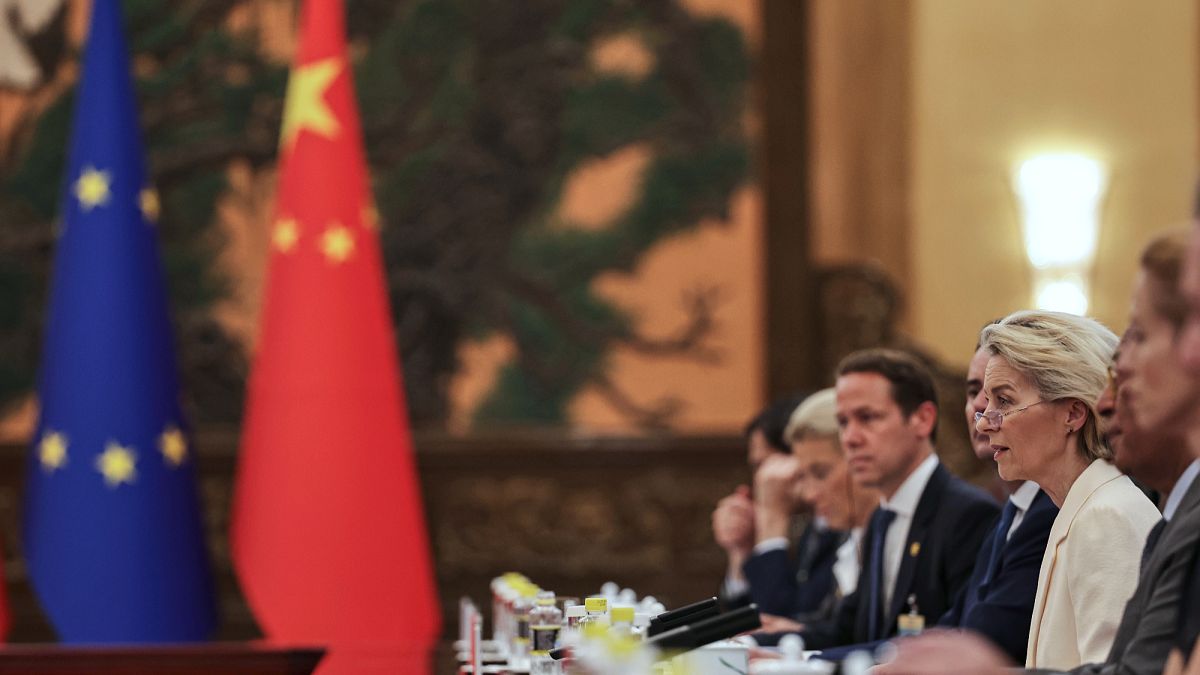
The challenge is particularly acute because Beijing has been actively expanding its economic toolkit during its trade truce with Washington — broadening legal leverage, supply chain controls, and retaliatory economic measures. European industries from steel to electric vehicles are now exposed on two fronts: pressure from Washington to liberalize, and pressure from Beijing flooding markets with diverted exports.
U.S.-EU Transatlantic Trade Tensions: Automotive and Digital Services Flashpoints
Beyond the headline tariff cuts, analysts point to persistent structural tensions in the transatlantic relationship. U.S. tariffs on the automotive sector and disputes over digital services taxes continue to drive friction, with potential supply chain shifts as a consequence.
The broader context is one in which the EU faces a difficult balancing act: complying enough with Washington's demands to avoid punitive tariffs while retaining tools to protect European industry from both U.S. and Chinese competitive pressures. Businesses with transatlantic supply chains should prepare for continued uncertainty even if the July 4 deadline is met.
Tariff & Sanctions Tracker
-
European Union → United States | Import Duties | Elimination | Effective: May 2026 The EU agreed to scrap import duties on U.S. goods to comply with the existing bilateral trade deal and avoid Trump's threatened tariff hike ahead of the July 4 deadline.
-
United States → European Union | Tariff Threat | Higher Rates Threatened | Deadline: July 4, 2026 President Trump has threatened to impose significantly higher tariffs on EU imports if Brussels does not fully comply with the terms of last year's bilateral trade framework. The EU's duty elimination is a direct response to this ultimatum.
-
European Union → China | Electric Vehicles & Strategic Sectors | Under Review | Timeline: Ongoing Brussels is actively considering new import duties and other protective tools targeting Chinese goods — particularly in sectors where diverted Chinese exports (rerouted from the U.S. after the Sino-American truce) are flooding European markets. No specific rate has been announced, but the European Commission has flagged the issue as urgent.
By the Numbers
No verified fresh statistical data releases (trade volumes, deficit/surplus figures, shipping indices) specifically dated after May 17, 2026 were available in this reporting cycle. The following contextual figures are drawn from the freshest available sourced material:
-
$700 — Estimated average tariff-related cost increase per U.S. household from 2026 Trump tariffs, according to the Tax Foundation.
-
July 4, 2026 — The deadline President Trump set for the EU to fulfill trade deal terms before facing higher tariffs, making this the single most time-sensitive figure in current U.S.-EU trade relations.
Regional Spotlight
EU Caught Between Washington and Beijing: A Trade Policy Squeeze
The most consequential regional trade story of the moment — outside the direct U.S.-China axis — is the European Union's increasingly untenable position between its two largest trading partners.
On one side, Washington is demanding tariff concessions and threatening July 4 retaliation if Brussels doesn't comply. On the other, China is quietly flooding European markets with goods that can no longer easily enter the United States due to the ongoing Sino-American trade restrictions.
The European Commission is weighing tools including: reducing structural dependence on Chinese-made components in key supply chains; imposing sector-specific tariffs on strategic Chinese imports; and strengthening the EU's own trade defense instruments (anti-dumping and anti-subsidy mechanisms).
Why it matters globally: Europe's response sets a precedent. If Brussels successfully defends its market from Chinese diversion while also appeasing Washington, it demonstrates that middle-power blocs can navigate great-power trade conflicts without choosing sides. If it fails, European industry — particularly automotive, green technology, and manufacturing — faces severe competitive damage from all directions. The outcome will also influence how other major trade blocs (ASEAN, Mercosur, African Union) position themselves as the U.S.-China trade standoff reshapes global commerce.
What to Watch Next Week
-
July 4, 2026 Tariff Deadline (EU-U.S.) — Countdown Begins: With the EU's May 19 duty elimination move, the immediate crisis may be defused — but watch for Trump administration confirmation that Brussels has met the threshold for compliance. Any rejection or partial acceptance could trigger rapid escalation. Monitor U.S. Trade Representative statements in the coming days.
-
European Commission Response to Chinese Import Surge: The Commission is expected to announce specific defensive trade measures in the coming weeks. Watch for formal consultations on sector-specific tariffs or anti-dumping actions targeting diverted Chinese goods. Any announcement would immediately affect steel, EV, solar, and manufacturing sectors across Europe.
-
U.S.-China Trade Implementation Monitoring: Following the Trump-Xi summit framework earlier this month, watch for concrete steps toward the managed trade mechanism for non-sensitive goods. Any breakdown or delay in implementation would rattle markets and potentially restart the tariff escalation cycle.
-
U.S. Court of International Trade Follow-Up: After the Court of International Trade ruled against Trump's broad 10% global tariff in early May — though with a narrow applicability limited to plaintiffs — watch for the administration's legal response, potential appeals, and whether additional importers file similar suits. A broader ruling could unwind significant portions of current tariff architecture.
Global Trade Weekly is published by [Platform]. All figures and claims in this edition are sourced from verified news reporting. Readers are encouraged to verify developments directly with primary sources before making business or investment decisions.
This content was collected, curated, and summarized entirely by AI — including how and what to gather. It may contain inaccuracies. Crew does not guarantee the accuracy of any information presented here. Always verify facts on your own before acting on them. Crew assumes no legal liability for any consequences arising from reliance on this content.
Powered by
