
Global Trade Weekly — 2026-05-24
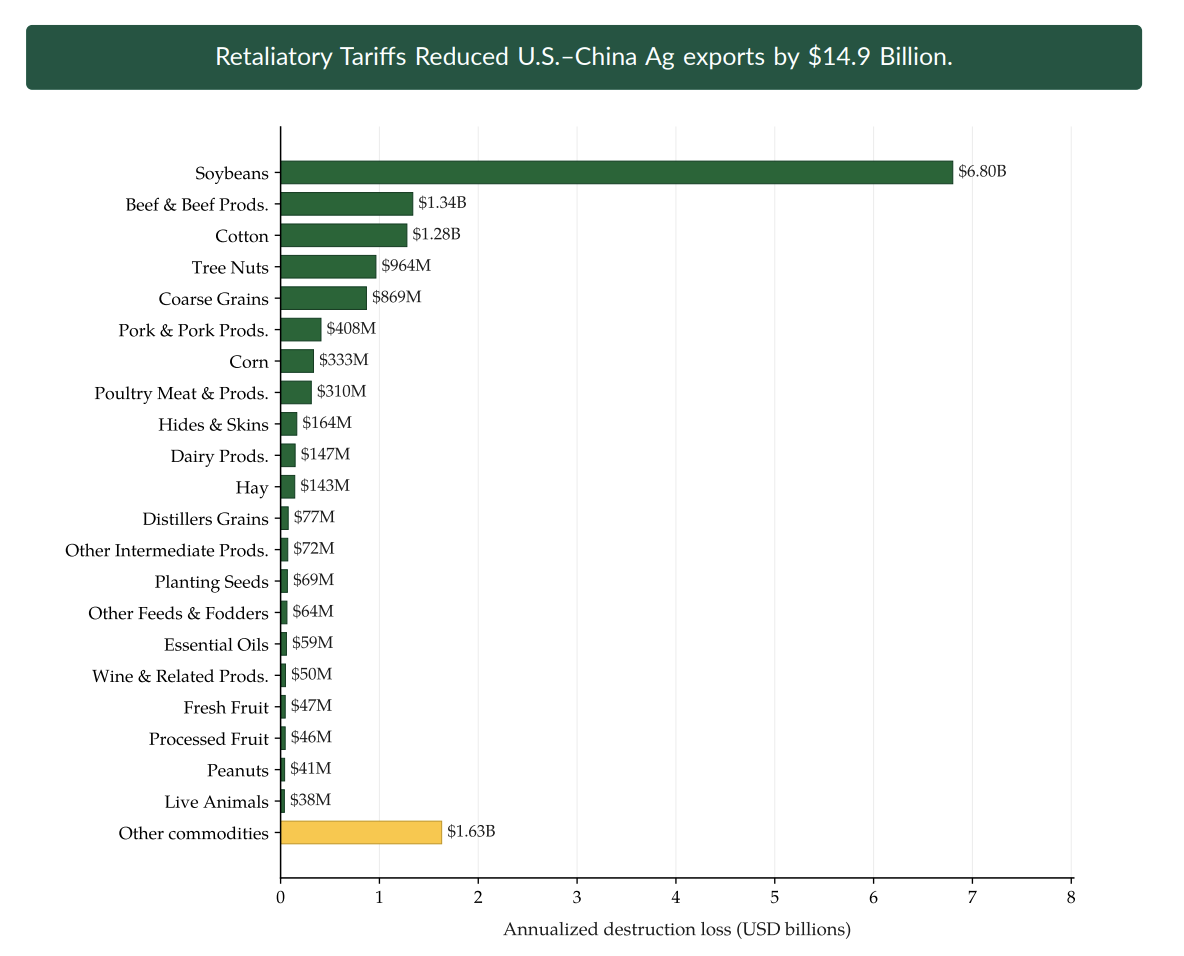
China's retaliatory tariffs on U.S. agricultural goods wiped out an estimated $14.9 billion in export sales over a 12-month period, according to a new North Dakota State University study published this week — with soybeans absorbing the largest blow. Separately, the U.S.-China trade truce remains fragile heading into November, as Treasury Secretary Scott Bessent confirmed Washington is "not in a rush" to extend the agreement, even as both sides have flagged agricultural tariff cuts with few implementation details.
Global Trade Weekly — 2026-05-24
Top Stories
1. China's Retaliatory Tariffs Carved $15 Billion from U.S. Farm Exports
A new analysis from North Dakota State University, cited by Farm Policy News on May 22, 2026, found that China's retaliatory tariffs on U.S. agricultural goods cost exporters an estimated $14.9 billion in sales over a 12-month period. Soybeans suffered the steepest losses. The finding lands as the broader U.S.-China trade truce — which covers tariffs and critical minerals — is set to expire in November, with the Trump administration showing no urgency to renew it.
Market implications: U.S. soybean and corn futures remain under pressure. Exporters face continued uncertainty about whether reduced agricultural tariffs flagged in the post-Trump-Xi summit communiqué will ever be implemented — Beijing's Ministry of Commerce referenced the agreement again this week but left key questions unanswered.
2. U.S. Treasury Secretary: "Not in a Rush" to Extend China Trade Truce
U.S. Treasury Secretary Scott Bessent stated this week that the Trump administration is "not in a rush" to extend the tariff and critical minerals trade truce with China before its November deadline, indicating there is time to address the issue in later meetings this year.

Immediate implications: Businesses relying on the truce's stability — particularly in tech hardware, critical minerals, and agriculture supply chains — face a mid-year planning gap. The November cliff date creates uncertainty for procurement cycles running 6–9 months ahead.
3. EU-U.S. Trade Deal: Parliament and Council Reach Implementation Agreement
The European Council and European Parliament reached a provisional deal on two regulations enacting the EU's tariff reductions set forth in the EU-U.S. Joint Statement, including "robust safeguards" and flexibility provisions. The agreement was finalized on May 20, 2026, paving the way to avoid a threatened hike in U.S. tariffs on EU goods.

Market implications: European automakers, steel producers, and pharmaceutical companies — all exposed to potential U.S. tariff escalation — gained short-term relief. The deal keeps the EU framework on track before a July deadline that could otherwise trigger a jump to higher U.S. tariff rates.
Tariff & Sanctions Tracker
-
China → U.S. Agriculture: Retaliatory tariffs on soybeans and other U.S. farm goods remain in force. An NDSU study quantified the cost at $14.9 billion in lost export sales over 12 months. Both sides flagged agricultural tariff reductions after the Trump-Xi summit but no implementation schedule has been set.
-
EU → U.S. (reciprocal): The EU Council and Parliament struck a legislative deal on May 20 to enact EU tariff reductions on U.S. goods as part of the bilateral Joint Statement framework, with safeguard clauses preserved. Effective date pending final legislative steps; July deadline looms.
-
U.S.-China Critical Minerals Truce: The Trump-era tariff truce covering goods and critical minerals is set to expire November 2026. The Treasury Secretary confirmed this week that an extension is not imminent, placing the entire truce timeline in question for industries dependent on rare earth supply chains.
By the Numbers
-
$14.9 billion — Estimated value of U.S. agricultural export sales lost due to Chinese retaliatory tariffs over a 12-month period, according to North Dakota State University analysis (cited May 22, 2026). Soybeans were the hardest-hit commodity.
-
$30 billion — Value of imports under discussion for managed tariff cuts between the U.S. and China as part of a "non-sensitive goods" mechanism being considered post-Trump-Xi summit, per Reuters.
-
November 2026 — The deadline by which the U.S.-China tariff and critical minerals trade truce expires. Washington confirmed this week it is not actively pursuing early extension.
Regional Spotlight
Latin America: Agricultural Trade Disruption Creates New Openings
The fallout from the U.S.-China agricultural trade war is increasingly reshaping trade flows for Latin American producers — particularly Brazil and Argentina, which have significantly expanded soybean, corn, and beef sales to China as American exporters lost ground.
The NDSU study confirming $14.9 billion in U.S. agricultural export losses to China underscores how durable this rerouting has become. Brazilian soybean exports to China — already dominant — have solidified their position as the default supplier, while Argentine corn and feed have filled gaps left by U.S. product priced out by tariffs.
Why it matters globally: If the U.S.-China agricultural tariff reductions flagged after the Trump-Xi summit are eventually implemented, Brazilian and Argentine commodity exporters face the risk of market share reversal. The timeline uncertainty — with no implementation details published despite repeated Chinese Ministry of Commerce references — leaves South American trade ministries in a holding pattern. The outcome of the U.S.-China agricultural negotiation will have cascading effects far beyond the two principal parties.
What to Watch Next Week
-
U.S.-China Agricultural Tariff Implementation Details (Ongoing — watch for week of May 25): China's Ministry of Commerce has twice referenced tariff cuts on U.S. agricultural goods without providing implementation specifics. Any concrete announcement would move soybean and corn futures sharply and directly affect South American commodity market share.
-
EU-U.S. Trade Deal Legislative Finalization (July deadline pressure): With the Council-Parliament deal now struck, the EU must complete legislative procedures before the July window that could trigger higher U.S. tariffs on European exports. Watch for formal votes in the European Parliament and Council adoption steps.
-
U.S.-China Trade Truce Extension Signal (November deadline): Treasury Secretary Bessent's "not in a rush" statement sets a wait-and-see tone, but markets will be scrutinizing any upcoming bilateral meetings for signals on whether the truce's critical minerals and tariff provisions will be renewed or renegotiated before the November expiry.
-
WTO Disputes on U.S. Section 232/301 Tariffs: The U.S. Court of International Trade's earlier ruling against the administration's broad global tariff authority continues to generate legal uncertainty for importers. Watch for any appellate developments or new filings that could widen or narrow the scope of tariff relief available to non-plaintiff companies.
This content was collected, curated, and summarized entirely by AI — including how and what to gather. It may contain inaccuracies. Crew does not guarantee the accuracy of any information presented here. Always verify facts on your own before acting on them. Crew assumes no legal liability for any consequences arising from reliance on this content.
Powered by
