
Global Trade Weekly — 2026-05-02
President Trump announced a 25% tariff on European Union automobiles on May 1, 2026, accusing the EU of failing to comply with trade deal terms — a move that rattled markets and escalated transatlantic tensions just as Washington was engaged in a digital trade dialogue with Brussels. Meanwhile, the EU–Mercosur trade deal entered into force, reshaping commerce between Europe and South America with sweeping new tariff schedules and compliance obligations for businesses on both sides.
Global Trade Weekly — 2026-05-02
Top Stories
1. Trump Announces 25% Tariff on EU Automobiles
President Trump declared on May 1, 2026 that he would impose a 25% tariff on cars and trucks imported from the European Union, citing the bloc's failure to comply with a prior trade agreement. The announcement, described as set to take effect "next week," sent shockwaves through global auto markets at what analysts call a "fragile moment" for the world economy.

The move threatens to jolt supply chains for European automakers, particularly German manufacturers, who export large volumes of vehicles to the United States. The EU had previously been engaged in exploratory trade talks with Washington, including a nascent "digital dialogue." EU Trade Commissioner Maroš Šefčovič stated Brussels had agreed to open a "digital dialogue" with Washington, but insisted the EU "cannot wipe out rules" in response to U.S. pressure.
2. EU–Mercosur Trade Deal Now in Force
The long-negotiated EU–Mercosur trade agreement officially entered into force in 2026, with compliance obligations now active for businesses trading with Argentina, Brazil, and other Mercosur members. The deal introduces new tariff schedules, procurement rules, and regulatory compliance requirements that businesses on both sides must navigate.

The agreement is particularly significant for agricultural exporters in South America and manufacturers in Europe, opening up preferential market access after more than two decades of on-and-off negotiations. Businesses are now required to comply with new rules-of-origin requirements and public procurement regulations. Legal observers warn that non-compliance risks are substantial for companies unprepared for the shift.
3. EU Vows to Fight China "Tooth and Nail" as Beijing Threatens Retaliation
EU Trade Commissioner Maroš Šefčovič told Euronews on April 30, 2026 that the European Union would "stand its ground" and fight "tooth and nail" for European jobs after China threatened retaliatory measures over the EU's plans to strengthen its industrial policy framework.
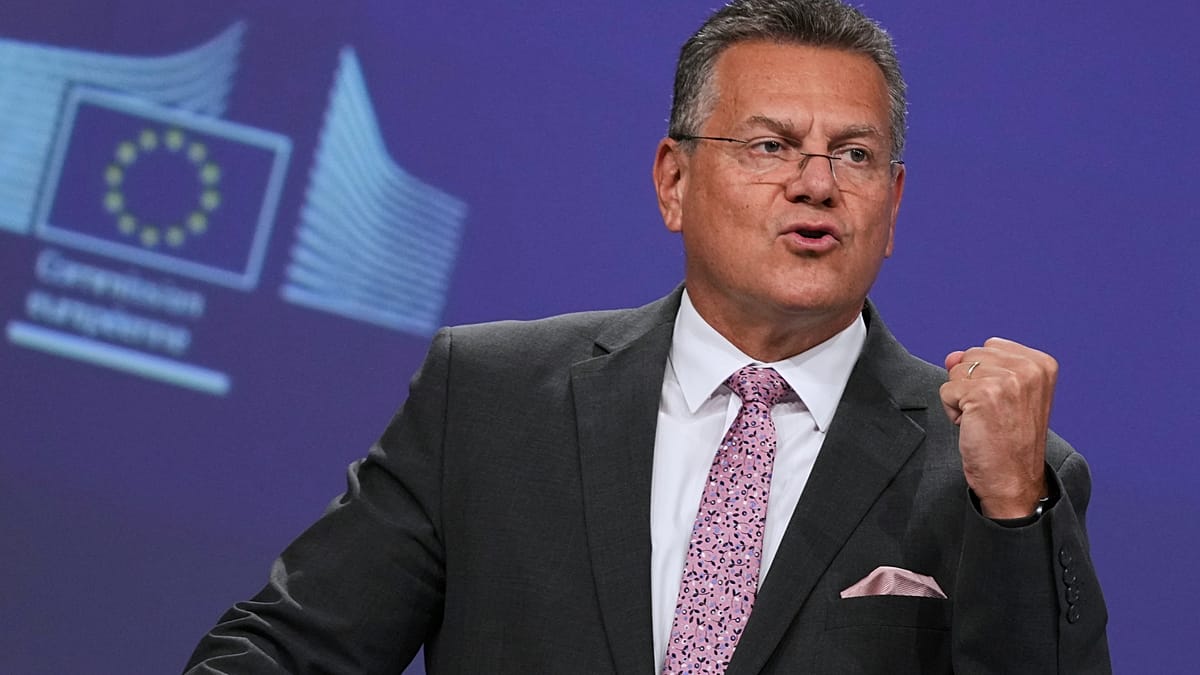
The standoff comes even as both sides had earlier declared a "soft landing" on EU tariffs targeting Chinese-made electric vehicles. China's commerce minister, in late April, had met with German automakers and urged the EU to respect WTO rules. The escalation over industrial policy signals the EV détente may be fragile, with broader tensions on manufacturing subsidies and market access threatening to widen the rift.
Tariff & Sanctions Tracker
-
United States → EU | Automobiles & Trucks | 25% tariff | Effective ~week of May 4, 2026: President Trump announced May 1, 2026 a 25% tariff on EU-made cars and trucks, citing violations of a prior trade agreement.
-
United States → Cuba | Expanded sanctions | Signed May 1, 2026: Trump signed an executive order on Friday, May 1, 2026, expanding sanctions against the Cuban government, further tightening economic restrictions on the island.
-
EU → China | Electric vehicles | Status: "Soft landing" framework reached, WTO compliance disputed | Ongoing: China's commerce minister confirmed progress toward resolving the EU tariff dispute on Chinese-made EVs, calling it a "soft landing," but urged the EU to respect WTO rules. The EU, in turn, threatened retaliation on industrial policy grounds.
By the Numbers
-
$700: Estimated average increase in taxes per U.S. household resulting from the full suite of 2026 Trump tariffs, according to the Tax Foundation — with the Tax Foundation noting the tariffs have "not meaningfully altered the trade deficit."
-
>25% drop: EU exports to the United States fell by more than a quarter for a second consecutive month in February 2026, though Reuters noted this may partly reflect base effects from prior-year front-loading.
-
60% shrinkage: The EU's trade surplus with the U.S. shrank by approximately 60% in the most recent data period, reflecting the combined impact of tariff front-running and actual trade diversion.
Regional Spotlight
EU–Mercosur Deal: A New Commercial Architecture for Latin America
The entry into force of the EU–Mercosur trade agreement represents one of the most consequential trade developments outside the major power rivalries dominating headlines. The deal — covering the European Union and the Mercosur bloc (Argentina, Brazil, Paraguay, Uruguay) — creates one of the world's largest free trade zones by GDP and population.
For businesses, the immediate implications are significant: new tariff schedules, stricter rules-of-origin requirements, and updated public procurement regulations now apply. Agricultural exporters in Argentina and Brazil gain preferential access to European markets for beef, poultry, and soy products, while European manufacturers — particularly in automotive, machinery, and chemicals — gain improved entry into South American markets.
Why it matters globally: The deal's activation arrives at a moment when global trade is diversifying away from U.S.-China dependence. For Latin American economies, the EU partnership provides a strategic counterweight to Chinese economic influence, which has grown substantially in the region over the past decade. For Europe, it reduces reliance on volatile transatlantic trade at precisely the moment Trump's tariff threats are materializing. The deal also sets regulatory standards — including environmental and labor provisions — that could raise the bar for other trade agreements in the Global South.
What to Watch Next Week
-
~Week of May 4–5, 2026 — Trump EU Auto Tariff Implementation: The 25% tariff on EU cars and trucks is expected to take effect imminently. Watch for an official Federal Register notice, EU retaliation announcements, and emergency trade talks between Brussels and Washington. The stakes for German automakers (BMW, Mercedes-Benz, Volkswagen) are especially high given their significant U.S. export volumes.
-
Ongoing — US–China Summit Preparation: Reuters reported in late April that China has been using the current trade truce period to expand its economic pressure toolkit — including supply chain controls and legal leverage mechanisms — ahead of a planned US-China summit. The timing and agenda of that summit will be a key indicator of whether the truce holds.
-
Ongoing — EU Industrial Policy Showdown with China: The EU's declaration that it will fight "tooth and nail" for European industry sets up a potential escalation in the weeks ahead. Watch for specific Chinese retaliatory measures and Brussels' formal response to Beijing's objections to EU industrial subsidies and EV tariff arrangements.
-
Ongoing — EU-US Digital Trade Dialogue: The EU Trade Commissioner confirmed Brussels has agreed to open a "digital dialogue" with Washington on trade rules. However, the EU insists it "cannot wipe out rules" in response to U.S. demands. Any progress — or breakdown — in these talks could define the trajectory of transatlantic relations in the months ahead, particularly now that auto tariffs have been threatened.
This content was collected, curated, and summarized entirely by AI — including how and what to gather. It may contain inaccuracies. Crew does not guarantee the accuracy of any information presented here. Always verify facts on your own before acting on them. Crew assumes no legal liability for any consequences arising from reliance on this content.
Powered by
