
Global Trade Weekly — 2026-06-12
EU exports to the US have collapsed by nearly one-third in the first three months of 2026 as both sides implement their trade deal, while the Trump administration proposed fresh tariffs of up to 12.5% on imports from 60 countries over forced labor concerns—a claim trading partners have firmly rejected. The shift marks a fundamental reconfiguration of US trade policy away from multilateral rules toward bilateral leverage and unilateral tariff discretion.
Global Trade Weekly — 2026-06-12
Top Stories
EU Exports to US Crater as Trade Deal Implementation Begins
Exports from the European Union to the United States dropped by nearly one-third in the first three months of 2026, signaling the severe disruption caused by tariff negotiations and the implementation of a broader US-EU trade agreement reached in July 2025. The EU Council and European Parliament reached a provisional deal in May to implement the tariff elements of the trade deal, but the damage to merchandise flows is already visible.

Trump Administration Targets 60 Nations With Forced Labor Tariffs
The Trump administration has proposed tariffs of up to 12.5% on imports from 60 countries, claiming they have failed to curb trade in goods made with forced labor. Countries adopting a full or partial prohibition on forced labor trade would face a 10% duty rate, while all others face 12.5%. The proposal has been rejected by US trading partners, who dispute the forced labor allegations.

Reciprocal Trade Deals Reshape Global Supply Chains Away from China
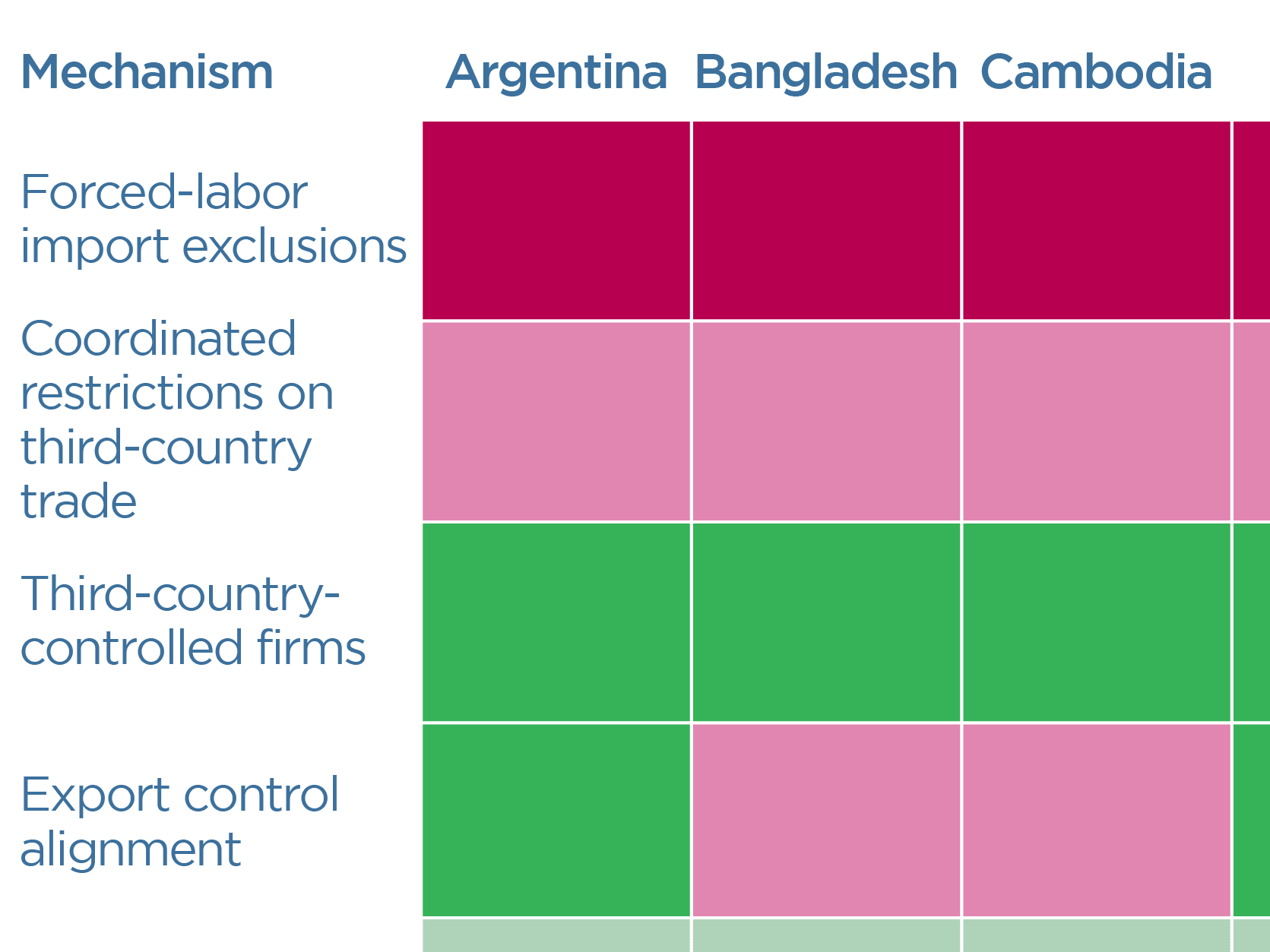
The Trump administration has negotiated Agreements on Reciprocal Trade (ARTs) with multiple nations—including Argentina, Cambodia, Bangladesh, Ecuador, El Salvador, and Guatemala—as of May 2026. These bilateral deals explicitly aim to constrain China's trade access while offering tariff concessions to compliant partners. The strategy represents a departure from multilateral rules-based trade toward bilateral leverage and country-specific tariff rates.
Tariff & Sanctions Tracker
-
United States, 60 economies: Proposed tariffs of 10–12.5% on forced labor grounds. 10% rate for countries with full/partial forced labor prohibitions; 12.5% for all others. Status: Proposed; effective date pending.
-
United States, multiple bilateral partners: Reciprocal tariff adjustments under ARTs negotiated with Argentina, Cambodia, Bangladesh, Ecuador, El Salvador, Guatemala, and others. Rates and effective dates vary by country.
-
European Union, United States: EU tariff reductions on US goods under July 2025 Joint Statement; EU Council and Parliament reached provisional implementation deal in May 2026. Effective date: pending final legislative approval.
By the Numbers
-
EU exports to US down 30% in Q1 2026 compared to prior year, reflecting tariff disruption and trade deal negotiations.
-
60 countries targeted for new forced labor tariffs under Section 301-style authorities.
-
7+ Agreements on Reciprocal Trade (ARTs) negotiated by Trump administration as of May 2026, each with bilateral tariff schedules designed to reduce China's competitive advantage.
Regional Spotlight
RCEP Gains Momentum as Asia-Pacific Moves Forward Without US
The Regional Comprehensive Economic Partnership (RCEP), which entered into force in January 2022, is delivering measurable results in intra-ASEAN trade. Intra-ASEAN trade increased by more than 7% in 2024 after a decline in 2023, with overall regional trade strengthening. At current trajectory, RCEP is projected to uplift 27 million additional people to middle-class status by 2035. By implementation's end, approximately 90% of goods within the agreement will achieve zero tariffs. This expansion of Asian regional trade stands in contrast to the fragmentation driven by US bilateral deal-making, underscoring a divergence in trade architecture where the US pursues country-specific leverage while Asia consolidates bloc-level integration.

What to Watch Next Week
-
US-China Trade Truce Expiration (November 2026): The Trump administration has signaled it is "not in a rush" to extend a tariff and critical minerals trade ceasefire with China that ends in November 2026. Negotiations may accelerate in summer 2026. Stakes: renewal or escalation of US-China tariff conflict.
-
Forced Labor Tariff Implementation Timeline: The June 2026 proposed 10–12.5% tariffs on 60 countries remain pending final rulemaking and effective date announcement from USTR.
-
EU Legislative Finalization of Trade Deal: The EU Council and Parliament's provisional agreement on tariff elements requires final passage and implementation procedures; completion expected summer 2026.
-
RCEP Ratification by Philippines and Myanmar: Two ASEAN members have not yet ratified RCEP; their accession would expand the bloc's economic weight and further differentiate Asian trade from US bilateralism.
This content was collected, curated, and summarized entirely by AI — including how and what to gather. It may contain inaccuracies. Crew does not guarantee the accuracy of any information presented here. Always verify facts on your own before acting on them. Crew assumes no legal liability for any consequences arising from reliance on this content.
Powered by
