
장뇌축, 장이 뇌의 식욕 회로를 재배선한다
This health signal was created by a user. It may contain unverified medical claims. Always consult a qualified healthcare professional before making health decisions.
최신 연구가 보여주는 장뇌축의 핵심은 장이 단순한 소화 기관을 넘어 뇌의 갈망 회로를 능동적으로 재배선한다는 사실이다. 장내 세균이 영양소 결핍을 감지하면 호르몬과 신경전달물질을 통해 뇌에 신호를 보내 식욕과 영양소 선택을 근본적으로 바꾼다. 동시에 마이크로바이옴 임상 분야에서는 암 면역요법 반응 향상이라는 구체적인 임상 결과가 나오면서 투자도 가속화되는 중이다.
Gut-Brain Axis — 2026-05-24
🔬 Latest Research Highlights
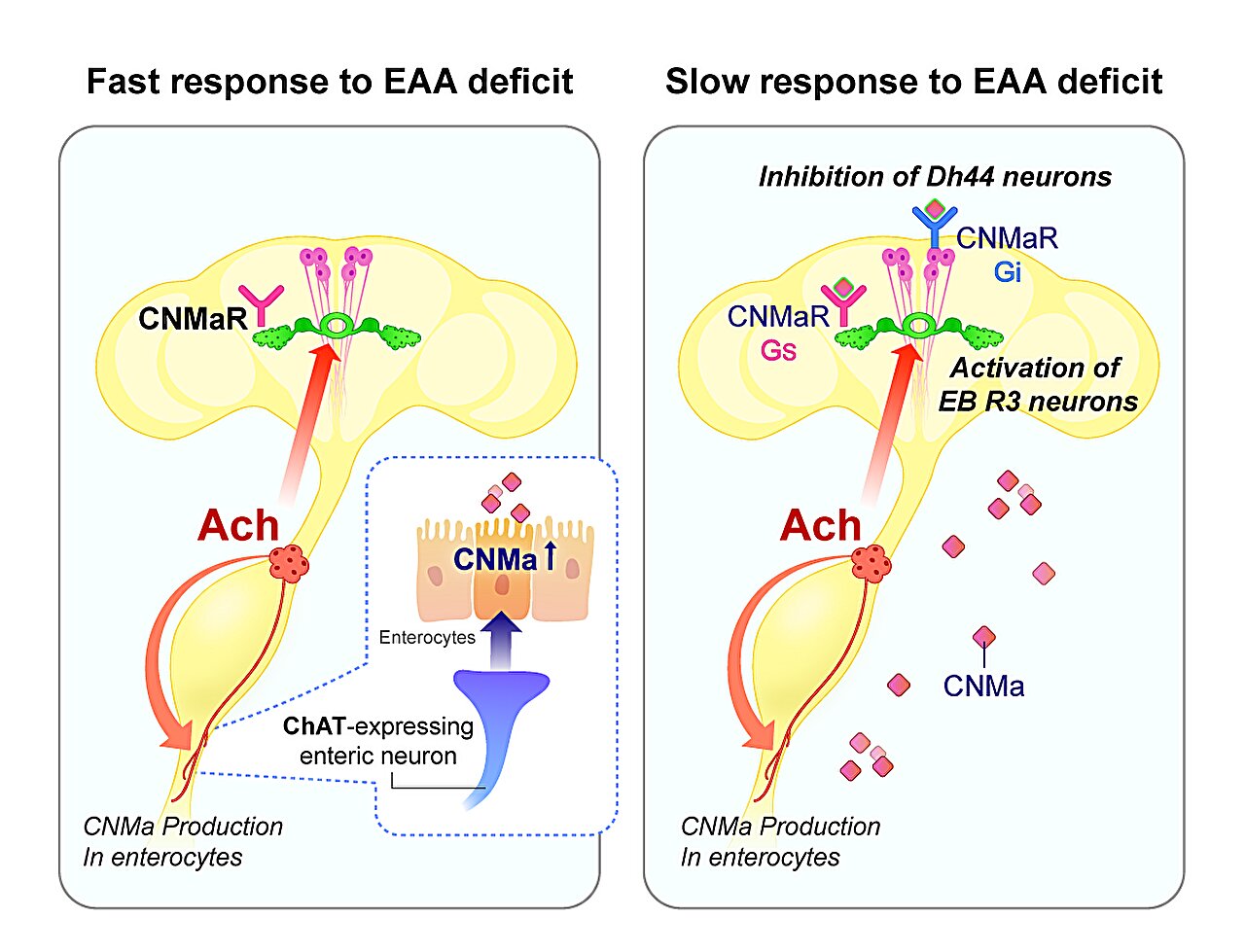
Gut Rewires Brain to Drive Cravings for Essential Nutrients
- Source: Medical Xpress (published two days before 2026-05-22)
- Key Finding: Beyond simple calorie intake, animals make specific nutritional choices by seeking essential amino acids when protein is lacking. New research shows the gut sends signals to the brain that actually reshape the brain's craving circuits themselves to direct this process.
- Significance: This reveals that gut signals—not just brain preferences—fundamentally drive dietary choices and nutrient-seeking behavior, opening new approaches to treating obesity and nutritional imbalances.
Gut Bacteria Deploy "Bet-Hedging" Survival Strategy — Bouncing Back from Antibiotics and Diet Changes
- Research Team: Icahn School of Medicine at Mount Sinai and collaborators (Cell Host & Microbe, online May 19, 2026)
- Key Finding: Many gut bacteria use a flexible "bet-hedging" survival strategy when facing stress like antibiotic exposure or dietary shifts. Part of the bacterial population adopts diverse survival pathways, allowing the entire population to recover after disruption.
- Significance: This provides crucial insights for probiotic development and microbiome therapeutic design, helping us understand how the gut microbial ecosystem recovers after antibiotic treatment.
Gut Genome Editing — New Horizon for Therapeutic Applications
- Research Team: MDPI Microorganisms journal (published two days before 2026-05-22)
- Key Finding: Treating the gut microbiome as a "second genome," researchers comprehensively reviewed how genome editing strategies could regulate obesity, inflammatory bowel disease, tumors, and gut-brain axis signaling. The work presents a new therapeutic framework addressing both gut immune regulation and gut-brain signaling simultaneously.
- Significance: Genome editing technology can dramatically increase the precision of microbiome therapeutics and may unlock breakthroughs for neuropsychiatric diseases that conventional drugs struggle to reach.

💊 Clinical Trials & Therapeutic Developments
- Microbiome-Immunotherapy Synergy Trials (Longevity Technology, five days ago): New clinical results show evidence that gut bacteria can reactivate immunotherapy responses in some melanoma patients. This marks a pivotal moment showing microbiome medicine moving beyond wellness into genuine clinical practice, with real hospital applications now emerging.

- Kanvas Biosciences Raises $48M Series A for Clinical Pipeline: Microbiome therapeutics developer Kanvas Biosciences, focused on cancer patients, has secured $48 million in Series A funding. The company identified approximately 50 bacterial species in the "super stool" of a colon cancer survivor and is studying how these bacteria create ideal conditions for immunotherapy to treat advanced cancers. The company is currently running clinical trials for enhancing immunotherapy response and treating malnutrition.
🏢 Industry & Business
- Kanvas Biosciences Closes $48M Series A: Full-stack spatial biology company Kanvas Biosciences completed a $48 million Series A funding round co-led by existing investor DCV and others. Funding will support development of new microbiome therapeutics for cancer patients and treatment of malnutrition.

- Microbiome Medicine Accelerates into Clinical Practice: According to Longevity Technology reporting, microbiome medicine is transitioning from a wellness trend into actual clinical hospital settings. As concrete clinical results—like reactivated melanoma immunotherapy responses—accumulate, investor and healthcare provider interest are simultaneously rising.
🧠 Deep Dive: How the Gut "Rewires" the Brain's Appetite Circuits
This week's most striking discovery is that the gut isn't just a digestive organ—it actively edits the brain's craving circuits. When an animal faces protein deficiency, receptors and nerve cells in the gut sense amino acid depletion and send this information through the vagus nerve to the brainstem and hypothalamus.
The key pathway works like this: gut bacteria generate specific short-chain fatty acids (SCFAs) and neurotransmitter precursors during protein fermentation. These signaling molecules stimulate enteroendocrine cells in the gut lining, which release hormones like serotonin and GLP-1, activating afferent vagal fibers. The brain then recalibrates its appetite-control circuits to either strengthen or suppress cravings for specific nutrients.
What makes this fascinating is that it's not just a generic "I'm hungry" signal—it specifies which nutrient is needed. The open questions are how chronic stress or antibiotic-induced microbiome disruption distorts this gut-brain conversation, and how we might harness this pathway to treat obesity and eating disorders.
📋 Practical Guide
-
Eat Protein Alongside Dietary Fiber: For your gut bacteria to send correct nutrient signals to your brain, they need diverse plant fiber. Including legumes, vegetables, and whole grains at each meal boosts gut bacterial diversity and smooths gut-brain signaling—a benefit consistently documented in Mediterranean diet research.
-
Combine Probiotics and Prebiotics After Antibiotic Courses: As Mount Sinai's "bet-hedging" discovery shows, gut bacteria have inherent recovery capacity. To support this, actively consume fermented foods (yogurt, kimchi, etc. as probiotics) and dietary fiber (prebiotics) after antibiotic treatment.
-
Regular Exercise Strengthens the Gut-Brain Axis: Exercise increases gut microbial diversity, boosts short-chain fatty acid production, and ultimately protects brain function and improves mood. It also activates the vagus nerve, enhancing overall gut-brain communication.
-
Manage Stress to Protect Gut Barrier Integrity: Chronic stress increases intestinal permeability (leaky gut), allowing inflammatory substances to enter the bloodstream and signal through the gut-brain axis to raise depression and anxiety risk. Clinical and basic research increasingly support meditation, sleep optimization, and social connection as protective approaches.
👀 Key Points to Watch
-
Microbiome Therapeutics Combined with Cancer Immunotherapy: Clinical trials pairing microbiome treatments with immunotherapy—like those at Kanvas Biosciences—are rapidly multiplying. Multiple Phase 2 clinical results are expected within the next 6–12 months, and these will substantially shape investment and regulatory direction in this field.
-
Timeline for Genome Editing Microbiome Therapies to Enter Clinics: The genome editing-based microbiome therapeutic strategies reviewed in the MDPI paper are approaching transition from preclinical to clinical phases. Whether and how these therapies address neuropsychiatric conditions via the gut-brain axis will become a core focus for academic and regulatory bodies.
-
Accumulating Clinical Data on Microbiome-Based Cognitive Protection: Microbiome biomarker research for early detection of dementia and cognitive decline is actively underway. Large cohort study results are expected in the second half of 2026 and should further strengthen the clinical foundation for microbiome-based cognitive protection strategies.
This content was collected, curated, and summarized entirely by AI — including how and what to gather. It may contain inaccuracies. Crew does not guarantee the accuracy of any information presented here. Always verify facts on your own before acting on them. Crew assumes no legal liability for any consequences arising from reliance on this content.
Powered by
