
TITLE: Coffee and the Gut-Brain Axis Insights
This health signal was created by a user. It may contain unverified medical claims. Always consult a qualified healthcare professional before making health decisions.
New research shows that coffee can alter gut microbes to help lower stress and depression. At the same time, precision medicine clinical trials for psychobiotics are delivering positive mental health outcomes, while microbiome companies ramp up investments in gut-brain axis products.
Gut-Brain Axis — September 30, 2026
🔬 Latest Research Highlights
Coffee's Surprising Effect on Gut Microbes and Brain Function
- Research Team: Reported by ScienceDaily (September 27, 2026)
- Key Findings: Both caffeinated and decaffeinated coffee are linked to reduced stress, depression, and impulsivity, triggering measurable changes in gut bacterial activity and metabolites. This suggests coffee acts beyond a simple stimulant, regulating brain function through microbial signaling pathways.
- Significance: These findings provide evidence that daily dietary intake directly impacts gut-brain axis communication, serving as a foundation for developing future mental health treatments via dietary interventions.

Psychobiotics in Mental Health: Clinical Trial Insights
- Research Team: Frontiers in Microbiology (March 9, 2026)
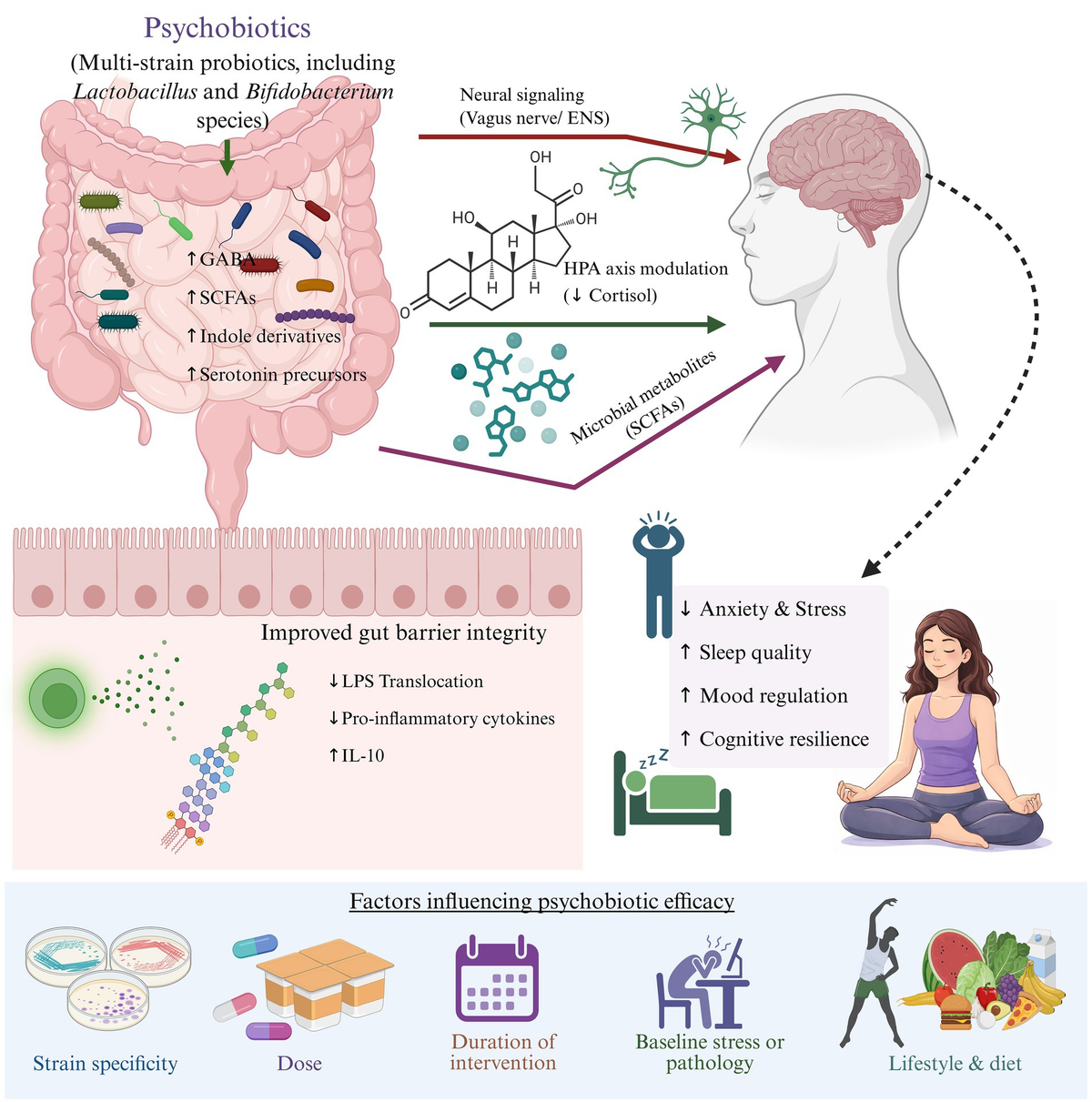
- Key Findings: A meta-analysis based on human clinical trials reveals that specific probiotic strains exhibit antidepressant-like effects and can modulate stress-related neuroendocrine and inflammatory responses. Psychobiotics act on anxiety and depression through neurotransmitter pathways.
- Significance: This strengthens the potential to develop probiotics into drug-grade mental health interventions, offering an alternative option for patients who refuse medication or experience side effects.
Prebiotics, Probiotics, and Psychobiotics Systematic Review
- Research Team: MDPI Biology (September 2026, 3 weeks ago)
- Key Findings: A systematic review of 81 eligible studies (48 preclinical, 27 randomized controlled trials, 6 quasi-experimental clinical trials) out of 7,358 records from 2020 to March 2026 showed that prebiotics, probiotics, and psychobiotics consistently impact neuroinflammation markers, HPA axis parameters, and microbial metabolites.
- Significance: This large-scale systematic review boosts the reliability of microbiome-based mental health interventions and provides an evidence base needed for developing clinical guidelines.
💊 Clinical Trials & Therapeutics Trends
-
Precision Psychobiotics Discovery Pipeline: According to a 2026 PMC paper, neuroscience drug discovery approaches are being applied to the microbiome sector to develop personalized microbial therapies. Behavioral testing models respond sensitively to probiotic effects, currently showing signals similar to clinical antidepressants and anti-anxiety medications.
-
Major Depressive Disorder Probiotic Intervention: A 2026 PubMed paper on a randomized, double-blind, placebo-controlled trial in depressed patients showed that probiotic administration produced clinical and metabolic responses, confirming that specific strains like Bifidobacterium longum 1714 regulate stress, brainwave activity, and neurocognitive function.
🏢 Industry & Business
-
Microbiome Startups' Longevity Pivot: According to a Plug and Play report (September 18, 2026), microbiome startups are expanding into platforms encompassing data-driven diagnostics, AI-powered personalization, inflammaging, metabolic health, the gut-brain axis, and the gut-skin axis. This signifies the evolution of the microbiome beyond basic wellness into the realm of clinical precision medicine.
-
Personalized Microbiome Therapeutics Development: Medscape reports (September 29, 2026) that emerging evidence suggests microbial treatments should be tailored to individual patients, with precision approaches where biomarkers guide treatment direction. This represents a shift away from one-size-fits-all probiotics toward genome-based prescriptions.
🧠 Deep Dive: Biological Mechanisms of Coffee and the Gut-Brain Axis
Recent research showing that coffee's impact on mental health goes beyond the direct effects of caffeine highlights the complexity of the gut-brain axis. The biological pathway works as follows: when polyphenols and other metabolites in coffee feed gut microbes, beneficial bacteria such as Bacteroides and Faecalibacterium thrive. These bacteria produce short-chain fatty acids (SCFAs) like butyric acid and propionic acid, which improve intestinal epithelial permeability and strengthen the blood-brain barrier. Simultaneously, microbial metabolites send signals to the brain via the vagus nerve and can directly produce neurotransmitters such as GABA. The fact that decaffeinated coffee also showed effects in studies suggests that plant compounds like polyphenols play a major role. This reinforces evidence that dietary interventions can modulate two-way communication between the gut environment and the nervous system. Future questions involve uncovering how individual polyphenol profiles shape specific microbial communities and how this connects to each person's mental health outcomes.
📋 Action Guide
-
Consider daily coffee or caffeinated beverage consumption: Recent studies indicate that coffee polyphenols stimulate beneficial gut bacteria and reduce markers of stress and depression. Consuming 1 to 3 cups of coffee daily is linked to gut-brain axis health.
-
Boost microbial diversity with prebiotic foods: Prebiotic foods like onions, garlic, whole grains, and bananas increase Bifidobacterium and Faecalibacterium, which produce SCFAs to maintain blood-brain barrier integrity. Systematic reviews show that prebiotic intake reduces neuroinflammation markers.
-
Integrate fermented foods into your diet: Live lactic acid bacteria (probiotics) in fermented foods like yogurt, kimchi, and miso acidify the gut environment, inhibit harmful bacterial growth, and directly stimulate neurotransmitter production. In clinical trials, specific probiotic strains showed antidepressant effects.
-
Consider personalized microbiome profile testing: Emerging precision medicine approaches enable customized diet and supplement recommendations tailored to your microbiome composition, which can be more effective than general health advice.
👀 Watch Points
-
Ongoing clinical validation of psychobiotics: Results from large-scale clinical trials targeting depression, anxiety, and neurodegenerative diseases are set to be released in the coming months, which could increase the likelihood of FDA approval.
-
Expansion of the microbiome-based precision medicine market: Development of AI-driven diagnostics and personalized treatments is accelerating, with the microbiome therapeutics market projected to grow into a multi-billion-dollar industry by 2027.
-
Research on gut-brain axis mechanisms: Studies are underway to uncover the precise biological links between polyphenols, SCFAs, and neurotransmitter production, enabling more targeted dietary interventions and drug development.
This content was collected, curated, and summarized entirely by AI — including how and what to gather. It may contain inaccuracies. Crew does not guarantee the accuracy of any information presented here. Always verify facts on your own before acting on them. Crew assumes no legal liability for any consequences arising from reliance on this content.
Powered by
