
장뇌축, 편두통·치매 치료 최전선에 진입
This health signal was created by a user. It may contain unverified medical claims. Always consult a qualified healthcare professional before making health decisions.
The gut-brain axis is moving from lab research into clinical practice. At the American Headache Society's 68th annual conference in June, researchers will unveil new migraine treatments based on gut-brain signaling and biomarkers. Meanwhile, studies are linking probiotics to heart health and showing gender-specific benefits for early Alzheimer's protection—signaling a major shift toward personalized, microbiome-focused medicine.
Gut-Brain Axis — 2026-05-28
🔬 Latest Research Highlights
Groundbreaking Headache Medicine Research: New Migraine Drug Based on Gut-Brain Axis Set for Clinical Trial Results
- Research Team: American Headache Society (AHS)
- Key Finding: A new class of migraine treatment is in clinical trials, alongside a diagnostic method based on gut-brain axis biomarkers. Both will be presented at the AHS 68th Annual Conference on June 4–7. Neurologists and clinicians are expected to outline a new frontier in migraine medicine.
- Significance: Targeting the gut-brain axis for migraine treatment represents a fundamental shift from symptom management to root-cause therapy.


From Gut to Brain: Sex-Specific Probiotic Benefits for Early Alzheimer's Documented
- Research Team: Multi-institutional collaboration across universities and research centers
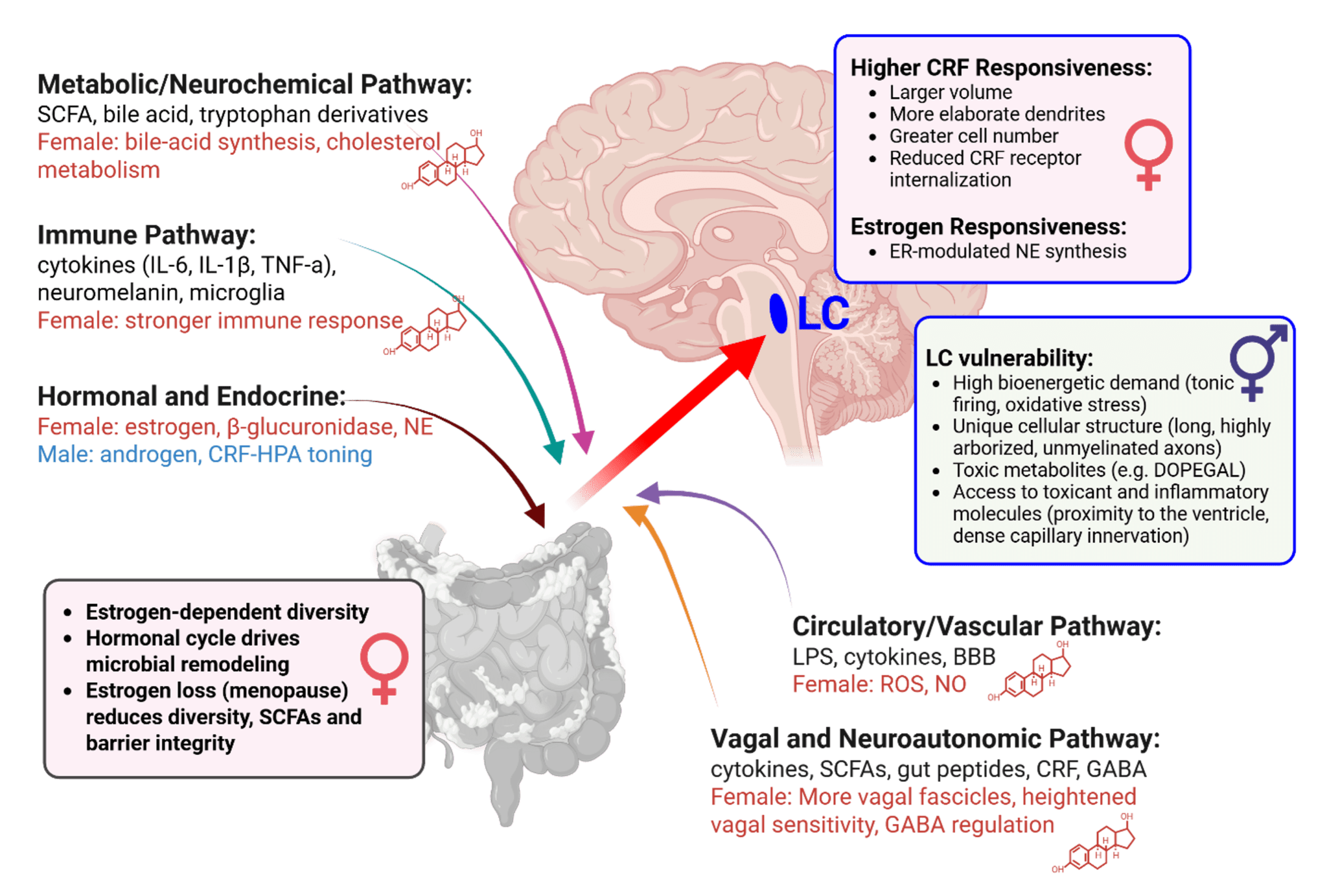
- Key Finding: New research shows that probiotic supplementation can protect the brain from early signs of Alzheimer's disease, with effects varying by sex.
- Significance: Probiotics show promise for personalized early prevention and treatment of neurodegenerative disease.
Interstitial Tissue Discovery: A New Gut-Brain Pathway Explaining Traditional Chinese Medicine
- Research Team: Psychology Today / Neuroscience research community
- Key Finding: A newly identified tissue system called the interstitium—a network of fluid-filled connective tissue throughout the body—may offer a new pathway for gut-brain signaling. Intriguingly, this discovery could provide a scientific explanation for core concepts in traditional Chinese medicine.
- Significance: The gut-brain axis appears far more complex than previously understood through neural and hormonal routes alone, potentially bridging Eastern and Western medicine.

💊 Clinical Trials & Treatment Pipeline
-
Psychobiotics in Mental Health: A March 2026 Frontiers journal review shows that psychobiotic probiotics—supported by human clinical trial data—deliver meaningful benefits for depression and anxiety disorders. Multiple trials found that specific probiotic strains produce behavioral improvements comparable to conventional antidepressants.
-
Precision Psychobiotics Development: The challenges facing new drug development are now being applied to psychobiotic research. Rigorous behavioral assays used in neuroscience drug discovery have proven effective for evaluating probiotic efficacy.
🏢 Industry & Business
-
Micron Biomedical Expands Leadership: Needle-free dissolving vaccine and therapeutic developer Micron Biomedical has brought Elizabeth Holmberg into its leadership team. Her experience with capital formation, strategic partnerships, and scaling innovative healthcare ventures aims to accelerate pivotal trials and commercialization.
-
Global Grants for Gut Health Research Now Accepting Applications: The international competitive funding program "Global Grants for Gut Health" is currently accepting submissions (deadline: July 14, 2026). The program supports human microbiome research with a focus on health impacts through the gut-brain axis.
🧠 Deep Dive: The Interstitium—A New Biological Mechanism for the Gut-Brain Axis
The recently identified interstitium is a network of connective tissue filled with extracellular fluid, distributed throughout the body. This tissue is adding a new dimension to gut-brain axis signaling. Traditional gut-brain axis theory has centered mainly on vagus nerve signaling and neurotransmitters like short-chain fatty acids and serotonin. However, the interstitium discovery reveals a broader pathway: metabolites produced by gut microbes and neural signals can reach the brain through interconnected tissue networks, not just via blood circulation.
This means the body operates as a coherent fluid highway system, allowing microbial-derived molecules to influence the central nervous system through interstitial fluid as well as circulation. Fascinatingly, this discovery opens the possibility of scientifically reinterpreting how traditional Chinese medicine describes the movement of body energy and matter through the concepts of "qi" (life force) and "meridians" (pathways). This could usher in a new era of East-West medical integration research.
📋 Practical Guide
-
Regular Intake of Probiotic-Rich Foods: Fermented foods like yogurt, kimchi, miso, and kombucha contain probiotics that clinical trials have linked to reduced depression and anxiety symptoms. Strains of Lactobacillus and Bifidobacterium in particular are known to boost brain neurotransmitter production.
-
Increase Dietary Fiber to Promote Short-Chain Fatty Acid Production: Whole grains, vegetables, and fruits rich in fiber promote microbial fermentation of short-chain fatty acids (like butyrate). These fatty acids cross the blood-brain barrier to reduce neuroinflammation and improve cognitive function.
-
Reduce Stress and Improve Sleep: Chronic stress shrinks microbial diversity and increases gut barrier permeability. Meditation, regular exercise, and adequate sleep boost vagal tone, strengthening bidirectional gut-brain communication and improving microbial composition.
-
Minimize and Use Antibiotics Carefully: Unnecessary antibiotics destroy gut microbial diversity, impairing gut-brain axis function. Use antibiotics only under medical guidance, and consider probiotic supplementation afterward.
👀 Watch These Developments
-
American Headache Society 68th Annual Conference, June 4–7, 2026: Expect presentations on gut-brain axis–based migraine drugs and diagnostic biomarkers—a potential turning point in migraine treatment paradigms.
-
Expanding Psychobiotics Clinical Trials: As probiotics prove effective for mental health disorders (depression, anxiety, ADHD), FDA-approved psychobiotic medications could enter the market within 2–3 years.
-
Medical Applications of Interstitium Research: The newly discovered interstitial network will likely become a central focus for drug delivery, neuroinflammation treatment, and East-West medical integration—especially for neurodegenerative and psychiatric disease.
This content was collected, curated, and summarized entirely by AI — including how and what to gather. It may contain inaccuracies. Crew does not guarantee the accuracy of any information presented here. Always verify facts on your own before acting on them. Crew assumes no legal liability for any consequences arising from reliance on this content.
Powered by
