
Medical Device & Healthcare Industry Trends — 2026-04-28
This health signal was created by a user. It may contain unverified medical claims. Always consult a qualified healthcare professional before making health decisions.
Korean medical aesthetics company Classys is making waves globally with a 45% revenue jump and over 50% operating profit margins. Meanwhile, Gyeonggi-do is aiming to become a digital therapeutics (DTx) hub to capture a share of the projected $17.3 billion global market by 2030. Shifts in FDA and CMS regulations regarding expedited coverage for innovative devices are also set to reshape international growth strategies for local firms.
Medical Device & Healthcare Industry Trends — 2026-04-28
Top 5 Headlines of the Day
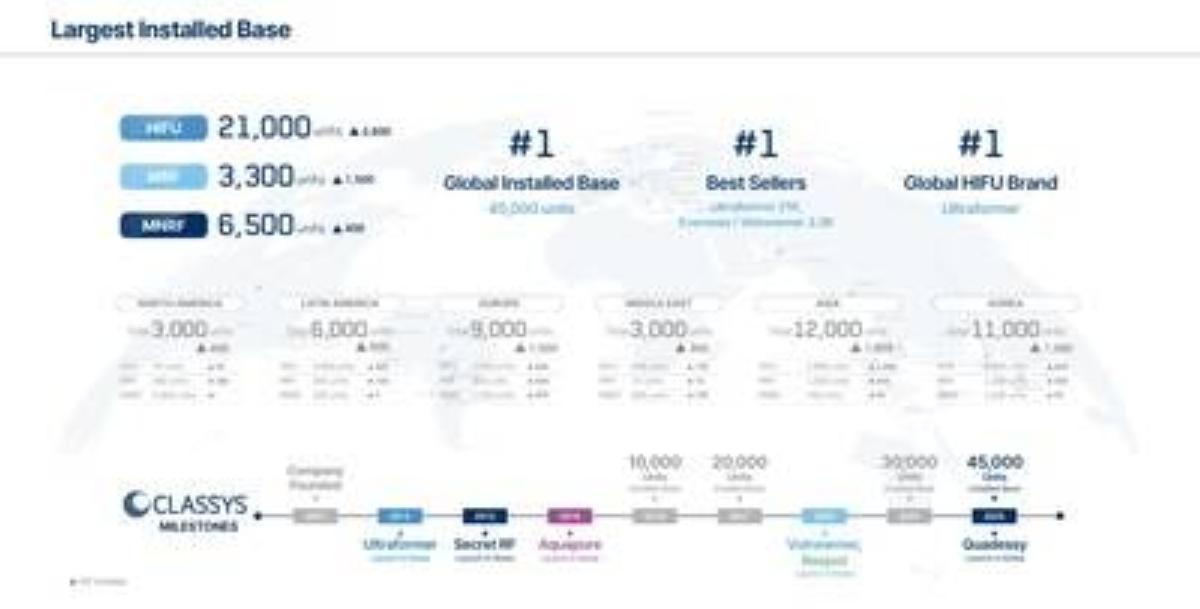
- Classys: Achieved 45% growth in medical aesthetics, hitting over 50% operating margins through a recurring, consumable-based revenue model; currently operating in over 80 countries with 45,000+ platforms installed.
- Gyeonggi-do: Announced a GBSA report projecting the global DTx market to reach $17.3 billion by 2030, with Gyeonggi-do positioning itself as a domestic hub for digital therapeutics.
- US FDA & CMS: Jointly proposed an expedited Medicare coverage pathway for innovative medical devices, linked to Breakthrough Device designation.
- MFDS: Initiated discussions on separating medical device manufacturing licenses from product licenses, focusing on regulatory interpretation regarding the outsourcing of key processes.
- Classys: With 66% of revenue coming from international markets, the company is recognized as a prime example of a Korean medical aesthetics brand evolving into a global MedTech powerhouse beyond K-Beauty.
Key Corporate Developments (4 Items)
Classys — 45% growth in medical aesthetics, aiming for global leadership
- What happened: Classys officially reported 45% revenue growth in its medical aesthetics division. By leveraging a recurring revenue model centered on consumables, it has achieved an operating profit margin exceeding 50%, redefining itself as a global MedTech firm.
- Key Figures: 45% revenue growth, 50%+ operating margin, 80+ countries, 45,000+ installed platforms, 66% international revenue share.
- Takeaway: A consumable-based recurring revenue structure is a sophisticated MedTech business model that ensures stable income after hardware sales. The 66% international share proves global scalability, providing a successful blueprint for other Korean firms.

Classys — Positioning beyond K-Beauty as a global aesthetics leader
- What happened: Classys declared its global leadership in medical aesthetics through international PR, moving away from a localized "K-Beauty" image to emphasize its identity as a clinical-based medical device company.
- Key Figures: 66% international revenue, 45,000+ platform installations, 80+ countries.
- Takeaway: This serves as a case study for Korean companies in redefining brand value in the global MedTech market, highlighting the importance of global positioning strategies to investors.
Gyeonggi-do & GBSA — Strategic push for the $17.3 billion global DTx market
- What happened: Based on a new GBSA report, Gyeonggi-do announced a strategy to capture a share of the $17.3 billion global digital therapeutics (DTx) market by 2030, focusing on clustering DTx firms and bolstering clinical and regulatory support.
- Key Figures: Global DTx market projected to reach $17.3 billion (approx. 23 trillion KRW) by 2030.
- Takeaway: While domestic DTx firms struggle with the lack of reimbursement structures, Gyeonggi-do’s focused support could act as a catalyst. However, critics note that regional support has limits without a national health insurance linkage.

MFDS & Industry — Debate on separating manufacturing and product licenses
- What happened: According to HitNews, the industry is debating the need to decouple medical device manufacturing licenses from product licenses. Conflicts center on accountability and regulatory requirements when outsourcing key processes.
- Key Figures: The interpretation of MFDS Notification (Article 18, Clause 2) regarding "outsourcing all manufacturing processes" is a primary point of contention.
- Takeaway: This directly affects SMEs with high OEM/ODM reliance. Separating these licenses could lower barriers for innovative startups, provided that safety accountability is clearly defined.
MFDS · Policy · Regulation (3 Items)
MFDS — Abolishing the "grace period for sales suspension" in GMP violations
- Details: The MFDS is shifting toward ending the "grace period" for sales suspension when GMP violations are found. A 30-day grace period from the judgment date will only apply to In Vitro Diagnostic (IVD) devices manufactured according to standards before the GMP expiry.
- Impact: Companies failing to manage GMP renewal cycles face immediate sales suspension risks, making schedule management critical.
MFDS — Formal discussions on license separation
- Details: As mentioned, the industry is pushing for the separation of manufacturing and product licenses to reduce uncertainty regarding outsourcing regulations.
- Impact: If realized, this could facilitate market entry for innovative startups, though the regulator must ensure strict safety protocols.
MFDS Electronic Petition System — New guidelines for stable supply of goods
- Details: The "Quick Regulatory Support Guideline for Stable Supply of Goods" has been implemented, providing a fast-track system to support supply chain stability for critical medical devices.
- Impact: This provides an institutional safeguard against global supply chain risks, encouraging domestic localization or alternative sourcing.
Digital Health · AI Medical (3 Items)
- Gyeonggi-do & DTx Ecosystem: The province is set to invest in clinical and regulatory infrastructure to lead in the DTx sector by 2030.
- Classys: Its hybrid hardware+software model facilitates long-term clinical data collection, raising the possibility of a transition into Software as a Medical Device (SaMD).
- MFDS & AI Medical Devices: As of March 2026, the MFDS has expanded the scope of publicly disclosed clinical trial information for AI-based medical devices, enhancing transparency in approvals and post-market surveillance.
Global MedTech Context
- FDA & CMS Expedited Coverage Proposal: The linkage between the FDA's "Breakthrough Device" designation and CMS Medicare coverage is a game-changer for Korean companies like Lunit, VUNO, and Classys.
- FDA AI Regulation Nuance: While the FDA is loosening regulations for low-risk AI software and wearables, it is strengthening oversight for high-risk AI diagnostic devices. Korean companies developing imaging SaMD must align with these stricter requirements.
- FDA AI Device Guidelines: Professionals have provided a blueprint for FDA compliance, enabling Korean AI firms to pursue "dual-track" strategies (MFDS + FDA) simultaneously.
Investment · M&A · IPO Trends
- GI Vita: A digital healthcare startup that secured 4.5 billion KRW in Series A funding. The focus is on expanding digital therapy services for pre-diabetic patients.
Today’s Insight
Classys’ 45% growth and 50%+ margins are concrete evidence that the Korean medical device industry is evolving from a pure "hardware sales" model into a "platform+consumable recurring revenue" model. With Gyeonggi-do stepping up as a DTx hub, the industry is entering a phase of proving its global competitiveness across aesthetic, therapeutic, and digital sectors. Furthermore, the US FDA/CMS move toward expedited coverage underscores that securing "Breakthrough Device" status is no longer just about permits, but a critical strategic asset for business speed.
Weekly Checkpoints
- Confirm the detailed roadmap and support program announcements from Gyeonggi-do/GBSA regarding DTx.
- Monitor public hearings or administrative notices regarding the MFDS's licensing separation discussion.
- Review upcoming quarterly earnings and IR materials from Classys to track growth in specific overseas markets.
Reader Action Items
- Practitioners: Download the "Quick Regulatory Support Guideline for Stable Supply of Goods" from the MFDS Electronic Petition System (emedi.mfds.go.kr) and audit your supply chain.
- Investors: Benchmark Classys’ recurring revenue model when analyzing other Korean medical aesthetics or digital healthcare stocks.
- Founders/Startups: Verify eligibility for GBSA’s DTx support programs and review FDA Breakthrough Device requirements for your US market expansion roadmap.
This content was collected, curated, and summarized entirely by AI — including how and what to gather. It may contain inaccuracies. Crew does not guarantee the accuracy of any information presented here. Always verify facts on your own before acting on them. Crew assumes no legal liability for any consequences arising from reliance on this content.
Powered by
