
Medical Device and Healthcare Industry Trends: 2026-06-09
This health signal was created by a user. It may contain unverified medical claims. Always consult a qualified healthcare professional before making health decisions.
South Korea's medical device industry is keeping its momentum with six consecutive years of trade surpluses and a rise in innovative technology designations. Meanwhile, the U.S. FDA’s relaxation of AI device regulations is opening doors for Korean companies abroad, especially as Samsung enhances its AI health platform and wearable technology to stay ahead in the global market.
Medical Device and Healthcare Industry Trends — 2026-06-09
Today’s Top 5 Headlines

-
Samsung Galaxy Watch AI Health App Update: Adds next-gen AI wellness tools and a redesigned dashboard, bolstering its global smartwatch health market presence.
-
S. Korean Medical Device Industry Scores 6th Consecutive Trade Surplus: Production reached 12.36 trillion won (up 8.1% year-on-year), driven by dental implants and ultrasound devices.
-
FDA Significantly Relaxes AI Medical Device Regulations: Reduces surveillance on general wellness devices and Clinical Decision Support (CDS) software; exempts low-risk wearable digital health devices.
-
45 Innovative Medical Devices Designated in S. Korea (2025): A 50% increase from the previous year, with a focus on AI and big data-driven technologies.
-
GE HealthCare Secures FDA 510(k) Clearance: Received approval for MIM Contour Protégé AI+ 2.0 radiation therapy software, intensifying competition in the AI radiation oncology market.
Key Corporate Trends
Samsung Electronics
- What’s happening: A major update to the AI health app for the Galaxy Watch and Galaxy ecosystem, enhancing personalized wellness features.
- Numbers: Numerous next-gen AI-based health monitoring tools added; dashboard UI completely redesigned.
- Key Insight: Samsung is upgrading its smartwatch health platform with AI to boost competitiveness in the global wearable market. Combined with the FDA’s eased regulations on low-risk wearables, faster market entry is expected.
Classys
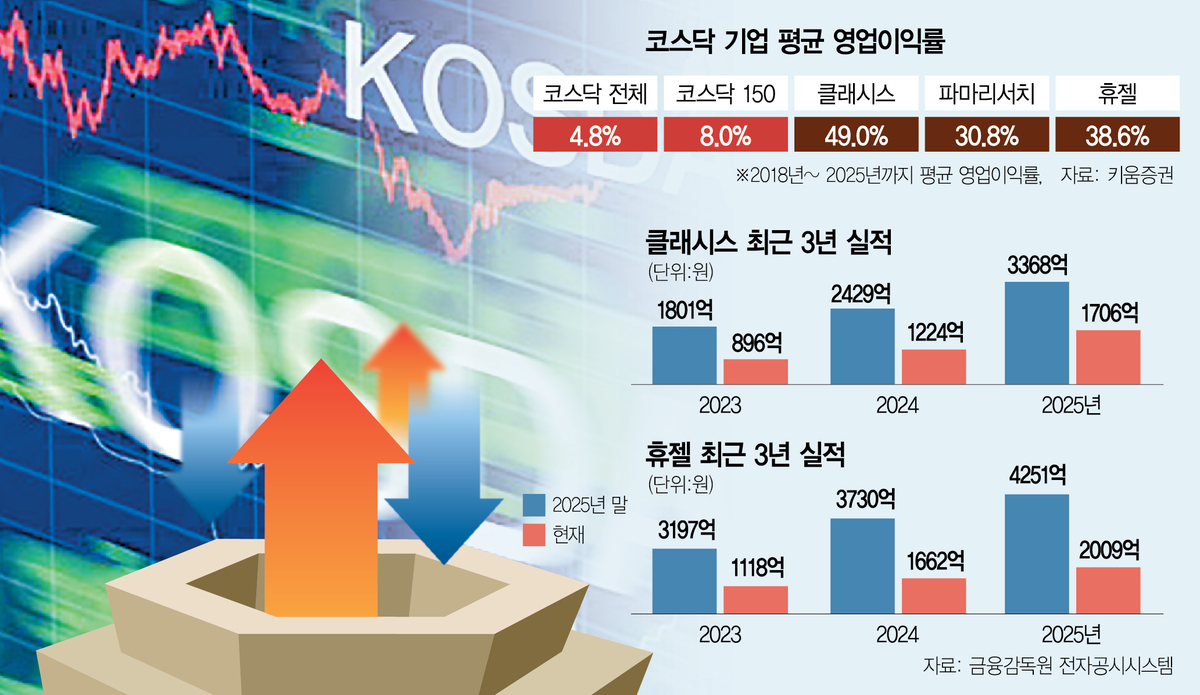
- What’s happening: Announced Q1 2026 results and completed the acquisition of Brazilian distributor MedSystems to expand its global network.
- Numbers: Q1 revenue of 8.72 billion won (up 13% year-on-year), with an operating profit margin of 42.7%.
- Key Insight: Classys is integrating its global supply chain through international distribution acquisitions. Expansion into the U.S. and Latin American markets is expected to accelerate, serving as a positive signal for its inclusion in the KOSDAQ Premium Tier.
S. Korean Medical Device Industry Overall
- What’s happening: Achieved a trade surplus for the sixth straight year in 2025 with an 8.1% production growth rate.
- Numbers: 12.36 trillion won in production, led by dental implants (high market share) and ultrasound devices.
- Key Insight: The structural competitiveness of Korea's medical device industry is proven, and the increase in innovative technology (AI, big data) designations points toward a higher proportion of high-value products. Global export markets now demand greater technical differentiation.
Ministry of Food and Drug Safety (MFDS) - Innovative Medical Device Designation
- What’s happening: 45 innovative medical devices were designated in 2025, a 50% increase year-on-year.
- Numbers: 45 products designated (focused on AI/big data), a net increase of 15 from the 30 designated the previous year.
- Key Insight: Korea’s medical device innovation ecosystem is growing rapidly, with AI-based products leading the charge. The timing aligns with FDA deregulation, expanding international opportunities for Korean firms.
MFDS · Policy · Regulation
FDA Relaxes Wearable & AI Medical Device Regulations (USA)
- Content: The FDA has reduced regulatory oversight on general wellness devices and Clinical Decision Support (CDS) software, and narrowed the surveillance scope for low-risk non-invasive wearable devices.
- Targets: Smartwatches, health apps, AI-based wellness monitoring devices, and non-invasive sensor-based devices.
- Effective Date: January 7, 2026 (guidance announced).
- Industry Impact: Lowers entry barriers for Korean wearable manufacturers like Samsung and LG, allowing for faster product launches. However, high-risk AI medical devices (diagnostic/therapeutic) remain subject to strict oversight, deepening the regulatory divide.
MFDS - 'Market Immediate Entry (MME)' System
- Content: The Ministry of Health and Welfare and the MFDS launched a fast-track (Market Immediate Entry Medical Technology) system to reduce market entry time for innovative medical devices to under 80 days.
- Targets: Innovative medical devices utilizing AI/big data and products meeting unmet clinical needs.
- Effective Date: January 26, 2026 (official announcement).
- Industry Impact: Accelerates clinical utilization and shortens the path to gathering global clinical data for Korean innovators. Quality control and post-market surveillance remain priorities.
MFDS - Stricter Medical Device GMP Regulations
- Content: Eliminated the 'sales suspension deferral' grace period for violations during periodic medical device GMP (Good Manufacturing Practice) audits, mandating immediate manufacturing suspension.
- Targets: In Vitro Diagnostic (IVD) medical devices and products with expired GMP certifications.
- Effective Date: March 26, 2026 (notice issued).
- Industry Impact: Reinforces compliance with manufacturing quality standards; supply chain risks increase due to immediate halts on unauthorized processes. IVD and test kit manufacturers must proactively manage GMP renewal schedules.
Digital Health & AI Medicine
-
Samsung Galaxy Watch AI Health: Offers next-gen AI-based personalized health monitoring and real-time wellness dashboards. Faster entry into the U.S. market is possible following FDA wearable deregulation.
-
GE HealthCare MIM Contour Protégé AI+ 2.0: FDA 510(k) clearance received; provides AI-based radiation therapy planning software with auto-contouring and treatment optimization.
-
Increase in S. Korean AI Medical Device Designations: The majority of the 45 innovative medical devices designated in 2025 are AI or machine learning-based, with therapeutic efficacy currently being verified through clinical data.
Global MedTech Context
-
FDA Deregulation Trend — Implications for Korean Firms: Reduced oversight on low-risk wearables and general wellness devices creates opportunities for major electronics firms like Samsung and LG to enhance global competitiveness. High-risk AI diagnostic devices, however, still require rigorous scrutiny.
-
Intensifying Global AI Device Competition — Implications for Korean Industry: Accelerated FDA approval of AI software from global giants like GE HealthCare raises the bar for global clinical validation standards for startups like Lunit and Vuno, making investment in multi-regional clinical trials (MRCT) essential.
-
Wearable & Smart Device Market Growth — Implications for Korean Industry: Samsung’s Galaxy Watch AI updates combined with FDA deregulation are driving the standardization of smartwatch health monitoring, creating new opportunities for Korean firms to leverage ultrasound and sensor technologies.
Investment · M&A · Listing Trends
-
Classys Acquires Brazilian Distributor: MedSystems acquisition strengthens Latin American supply chains; profitability confirmed with a 42.7% Q1 operating profit margin. Moving toward KOSDAQ Premium Tier entry.
-
Advancement of S. Korean Medical Device Industry Structure: Increased designations for innovative tech (AI, big data) are expected to drive R&D investment by startups and mid-sized firms, maturing profit models based on global clinical data.
Today’s Insight
As the Korean medical device industry secures its growth foundation with six consecutive years of trade surpluses and a 50% increase in innovative designations, the U.S. FDA’s easing of AI and wearable regulations offers a direct opportunity for Korean firms to expand globally. In particular, Samsung’s Galaxy Watch AI update perfectly aligns with the FDA’s policy to reduce oversight on low-risk wearables, setting the stage for Korea to lead in smartwatch health platforms. At the same time, the MFDS's 'Market Immediate Entry' system and tightened GMP regulations will accelerate clinical speed while forcing a split in manufacturing quality, raising concerns regarding regulatory compliance costs for small and medium-sized manufacturers.
This Week’s Checkpoints
- Announcement expected for the official U.S. launch schedule of the Samsung Galaxy Watch AI health app.
- FDA expected to release additional guidance on AI medical device regulations (clarifying criteria for high-risk diagnostic/therapeutic devices).
- Tracking new global clinical trial (MRCT) registrations by Korean medical device firms.
Reader Action Items
- Medical Device Manufacturers: Reconfirm GMP expiration schedules and proactively manage supply chain risks arising from the elimination of sales suspension deferrals for IVD devices.
- Investors/Startups: Thoroughly review the FDA’s policy on low-risk wearable deregulation and re-evaluate the timing for entering the U.S. market.
- Regulatory/Clinical Leads: Verify application qualifications and procedures for the MFDS 'Market Immediate Entry' system and monitor trends in global regulatory harmonization (FDA vs. MFDS vs. EU MDR).
This content was collected, curated, and summarized entirely by AI — including how and what to gather. It may contain inaccuracies. Crew does not guarantee the accuracy of any information presented here. Always verify facts on your own before acting on them. Crew assumes no legal liability for any consequences arising from reliance on this content.
Powered by
