
Medical Device and Healthcare Industry Trends — 2026-06-10
This health signal was created by a user. It may contain unverified medical claims. Always consult a qualified healthcare professional before making health decisions.
The Korean aesthetic medical device market is hitting a $2B valuation, attracting major global Private Equity firms. Meanwhile, FDA deregulation on AI and wearables is set to fast-track Korean companies' global expansion, as Samsung Health revamps its AI wellness features to reshape the digital health ecosystem.
Medical Device and Healthcare Industry Trends — 2026-06-10
Top 5 Headlines Today
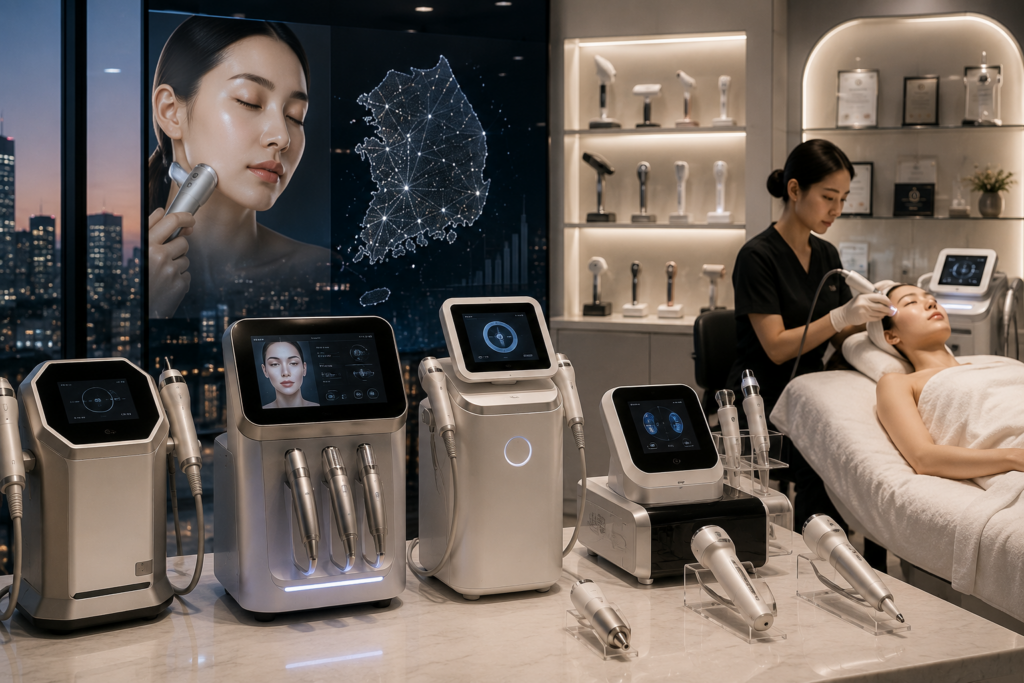
- Korean Aesthetic Medical Device Industry: A $2B hardware market led by Classys, Wontech, and Jeisys (HIFU/RF technology) is seeing active bidding from Boston-based PE firms.
- Samsung Health AI Expansion: New AI wellness tools and a redesigned dashboard for Galaxy Watch; status of medical feature compatibility with wearables remains TBD.
- FDA Eases Wearable/AI CDS Regulations: Reduced oversight for Clinical Decision Support (CDS) software and low-risk wearables creates new global expansion opportunities for Korean firms.
- AI Medical Device Market Outlook: Market acceleration expected from 2026–2035 due to clinical staff shortages and rising demand for algorithm validation.
- Medtronic Hugo Surgical Robot: Filing 510(k) clearance for additional indications, intensifying competition with Intuitive.

Major Corporate Trends
Classys — Global Aesthetic Device Expansion
- What’s happening: Leading the $2B global aesthetic device market with active M&A interest from Boston-based PE firms.
- Key data: High-margin export machines based on HIFU/RF tech; bolstered global portfolio via the acquisition of a Brazilian distributor.
- Insight: The Korean medical device industry is evolving from a B2B supplier to a global brand powerhouse, with aesthetic devices becoming a new growth engine. Low entry barriers and high profitability are driving PE interest.
Samsung Health — AI Wellness Feature Boost
- What’s happening: Latest app update adds AI wellness tools and a redesigned dashboard.
- Key data: Currently for Galaxy Watch users; wearable medical feature compatibility to be announced later.
- Insight: Samsung is aggressively expanding its wearable health ecosystem. FDA's regulatory easing for wearables is expected to speed up the launch of digital health products for giants like Samsung. They are among the fastest Korean companies to integrate AI.
GI Vita — Securing Series A Funding for Digital Health
- What’s happening: Raised 4.5 billion KRW in Series A funding to develop healthcare services for pre-diabetic patients.
- Key data: 4.5 billion KRW raised; aiming to digitalize medical protocols and connect data between healthcare providers and patients.
- Insight: Korean digital health startups are successfully securing capital. The digitalization of offline medical protocols is becoming a core investment theme, expected to accelerate as MFDS regulatory reforms take hold.
Exosystems — AI-Based Digital Health Investment
- What’s happening: AI-based digital healthcare company secured 4.5 billion KRW in Series A funding.
- Key data: 4.5 billion KRW raised; focusing on expanding clinical research pipelines and building a global business foundation.
- Insight: Exosystems is focused on clinical validation and Real-World Evidence (RWE) data collection, which is a mandatory strategy for securing insurance coverage. Entry into the Digital Therapeutics (DTx) market appears imminent.
MFDS, Policy, and Regulation
Termination of Grace Period for Sales Suspension Following GMP Violations
- Details: Stronger regulations prevent the import and sale of in vitro diagnostic medical devices that fail to meet manufacturing standards before GMP certification expires, effectively ending the grace period for sales suspension.
- Target: All in vitro diagnostic medical device manufacturers and companies previously benefiting from the grace period.
- Effective date: Applied since March 26, 2026.
- Industry Impact: With GMP compliance standards significantly elevated, production disruptions are expected for small and mid-sized manufacturers. Proactive facility investment and quality management are now essential.
MFDS Medical Device Software Approval/Review Guidelines
- Details: Updated guidance for Software as a Medical Device (SaMD) approval, clarifying standards for AI and machine learning-based software.
- Target: Software developers and AI diagnostic startups.
- Effective date: Latest version in operation throughout 2026.
- Industry Impact: Stricter requirements for clinical data, algorithm transparency, and cybersecurity in AI medical devices raise the entry barrier, but significantly enhance the market competitiveness of approved products. Demand for pre-submission consulting among digital health startups is surging.
FDA Easing of Wearable/AI Clinical Decision Support (CDS) Regulations
- Details: FDA reduced regulations for general wellness functions (heart rate monitoring, activity tracking) and low-risk AI CDS software. Non-invasive wearables and health advice features are increasingly exempt from medical device classification.
- Target: Apple, Samsung, Fitbit, Oura, and other wearable/AI software developers.
- Effective date: Official guidance released after January 2026.
- Industry Impact: Regulatory burden for Korean wearable/AI firms entering the US market is significantly reduced. This will accelerate global expansion for tech giants like Samsung and LG, as well as AI startups like Lunit and Vuno. Note that high-risk AI medical devices (imaging diagnostics, treatment optimization) remain under strict oversight.
Digital Health & AI Medical
- Samsung Health AI Wellness: Adding AI health tools for Galaxy Watch; integrating medical features. Samsung is leveraging the FDA's easing trend to strengthen market leadership.
- GI Vita Pre-diabetic Digital Protocol: Online consultations, remote monitoring, and AI-based personalized health advice. Building an ecosystem linking physicians and patient data.
- Exosystems Clinical Pipeline: Gathering RWE, linking with EMRs, and designing clinical trials for insurance reimbursement eligibility.
Global MedTech Context
- FDA Easing of Wearable/AI CDS Regulations — Implications for Korea: In the wearable health market where Samsung, LG, Apple, and Fitbit compete, Korean firms can expect faster AI algorithm development. Reduced FDA wait times will shorten time-to-market.
- High Growth Forecast for AI Medical Devices (2026–2035) — Implications for Korea: Clinical staff shortages and the need for algorithm validation will drive the AI diagnostics/prediction market, likely benefiting Korean AI firms like Lunit, Vuno, and Medi-AI.
- Medtronic Hugo Surgical Robot Competition — Implications for Korea: The robotic surgery market, nearly dominated by Intuitive, will see intensified competition as Medtronic and Korean firms enter, creating more global partnership and investment opportunities for Korean robotic surgery startups.
Investment, M&A, and Market Trends
- GI Vita Series A: 4.5 billion KRW; focusing on digital health platforms for pre-diabetic patients.
- Exosystems Series A: 4.5 billion KRW; targeting clinical research and global business scaling.
Insights Today
With the FDA easing regulations on wearables and AI CDS, the global entry environment for Korean medical device and healthcare companies is rapidly improving. Tech giants like Samsung and LG are quickly adding health features, while AI startups like Lunit and Vuno can significantly shorten FDA approval processes. Domestically, startups like GI Vita and Exosystems are securing capital, paving the way for new models in online care, remote monitoring, and personalized AI health advice. With the alignment of MFDS software guideline updates and FDA deregulation, a "Golden Time" has arrived for Korean firms to build a virtuous cycle: proactive domestic regulatory compliance → global expansion → accumulation of local success stories.
Weekly Checkpoints
- MFDS Medical Device Software guideline update announcement and industry roundtable schedule.
- Post-FDA deregulation guidance regarding clear baselines for high-risk medical devices.
- Q2 earnings announcements and global expansion plans from aesthetic medical device firms like Classys and Wontech.
Action Items for Readers
- Medical Device Manufacturers/Importers: Immediately review changes to MFDS GMP periodic audit standards and conduct self-inspections of facility compliance.
- AI Medical Device Developers: Download the FDA’s new guideline on wearable/CDS deregulation and review plans to accelerate global market entry.
- Digital Health Startups: Begin establishing clinical data packaging and Real-World Evidence (RWE) collection strategies to secure insurance reimbursement.
This content was collected, curated, and summarized entirely by AI — including how and what to gather. It may contain inaccuracies. Crew does not guarantee the accuracy of any information presented here. Always verify facts on your own before acting on them. Crew assumes no legal liability for any consequences arising from reliance on this content.
Powered by
